One Customer. Every Detail Your Team Needs.
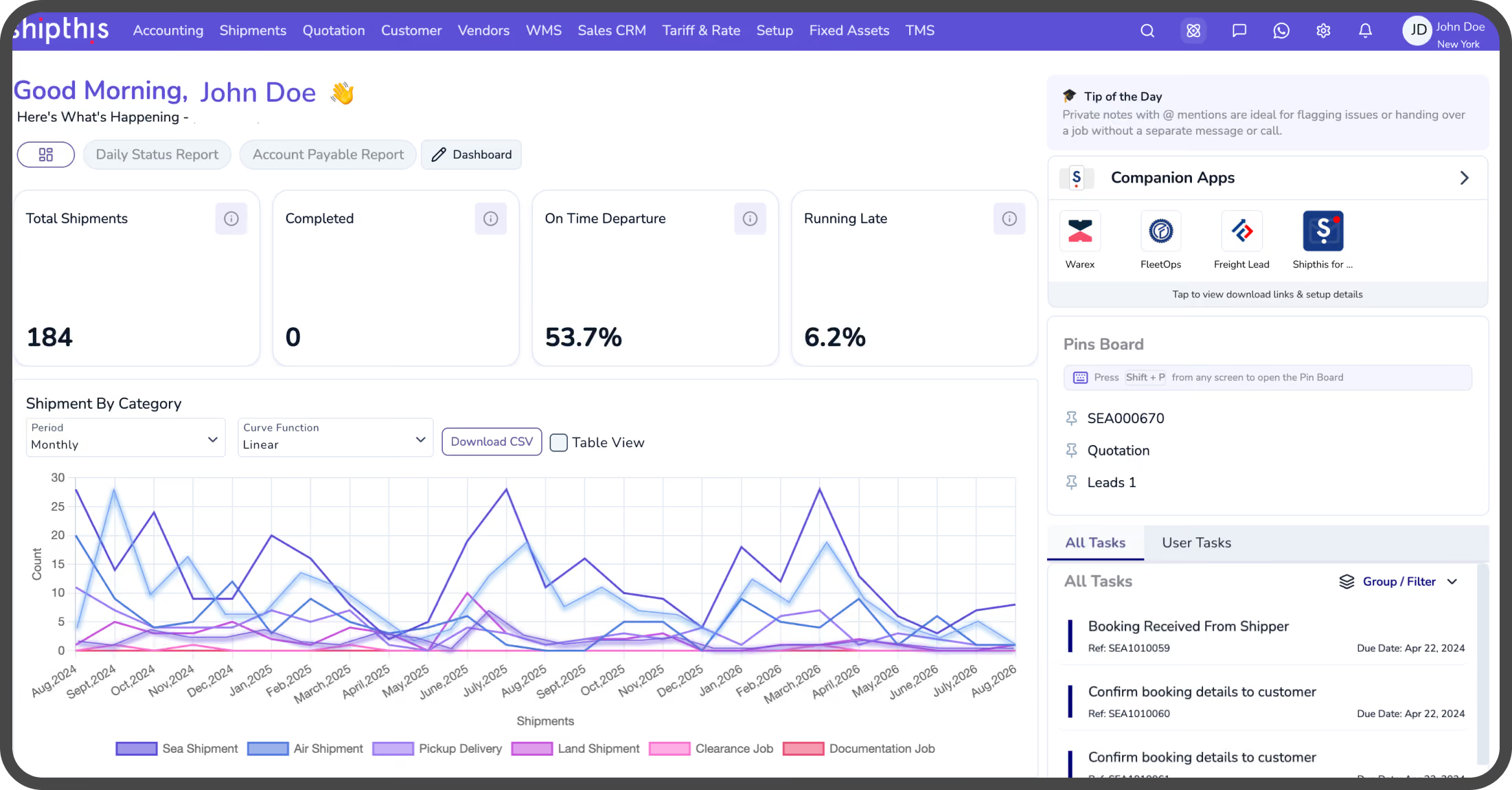
Managing a customer takes more than keeping their name and contact details on file. Shipthis brings the entire customer relationship together, their consignees, shippers, shipment details, cargo information, what they owe, what you've billed, and how your team communicates with them. From customer-specific pricing and credit controls to shipment and accounting dashboards, everything stays connected to the same account. Your teams work from one shared view, while customers with multiple branches, contacts or related parties remain easy to manage.
The customer record that doesn't need a second system to back it up.


.avif)
Know the customer, the business you're doing with them, and where the account stands, before you make the next decision.
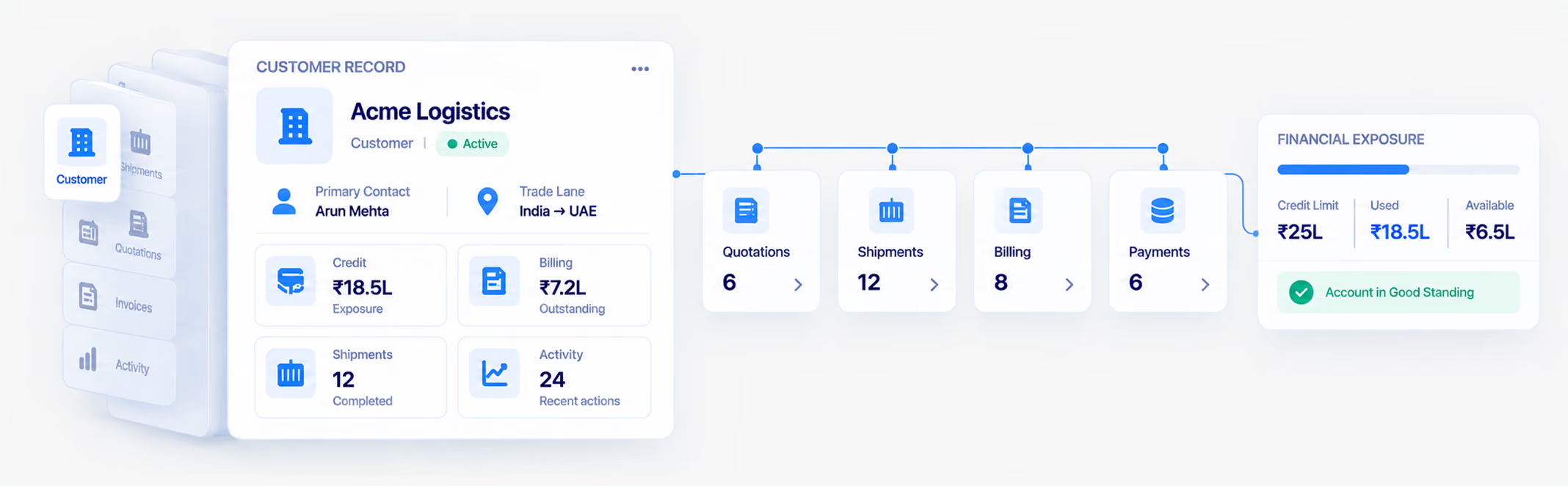
A contact list tells you who the customer is. A connected customer record tells you how the relationship is doing. Shipthis brings credit position, billing, shipments, customer activity and commercial details together, so teams don't have to piece the picture together across different systems. When a customer asks for another shipment, a new quotation or more credit, the information needed to make that decision is already there, in the same place your team manages the relationship.
.avif)
.avif)
Shipments, Quotations, Invoices, Parties, and Vendors, All Pointed at the Same Record
Quotations, shipments, invoices, parties and vendor relationships all connect back to the same customer, so every team works from the same account.
The customer record is the commercial anchor for the relationship. Quotations are raised against the customer, shipments use it as the bill-to party, and invoices inherit its payment terms and credit controls. Customer parties, shippers, consignees, notify parties and suppliers, stay linked to the account, and when a customer is also an agent, the related vendor relationship connects to the same record.
.avif)
.avif)
A Customer Lifecycle Built Around the Relationship After the Sale
Track where each customer stands once they enter your business, independently from approval, blocking and other operational statuses.
Customer management starts after the sale. Shipthis lets you define lifecycle stages, from Active and Trading to Dormant or Inactive, that stay separate from operational status. A customer can be actively trading but temporarily blocked, or inactive with its full history still available, giving account, operations and finance a clearer view of both the relationship and the account's current standing.
A Credit Limit That Accounts for Work You Haven't Invoiced Yet
Shipthis tracks the credit position across approved, draft, under-review, and open amounts, so an account's exposure reflects the business already in motion, not just invoices already issued.
Set a credit limit for each customer and Shipthis enforces it as business moves through the system, with Account Credit Block stopping invoices that would exceed it. Unbilled charges can be included in the calculation, so exposure reflects work already committed, not just what's invoiced. Payment terms apply automatically, and the Customer Dashboard surfaces accounts over their limit.
.avif)
.avif)
Denied Party, Sanctions Screening Built Into the Customer Record
Screen customers and related parties against sanctions, denied party and watchlists, with configurable screening rules and a complete history of every check.
Shipthis brings sanctions screening into the same customer and partner records your teams already manage. Customers, vendors, related parties, carriers and vessels can be screened against government sanctions and watchlists, with frequency and match sensitivity configured to your requirements. Results appear directly on the record, and every screening run is retained for a clear, auditable trail.
Give Every Customer a Portal of Their Own
Turn a customer contact into a portal user directly from their contact record, no separate user setup or account creation process.
Enable Customer Portal Access on a contact and assign a role, their portal login is created as part of the same customer setup, no separate user record to maintain. Customers can access what's relevant to them, shipments, tracking, quotations, invoices, statements and credit notes, depending on the role assigned, self-service that stays connected to the same data your team works with internally.
.avif)
.avif)
See Every Customer Relationship at a Glance
The customer master gives your team a clear view of every account, with the key information, status update and activity needed to understand the relationship without opening records one by one.
See your customer information together in one actionable view, and drill into the details when you need the full picture. From the list, your team can quickly reach status updates, audit history, contract details, activity, shipments, sales, parties, statements and account status, keeping the context of the relationship close at hand.
The Customer Record That Knows How You Do Business With Them
Contracts, credit, margins, customer-specific charges and compliance checks, all connected to the customer relationship.
.avif)
Every customer comes with their own contracts, credit limits, payment terms, margin rules, specific charges and customer-specific products, all tied to the account so they follow the customer through the business. Denied-party and sanctions screening connects to the same record, so financial controls and compliance status sit right where your team manages the account.
Your Lifecycle Stages, Credit Policies, and Screening Thresholds, Configured Before Go-Live
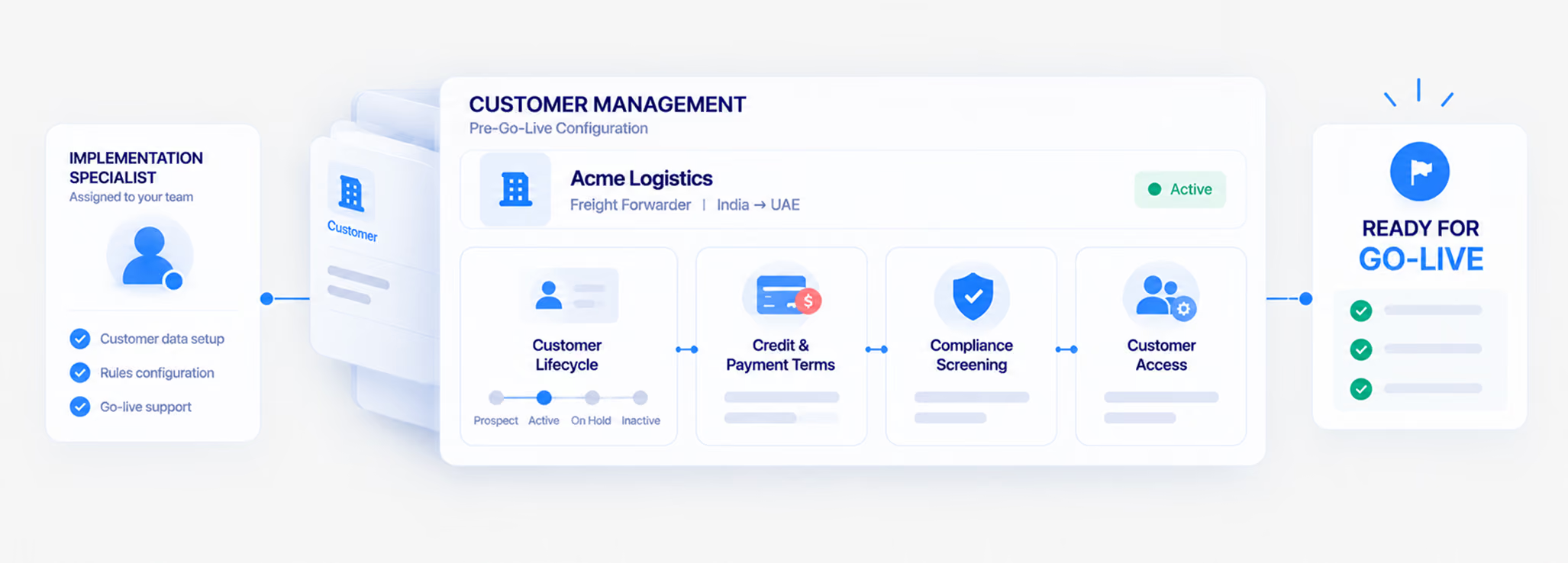
Implementation configures the Customer Lifecycle and Status workflows your team actually uses, sets credit limits and payment terms account by account during migration, and configures denied party screening thresholds and frequency to match your compliance obligations, with Customer Roles and portal settings ready before your first customer logs in. Most customers are fully operational within 9 weeks, with a named implementation specialist rather than a generic support queue.

Bring Your Actual Customer Book. We'll Show You What's Connected.
The fastest way to evaluate Customer Management is against the accounts your team manages every day.
Bring your real customer scenarios, complex billing, multiple branches, customer-specific pricing, credit controls, contracts or compliance requirements, and we'll show you how they work in Shipthis.
No credit card, no commitments.
Book a demo or start your 30-day free trial — and talk to a real freight specialist, not a sales script.
Customer Relationship Management Questions, Answered
Both. Credit Limit, Account Credit Block, Payment Term, and an optional Include Unbilled Amount setting track exposure across approved, draft, under-review, and open amounts, visible on the Customer Dashboard, not just on an invoice after the fact.
Screening is a configurable feature of the customer record itself, covering customers, vendors, customer parties, vendor parties, shipping lines, airlines, and vessels, with a configurable match threshold and frequency.
Yes. Customer Roles scope portal access by function, an accounts role sees invoices and statements, an operations role sees shipments and tracking, and a contact only gets portal access when a role is explicitly assigned.
It moves to Inactive lifecycle status. History is preserved, the account simply drops out of some default active-account views.
Yes. A customer flagged Is Also Agent carries a Linked Vendor record for the money owed in the other direction, so the relationship stays on one account viewed from either side.
Yes, from the customer list, select the duplicate rows and use the bulk Merge action.