A Quote Below Your Margin Floor Doesn't Go Out. Full Stop.
Set margin floors once, and every quote gets checked against them automatically, fixed margins, percentage-based markups, tiered pricing by volume or lane, or conditional rules based on customer or shipment type. Shipthis applies the right markup automatically and stops a below-threshold quote before it reaches the customer, instead of your team discovering the margin gap once the shipment's already invoiced.
No credit card required. Go live in weeks, not months. Implementation team included.



.avif)
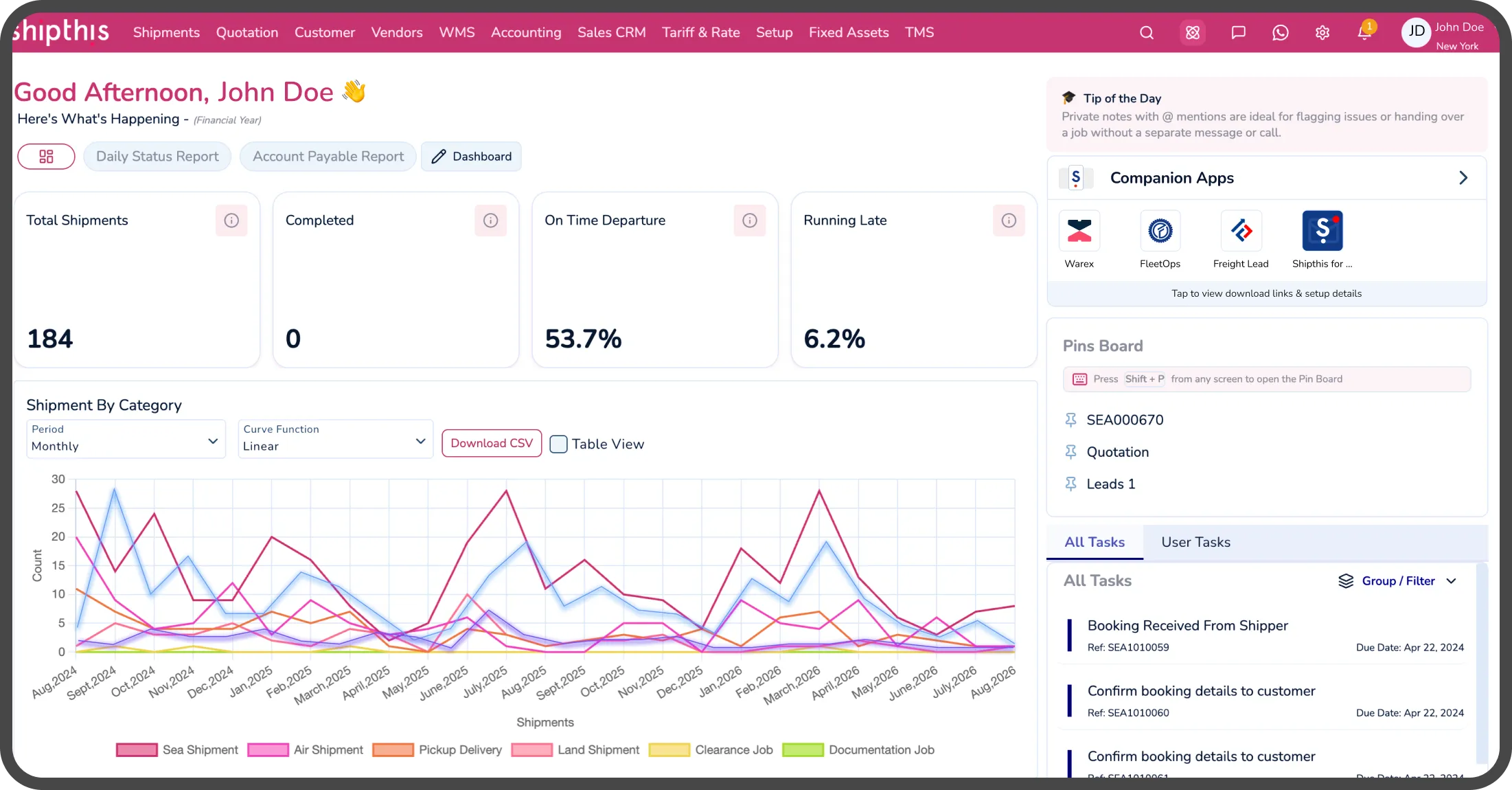
By the time a below-margin quote shows up in reconciliation, the shipment's already moved. Margin protection has to happen before the quote is sent, not after.
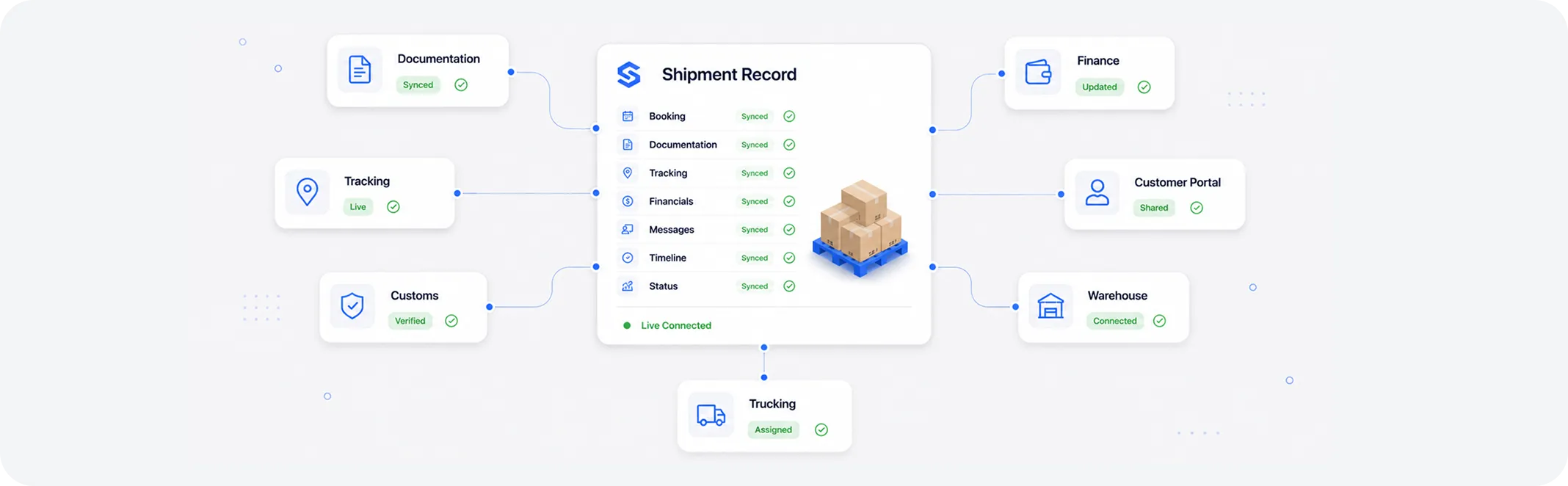
Most forwarders find out about a margin problem during invoice reconciliation, someone notices a shipment that went out at a thinner margin than it should have, weeks after the quote was sent and the cargo already moved. At that point, there's nothing left to do about that specific shipment, the best you can do is try not to repeat the mistake. Shipthis moves margin protection to the only point where it can actually prevent the loss: before the quote is sent. Every quote is checked against your margin rules automatically, and one that falls below the floor simply doesn't go out, not flagged for review after the fact, stopped before it becomes a shipment you can't undo.


Fixed, Percentage, Tiered, or Conditional, Whichever Your Pricing Actually Needs
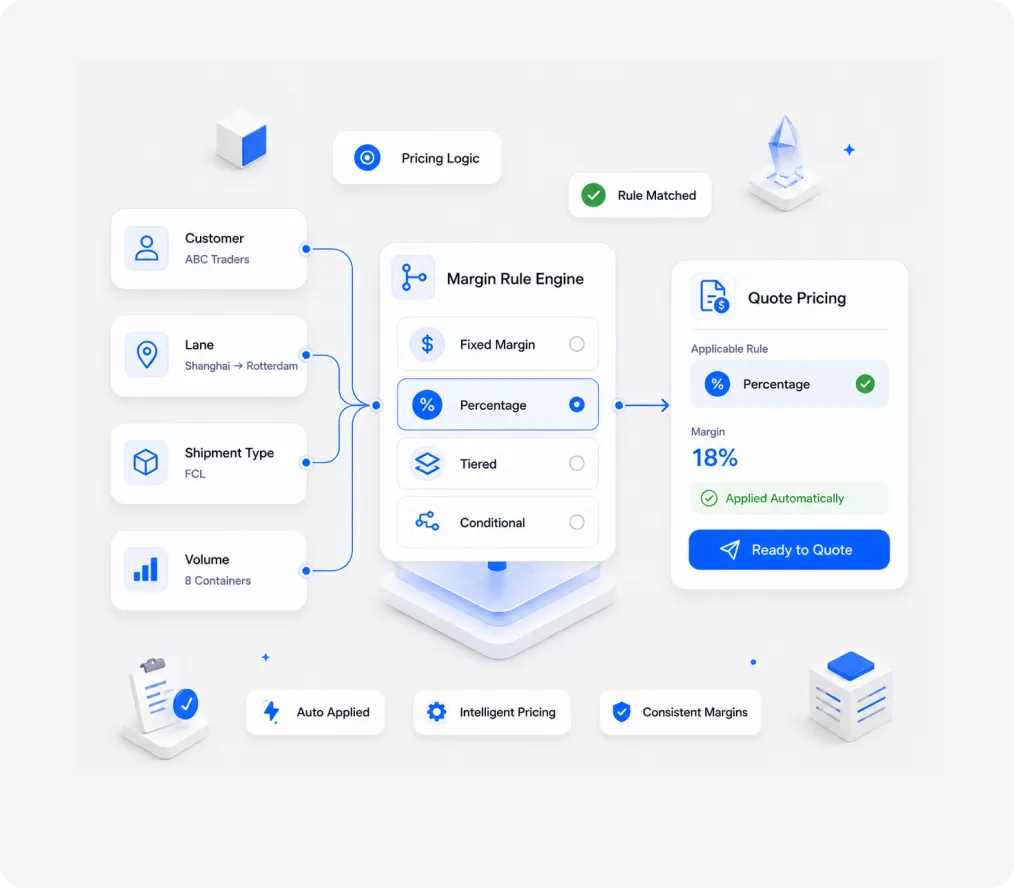
Set margin rules as a fixed amount, a percentage, a tiered structure based on volume or range, or conditional logic based on customer, lane, or shipment type.
Different parts of your business likely need different markup logic, a fixed margin for one type of shipment, a percentage-based markup for another, a tiered structure that scales with volume or distance, or a conditional rule that applies differently depending on the customer or lane. Shipthis supports all four approaches, so your margin rules can actually reflect how your pricing strategy really works, instead of forcing every quote through one blanket markup percentage that fits some shipments well and others poorly.
.webp)
Not a Warning. A Wall Protecting your Margins.
A quote that falls below your defined margin floor doesn't get flagged for someone to notice later, it doesn't go out at all, unless specifically authorized.
A margin calculation that just displays a number still depends on someone actually looking at it and deciding to act, which is exactly the step that fails under time pressure or with a less experienced pricer. Shipthis's margin floors are enforced, not advisory. A quote that falls below the threshold you've defined simply cannot be sent as-is, closing the gap between "the system showed a low margin" and "someone actually stopped the quote because of it."
The Sell Price, Calculated From Your Actual Cost Rate, Automatically
Margin rules apply directly on top of the cost rates already in your rate library, so the sell price a customer sees reflects your actual current cost, not a stale assumption.
A margin rule is only as accurate as the cost rate it's applied to, and if that cost rate is outdated or disconnected from the actual rate library, the resulting sell price is wrong regardless of how well-designed the markup logic is. Shipthis applies margin rules directly on top of the cost rates stored in your rate library, whether entered manually, uploaded via the AI tariff parser, or sourced from a contracted rate, so the sell price calculated for every quote reflects your actual current cost, automatically, every time.
.webp)
.webp)
Enforced by Default. Overridden Only With Authorization
A below-floor quote routes for approval instead of going out unchecked — margin protection with a deliberate exception path, not an inflexible wall.
Sometimes a quote below the standard margin floor is a legitimate business decision, a strategic account, a competitive bid, a volume commitment that changes the math. Shipthis doesn't treat the margin floor as an absolute block with no way through. A below-threshold quote routes for approval instead of going out automatically, so the decision to override the floor is made deliberately by someone authorized to make it, not skipped past by default. Full approval workflow and quote status tracking is covered on the Quote Lifecycle Management page.


Showing a Margin Number Isn't the Same as Protecting It
Configurable markup logic, an enforced floor, connection to real cost data, and a deliberate exception path, not a percentage displayed for someone to notice or ignore.
.webp)
Most quoting tools show a margin figure somewhere on the quote screen and call that margin management. Shipthis actually enforces it. Markup rules configured the way your pricing genuinely works, a floor that stops a below-threshold quote rather than just flagging it, sell prices calculated from real, current cost data, and a deliberate approval path for the legitimate exceptions that come up. That combination is what turns margin protection from a number on a screen into something that actually changes outcomes.
Configured With Your Actual Pricing Logic, Not a Generic Default
A dedicated implementation team works through your actual margin thresholds and markup logic, so the rules enforced from day one reflect how your business really prices.
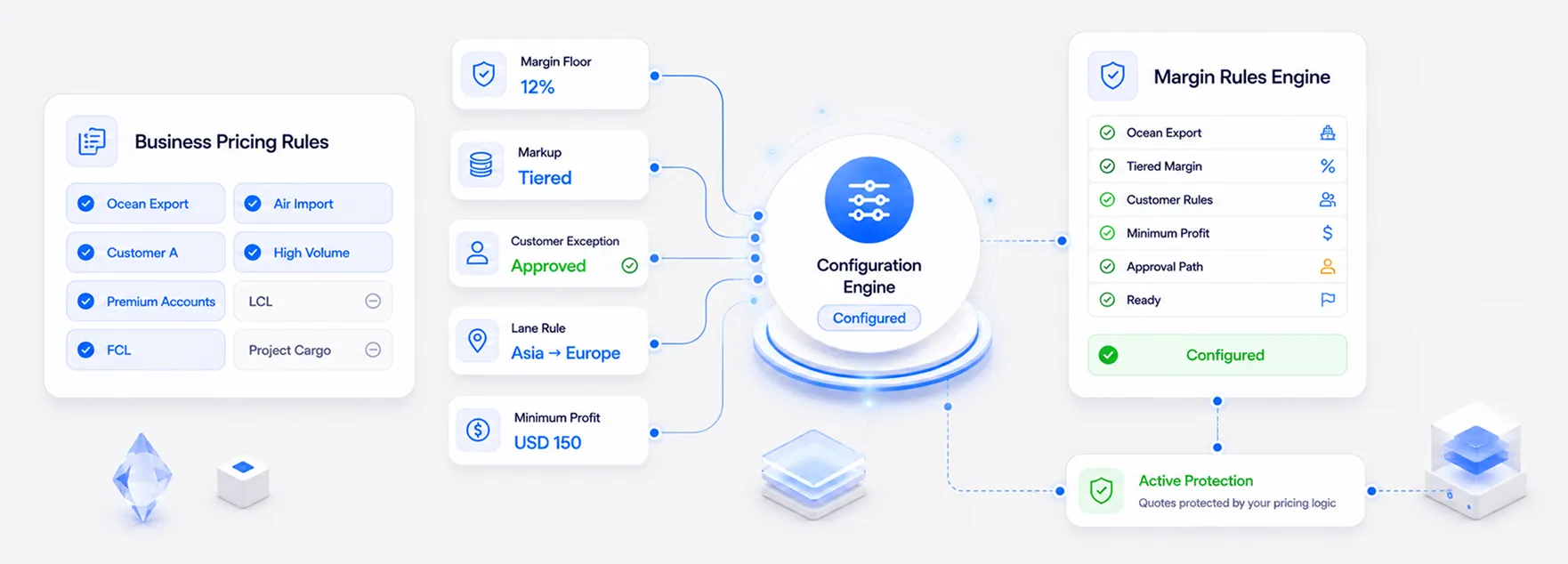
A margin rules engine configured with generic defaults is nearly as risky as having no rules at all, set the floor too high and legitimate quotes get blocked constantly, set it too low and it protects nothing. Shipthis onboarding is built around getting this right from the start. Implementation works through your actual margin thresholds, markup logic, and known exception cases, so the rules enforced from day one reflect how your business genuinely prices, not a generic template. Most customers are fully operational within 9 weeks.


See a Below-Floor Quote Actually Get Stopped
Book a walkthrough with your own margin thresholds and markup logic, or start a free trial and test the floor yourself.
A demo can walk through your own margin structure and markup rules — not a generic script. Prefer to explore first? A free trial gives your team hands-on access with no commitment.

Book a demo or start your 30-day free trial — and talk to a real freight specialist, not a sales script.
Margin Rules Engine Questions, Answered
Fixed margins, percentage-based markups, tiered or range-based markups by volume or lane, and conditional pricing logic based on customer, shipment type, or other criteria.
It's blocked from going out as-is. It can be routed for approval if someone authorized wants to override the floor deliberately, but it doesn't go out automatically.
The same rate library covered in Tariff & Rate Management whether entered manually, uploaded via the AI tariff parser, or sourced from a contracted rate.
Yes, through an approval path the floor routes the quote for deliberate authorization rather than blocking it with no way through.
It removes the need for margin-threshold review specifically, since the system enforces that automatically human review remains available for the judgment calls that genuinely need it, like approving an exception.
A displayed percentage requires someone to notice it and act it's advisory. Shipthis's margin floor is enforced: a below-threshold quote doesn't go out without deliberate authorization, regardless of whether anyone was watching that specific quote.