Advanced Integrations
Shipthis makes all your applications and services work better by letting you easily integrate - both into and out of the Shipthis platform. Orchestrate your forwarding operation from a single platform and avoid context-switching.
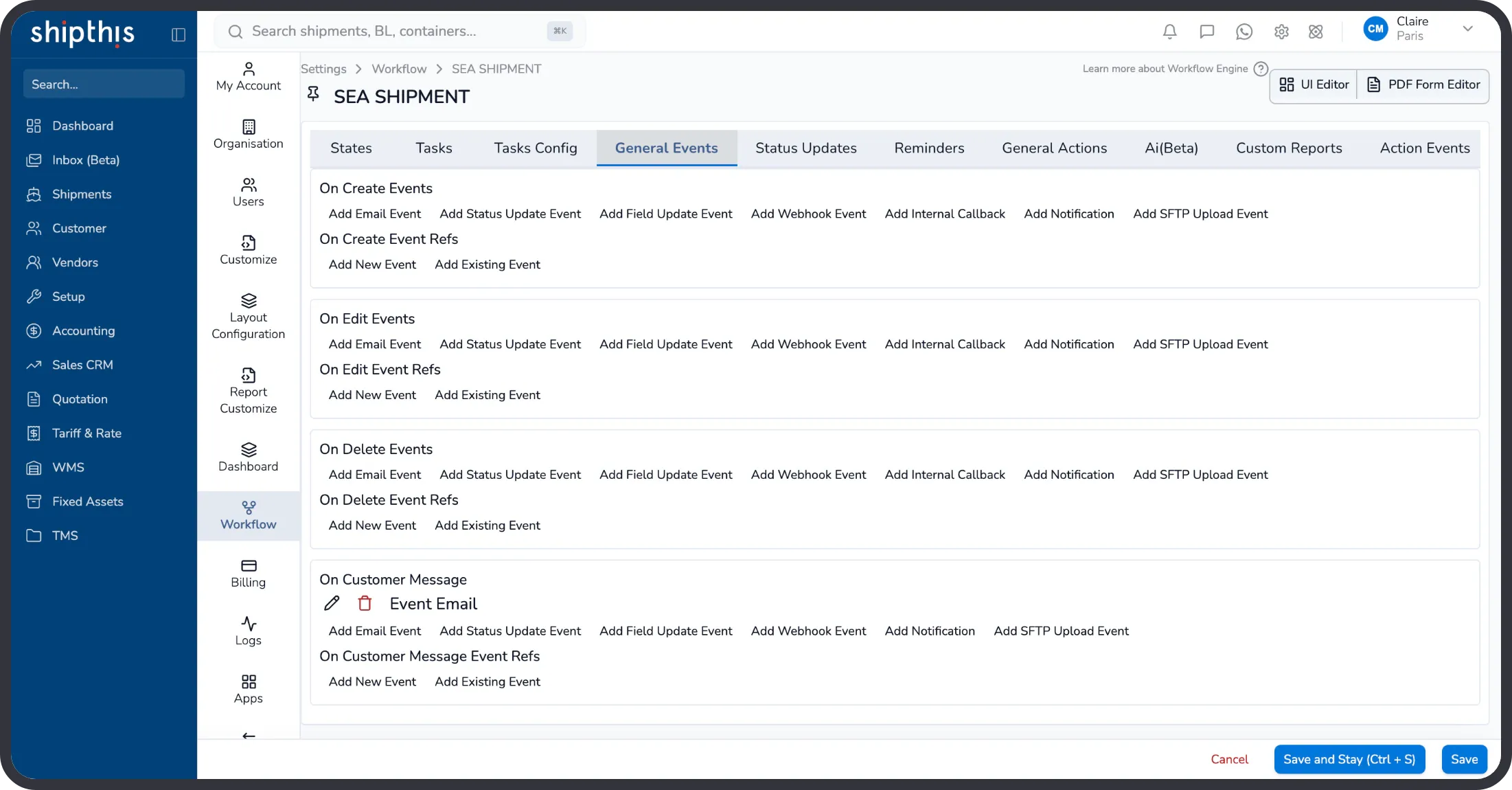




Optimize your supply chain execution with seamlessly integrated EDI, API, and web-hook connections.
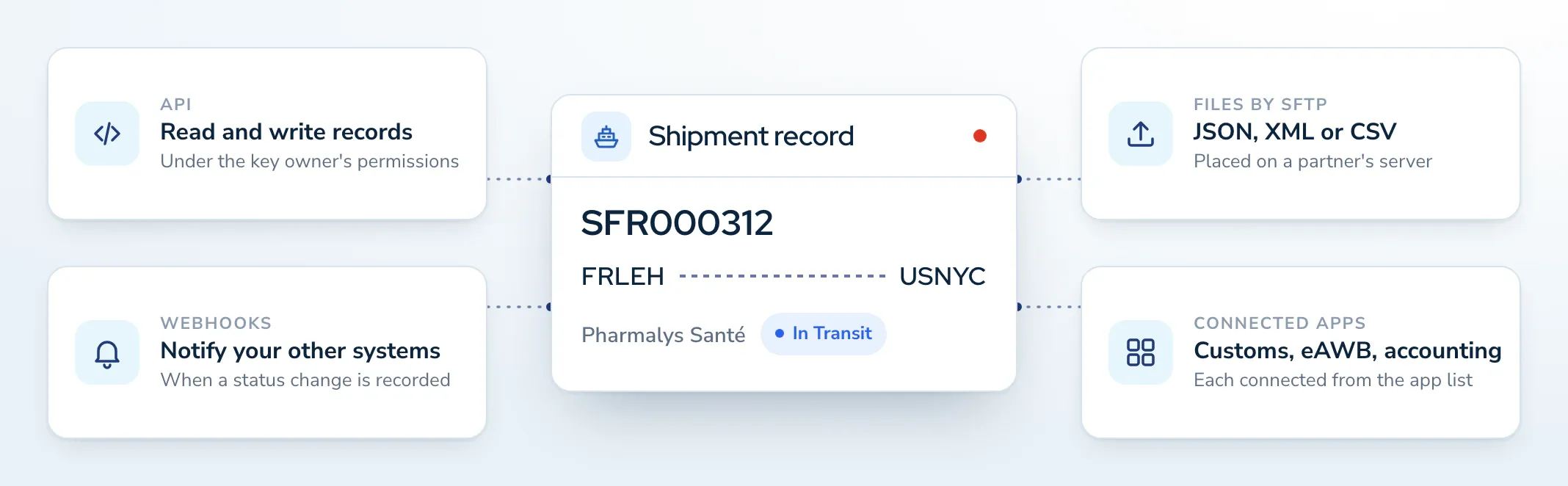
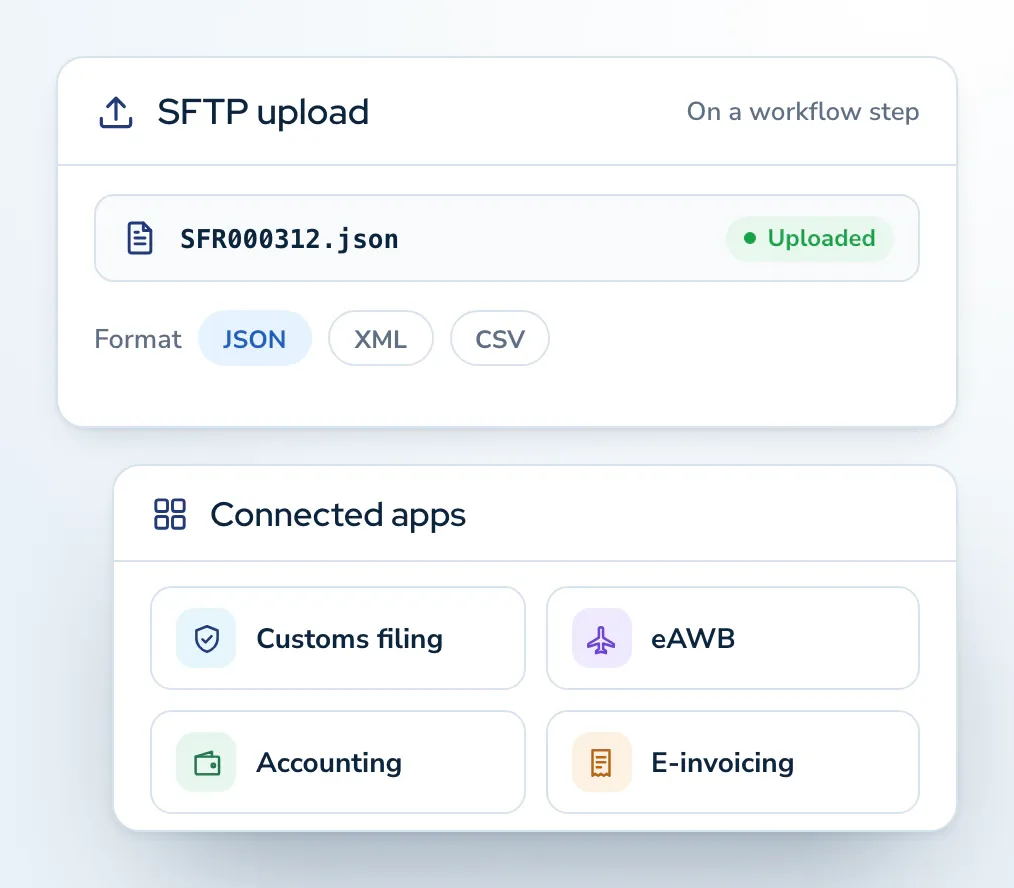
In Shipthis, your developers can read and write records through the API, and a status change can notify your other systems by webhook. Where a partner works with files, a workflow step can place a record on their server, and connected apps carry customs filings, electronic air waybills and accounting entries, so your other systems can work from the same shipment record as your team.


Forward Looking - Transparent and Open API
Our API uses cutting-edge REST API functionality to deliver resource-oriented URLs that are efficient at exposing the maximum amount of functionality in an easy-to-use interface.
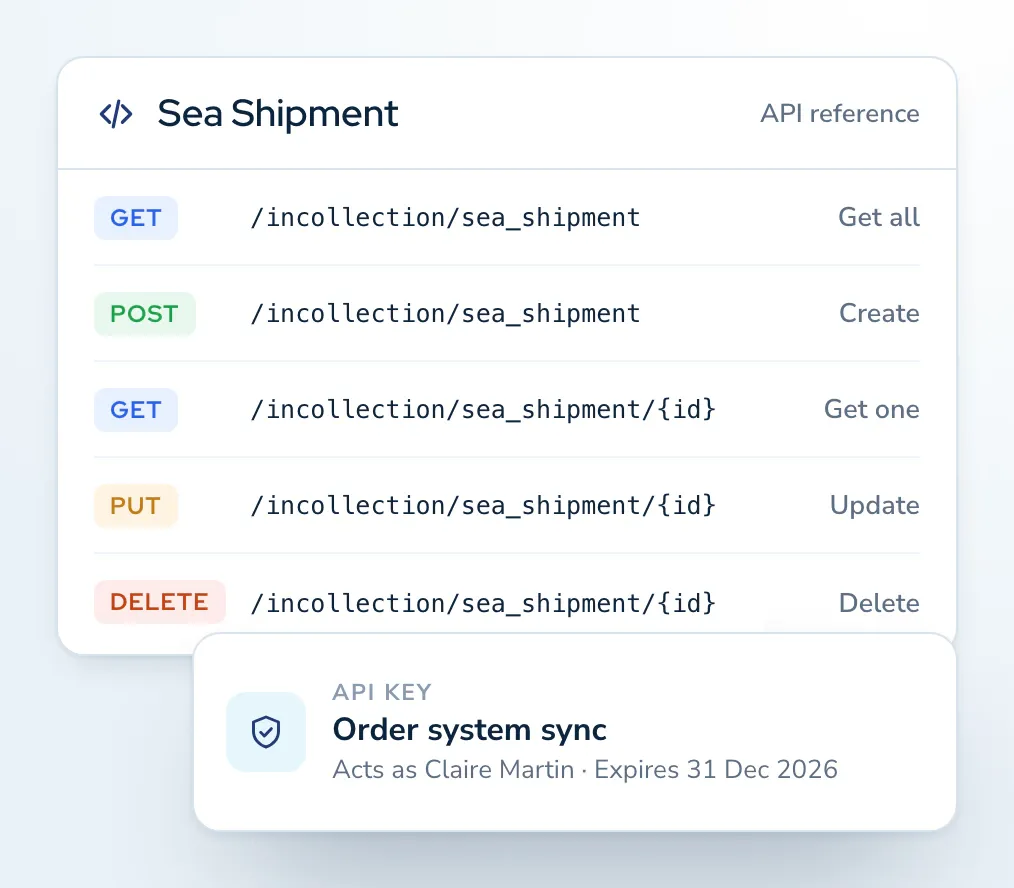
- Your developers can read and write records through the Shipthis API: list, read, create, update and delete, for each kind of record your administrator has opened to it.
- Each API key carries a label and an optional expiry date, and acts with the permissions of the person who created it.
- The API reference is generated from your own set-up, so a field you add to a form appears in it.
Better Together – Integrate With Your Customer’s Business Applications
Leverage the Shipthis integration framework of prebuilt APIs, and Webhooks to enable Shipment, Warehouse Data, Inventories, Status Updates, etc. with your customers directly to their business application.
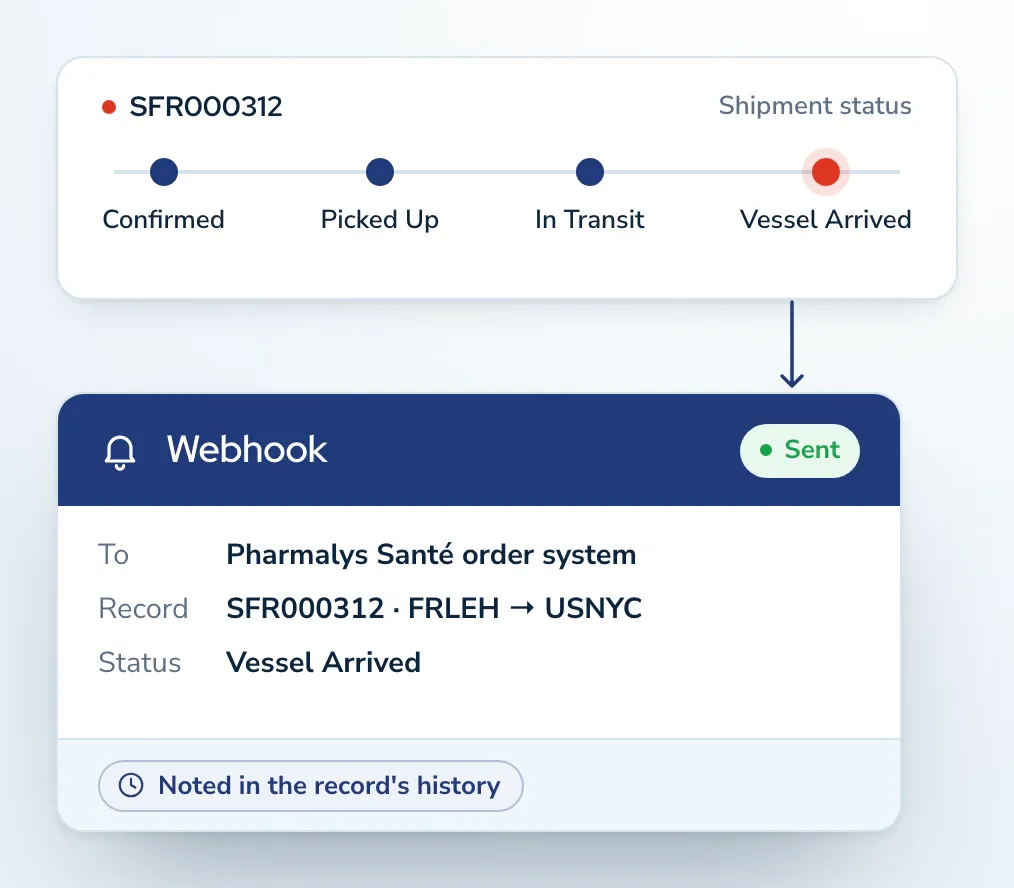
- A status change can notify your other systems by webhook: the record is sent to the address you give when that change is recorded.
- Webhooks can also be set for when a record is created, edited or deleted.
- Customers with portal access can generate API keys of their own, for their systems to use.
Legacy to Modern Platform
Modernize your legacy freight management system with Shipthis’s superior pre-built connectors and integration framework for legacy systems.
- Where a partner or an older system works with files, a workflow step can place the record on their SFTP server as JSON, XML or CSV.
- Connected apps, some of them add-ons, cover customs filing in the countries Shipthis supports, electronic air waybills, accounting packages and e-invoicing.
- In South Africa, a connected app files customs declarations and cargo manifests with the revenue service as EDI messages, and the answers come back onto the declaration.






Explore More Integration Capabilities
Where integrations meet the rest of Shipthis: the workflows that send them, the roles they work under, and the connections already built for customs, air waybills, banks and tracking.
Sea, air and land shipments each follow their own workflow, with the stages you set.
Roles decide who can view, create, change or delete each kind of record.
File Master and House AWBs electronically in IATA format.
In the countries Shipthis supports, many customs filings start from the shipment, with most of its details carried across.
On shipments with tracking switched on, tracking updates can move the shipment's status forward for you.
Import bank statements, or sync settled transactions where available, and match them to your ledger.
A branded portal for quotes, bookings, tracking, documents and reports.
Shipthis AI reads freight documents and emails, and prepares records for your team to check.
Advanced Integrations Questions, Answered
Optimize your supply chain execution with seamlessly integrated EDI, API, and web-hook connections.
Our API uses cutting-edge REST API functionality to deliver resource-oriented URLs that are efficient at exposing the maximum amount of functionality in an easy-to-use interface.
Yes. Developers can read and write records through the Shipthis API, for the kinds of record an administrator has opened to it, and a status change can notify your customer's system by webhook. Customers with portal access can generate their own API keys.
Modernize your legacy freight management system with Shipthis’s superior pre-built connectors and integration framework for legacy systems.