
A Full Freight Accounting Module, Inside the System That Ran the Freight
GAAP-compliant double-entry accounting built for forwarders, with multi-currency, multi-entity, accruals, locked periods and job-level profitability, reading from the same record that moved the shipment. Not exported to finance. Not reconciled against operations. The same record.
Real double-entry accounting, built for how freight actually works
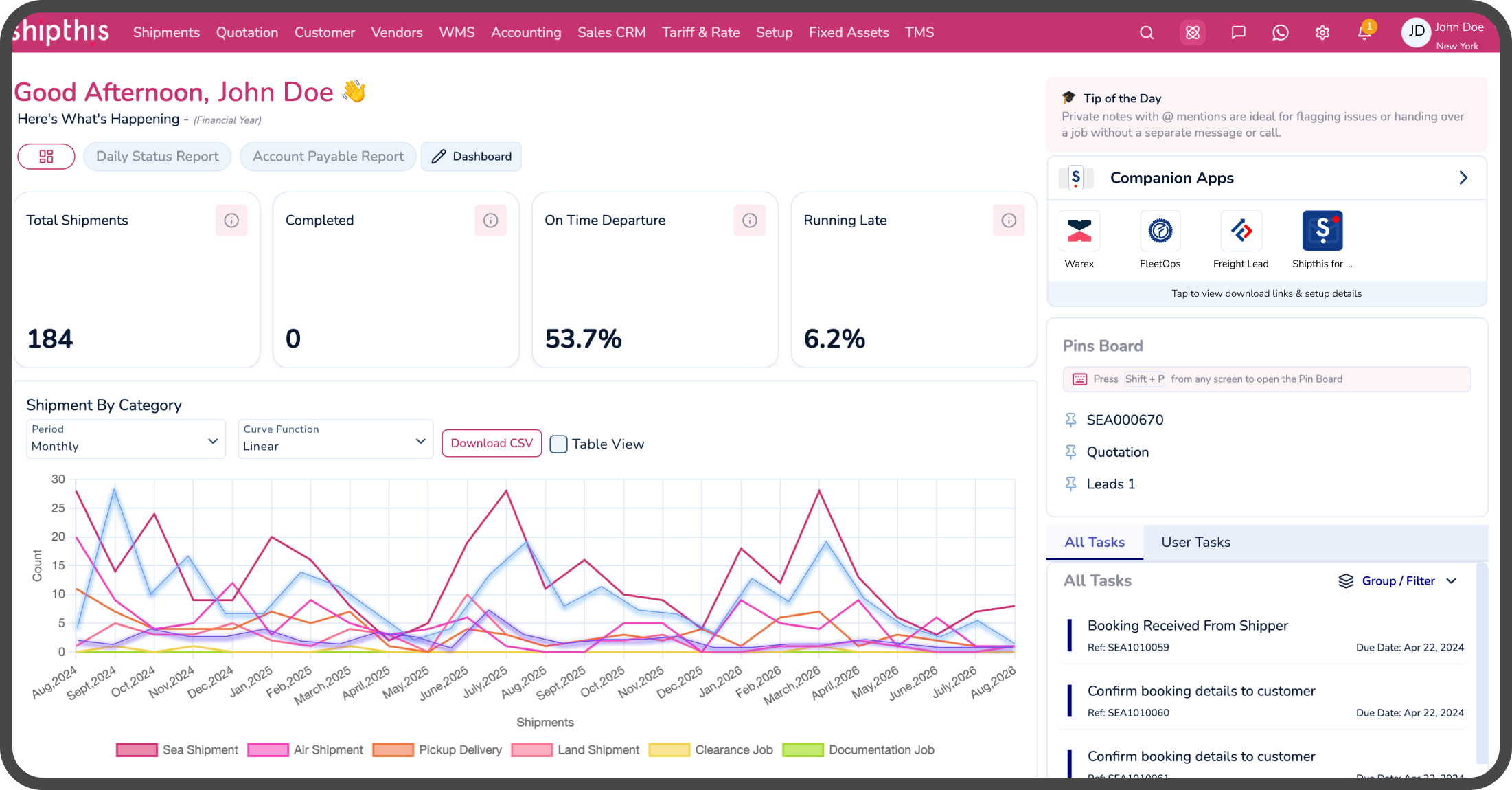




Job margin rebuilt from file exports every time someone asks. One currency view, so reported margin drifts. Accruals prepared by hand at every close. That’s the real cost of finance and operations living apart.
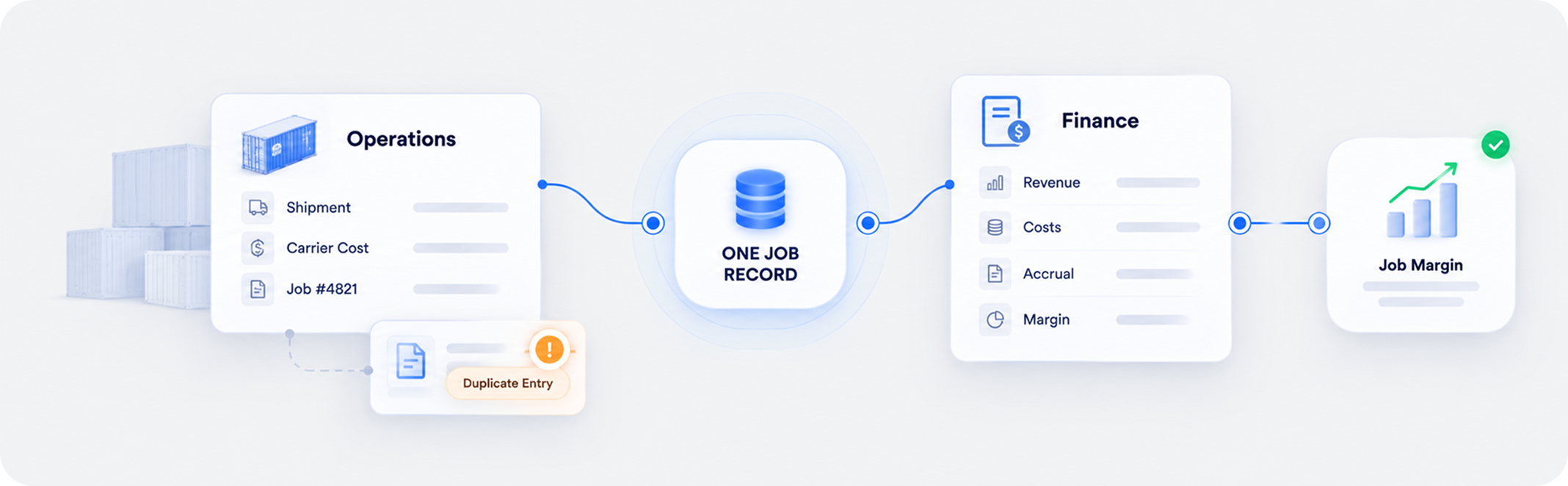
Separate systems for operations and accounting force the same data in twice, and each entry is a chance to get it wrong. Vendor invoices land weeks after delivery. Small charges, such as handling, documentation and port surcharges, go unbilled and quietly leak margin. Nobody notices until month-end. Shipthis removes the gap rather than bridging it. The ledger is the job record: job profitability is what the ledger already says, every line carries its transaction, base and group currency together, and each accrual links to the entry that clears it. Nothing to reconcile, because nothing was duplicated.


Debits, Credits, and Three Currencies, Generated From the Shipment
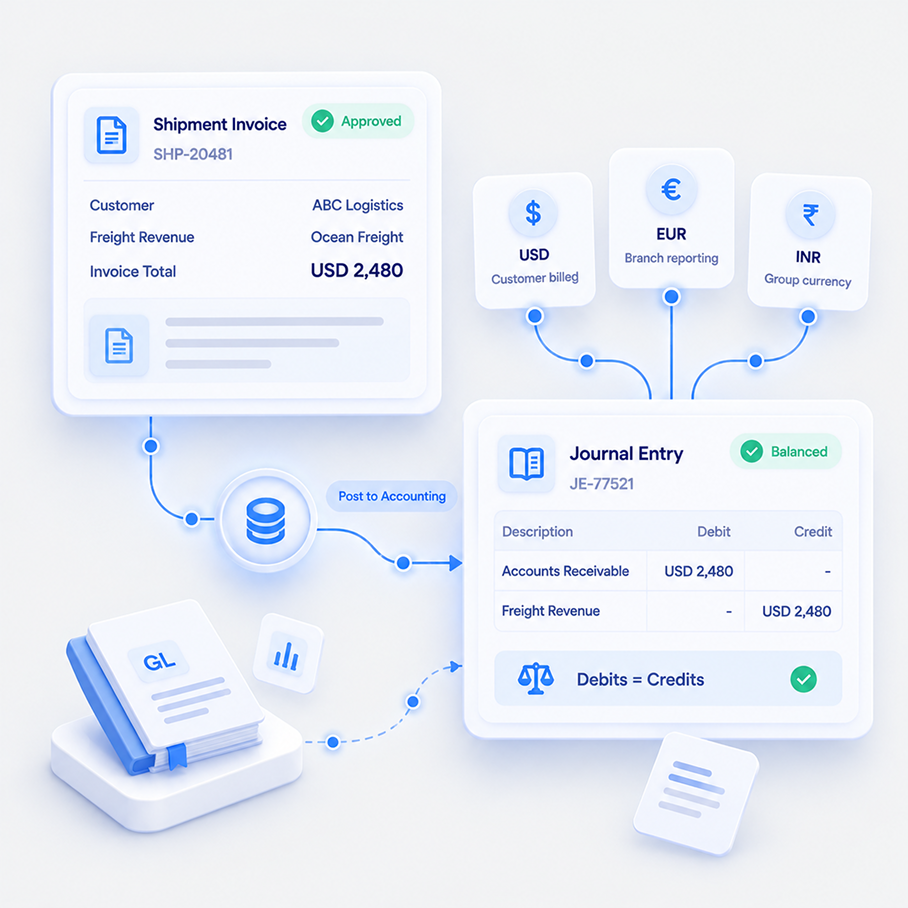
Freight revenue, trucking cost, accrued vendor cost, trade receivable. A balanced entry, written from the job, checked as it posts.
Approve an invoice and the posting sequence runs the same way every time: the receivable to that customer’s control account, revenue by sale book, output tax and withholding, an open-item row carrying its due date, and the job’s margin brought current.
Every posted line carries three currencies at once: what the customer was billed in, what the branch reports in, and your group currency, with the posting-date rate held on the entry so the figures re-perform later. It also carries its context: the job, the party subledger, the document that caused it, and the accrual it clears. Amounts post as integers to thousandths of a unit, so nothing rounds away.
A Job Shouldn’t Look Profitable Until the Late Invoice Arrives
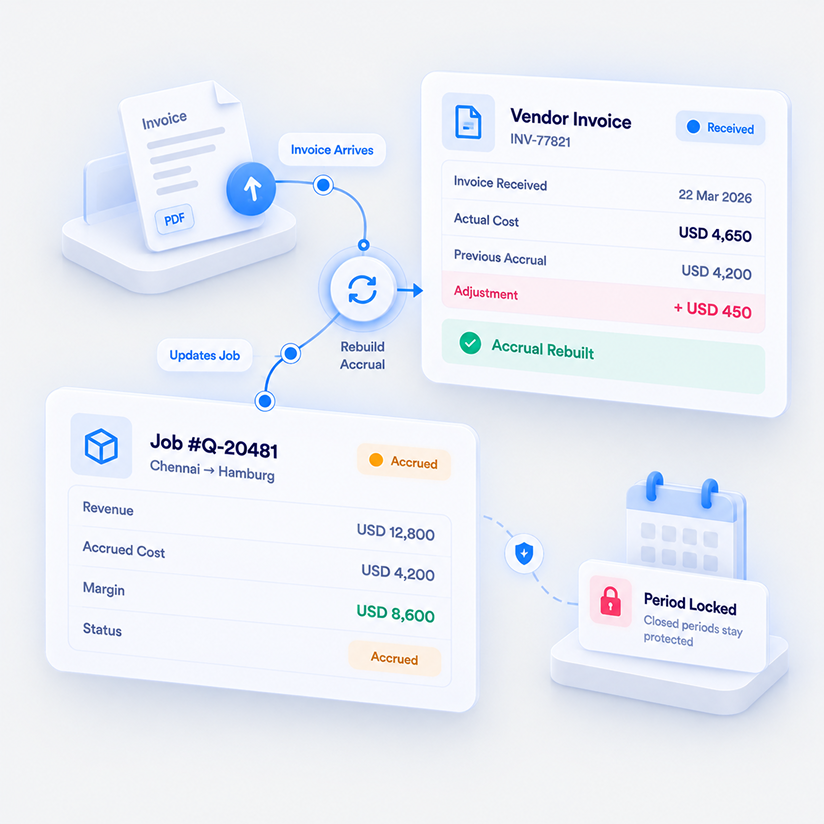
Six recognition policies, accruals that rebuild rather than patch, and a locked period that holds, including against the indirect routes through operational edits.
You decide when a job’s figures belong to a period; the accrual engine handles the rest. The estimate posts as work in progress and the same line clears it when the real document arrives, recomputed from scratch each time, so estimate and actual never double count. Six recognition policies are available, set for the organisation and overridable per region.
Revenue invoiced before a shipment’s transaction date posts as deferred revenue and reverses itself automatically on the date the shipment actually arrives, with no manual journal to remember. Payments recorded in one month but clearing in another, like post-dated cheques, are flagged as uncleared so your bank position stays honest.
Closing a month holds. Each region has three lock dates: general, receivables and payables. The tightest one decides, and entries are tested against the date their accrual would land on, not just their amount. Reopening is role-gated and logged, so it’s a decision someone owns.
Job Margin Isn’t a Report You Run. It’s What the Ledger Already Says.
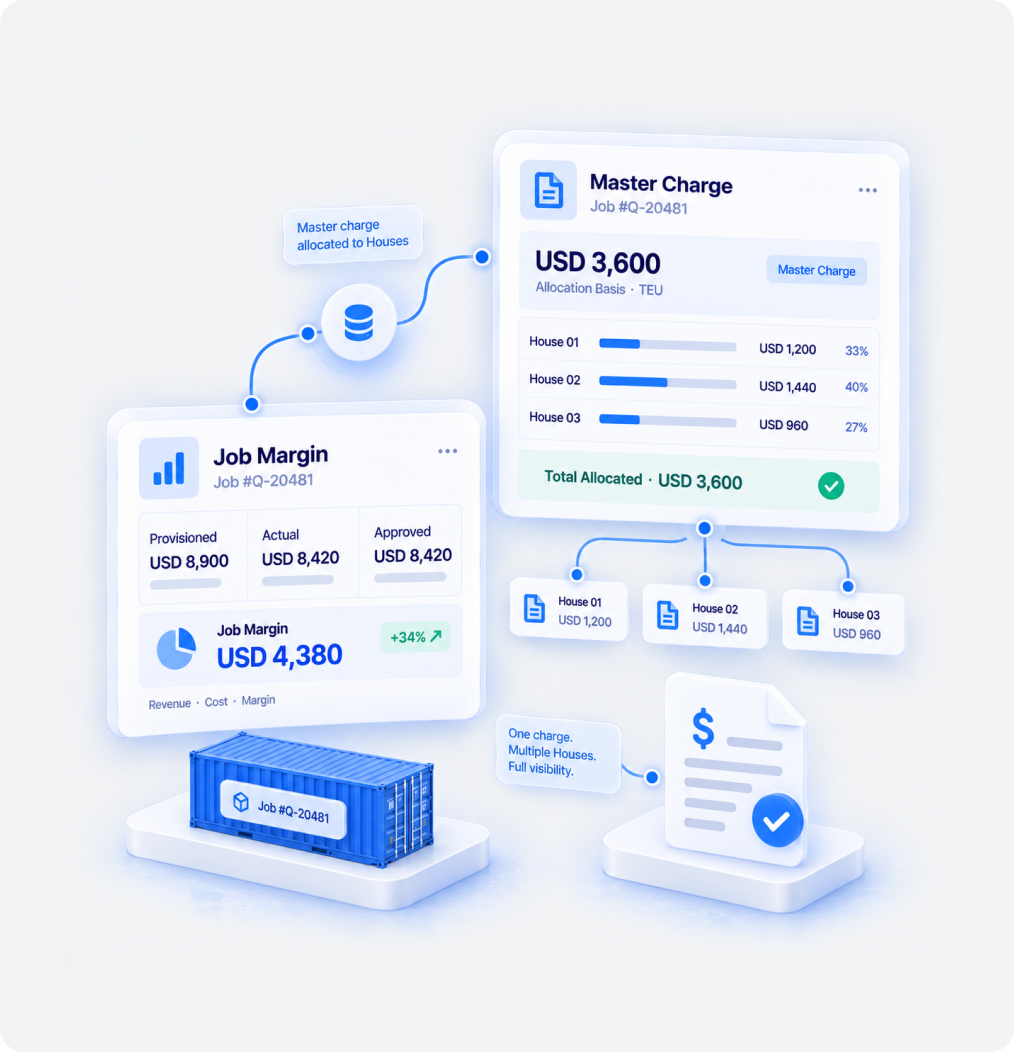
Provisioned, actual and approved profit side by side on every job, and master charges that split across houses by the basis the trade actually uses.
Because cost and revenue post against the job, profitability isn’t rebuilt from exports. It’s already there, with provisioned, actual and approved margin visible together, drillable by party, document and date.
On console jobs, a master charge shares across houses by whichever basis suits the trade: chargeable or gross kilos, CBM, TEU, container count, weight-or-measure, equal shares, or named container and vehicle types. A single charge can use its own basis. Shares add back to the charge exactly, with no rounding dust, and when a house departs, the remainder re-shares while billed history stays intact.
Drop the Vendor Bill In. It Comes Back Matched to the Job.
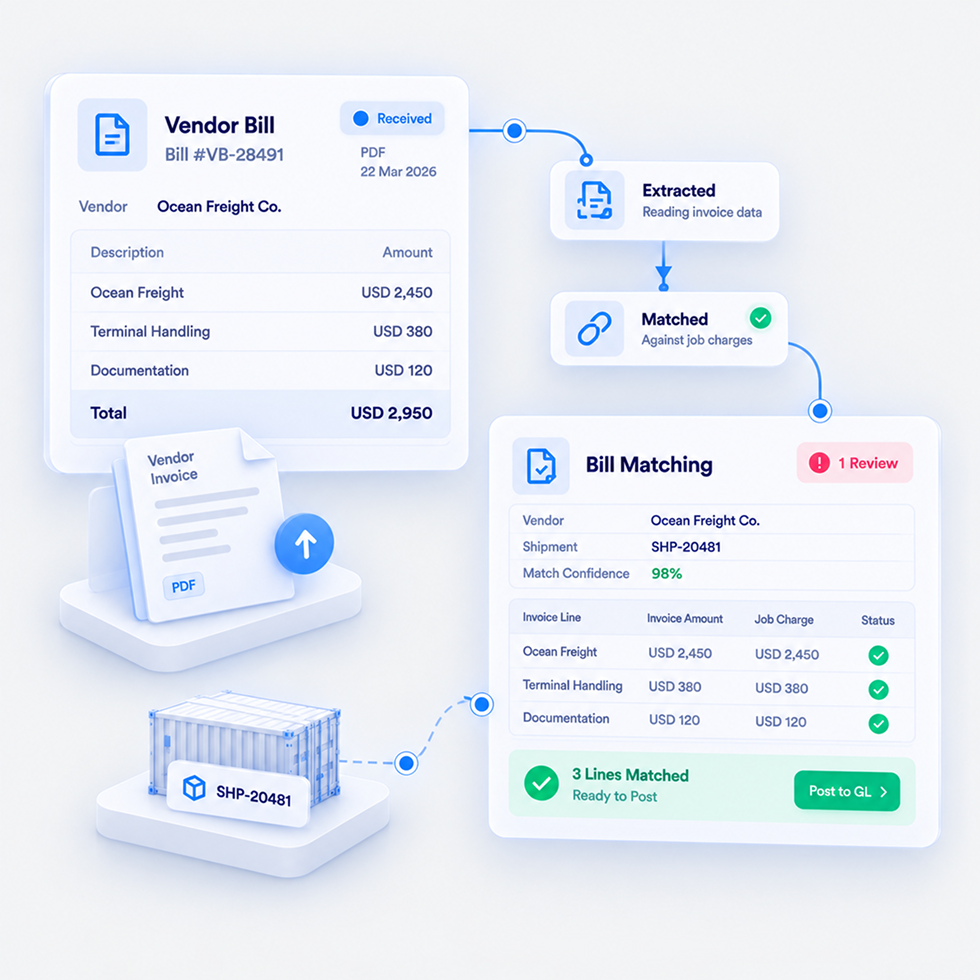
Extraction reads the rows and maps the columns. Each row is matched against that vendor’s shipments and the charge lines already on them, within your tolerance.
A vendor bill arrives in whatever layout the vendor sends. Extraction reads it and reports its confidence per field, then each row is matched against that vendor’s shipments and existing charge lines, testing combinations to find the closest fit.
Every row comes back with one of six verdicts: matched, variance, new, no shipment, ambiguous, or matched outside this vendor. Your AP desk spends its time only on rows that need a person. Duplicate bill numbers, dates inside a locked period and missing FX rates are all raised before you start. Bills that arrive by email are filed against the right shipment automatically, so the wizard opens on a bill already on the job.
Fixed Assets, Recurring Journals, Audit Trail. You Won’t Need a Second System.
Depreciation schedules that run monthly on their own, scheduled recurring entries, a full audit trail of who changed what, and role-level control down to which accounting screens a person can even see.
A fixed assets module captures your assets, holds their depreciation rates, and runs the depreciation journal every month, so that whole cycle automates rather than sitting in a spreadsheet. Recurring journal entries carry their own schedule, with frequency, day of month, start and end date, and period-wise or auto-post when due, so a twelve-month split posts itself.
Every change is logged: who opened or closed a period, who amended what, and why. Roles control both what a person can do and which accounting screens they can see at all, so your AP desk can post journals without seeing everything else. Accounts and bank accounts can be hidden or blocked when you stop using them, and currencies you don’t trade in can be removed from the list entirely.

Quote in USD, Pay in EUR, Invoice in GBP, Report in Your Base Currency
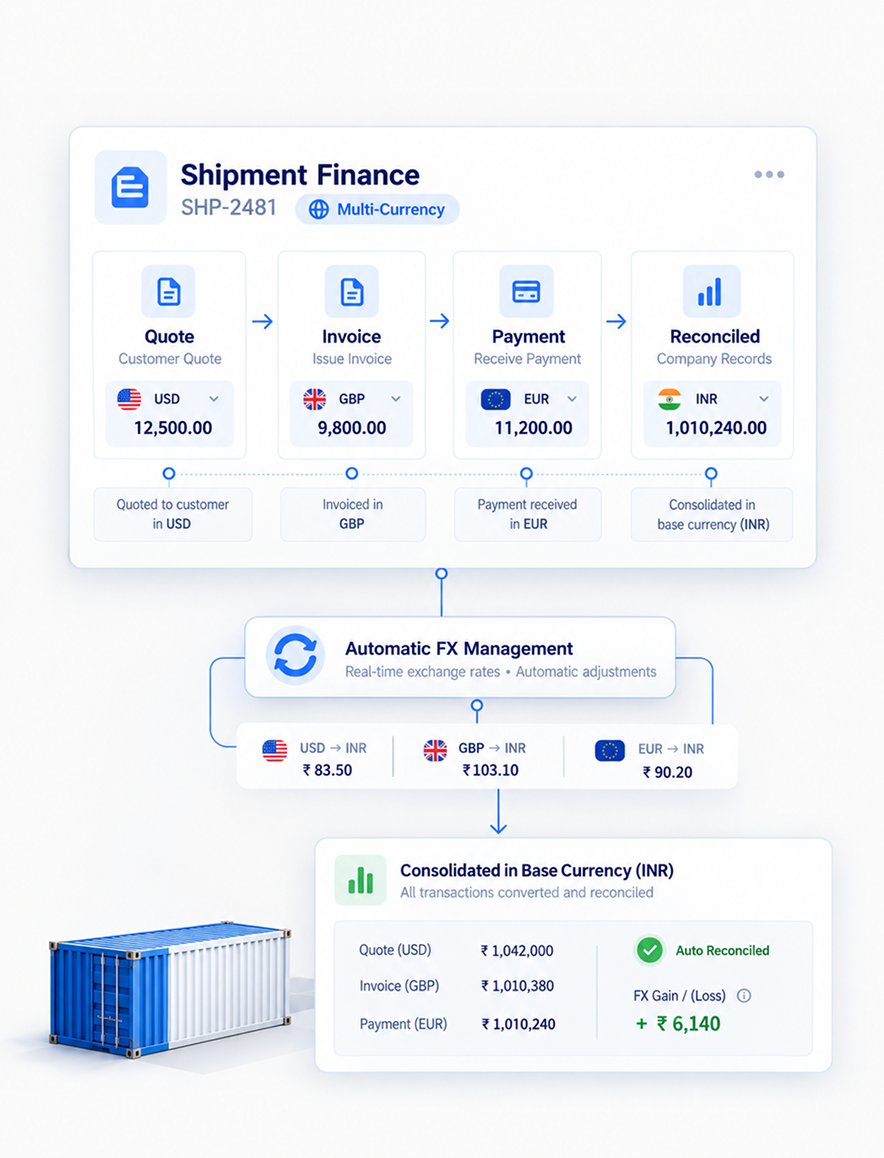
Three currencies on every line, FX gain and loss calculated automatically against the original transaction, and e-invoicing compliance across the mandates you actually file under.
Adding a currency takes one step: pick the ISO code and the live rate populates itself. You can also hold override rates for a specific currency pair where you need them. When a payment settles against an existing customer or supplier invoice at a different rate, the FX gain or loss is calculated automatically. Where a rate is missing entirely, posting stops and says so rather than converting at parity.
At close, cash, receivables, payables and other monetary accounts revalue per account, party and currency, with a chance to adjust the closing rate before anything posts, which resolves most FX exposure in a single prepared journal. Multi-entity setups report separately and consolidate cleanly, with receipts spanning branches posting into each branch’s own books. Reports and documents render in English, Arabic, Russian and other languages out of the box. E-invoicing covers GST, VAT and ZATCA, alongside mandates like Brazilian NFS-e and Egyptian e-invoicing.



Integrated Usually Means Exported and Reconciled. Embedded Means One Record.
A real GAAP-compliant ledger, built from the charge lines that already run operations, with the accruals, period locks, console splits and multi-currency posting that freight specifically requires.
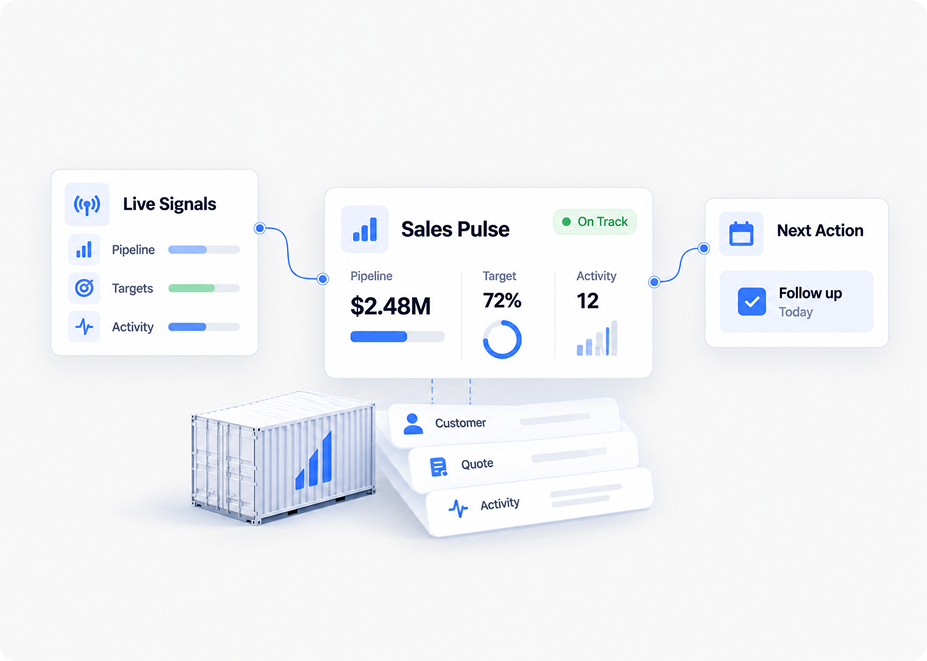
Most platforms claiming integrated accounting mean operations exports to finance and somebody reconciles the two. That’s an integration, and integrations drift.
Shipthis means something narrower and more useful: the ledger is written from the same charge lines that run the shipment. Approve an invoice and the full posting sequence follows. Close a month and it stays closed. Ask for job margin and the ledger already knows. That’s the difference between accounting that sits beside your operations and accounting that is your operations.
Your Chart of Accounts and Open Balances, Migrated, Not Rebuilt
A dedicated implementation team brings your accounts, balances and live jobs across, so your finance team closes its first month in Shipthis without starting from zero.
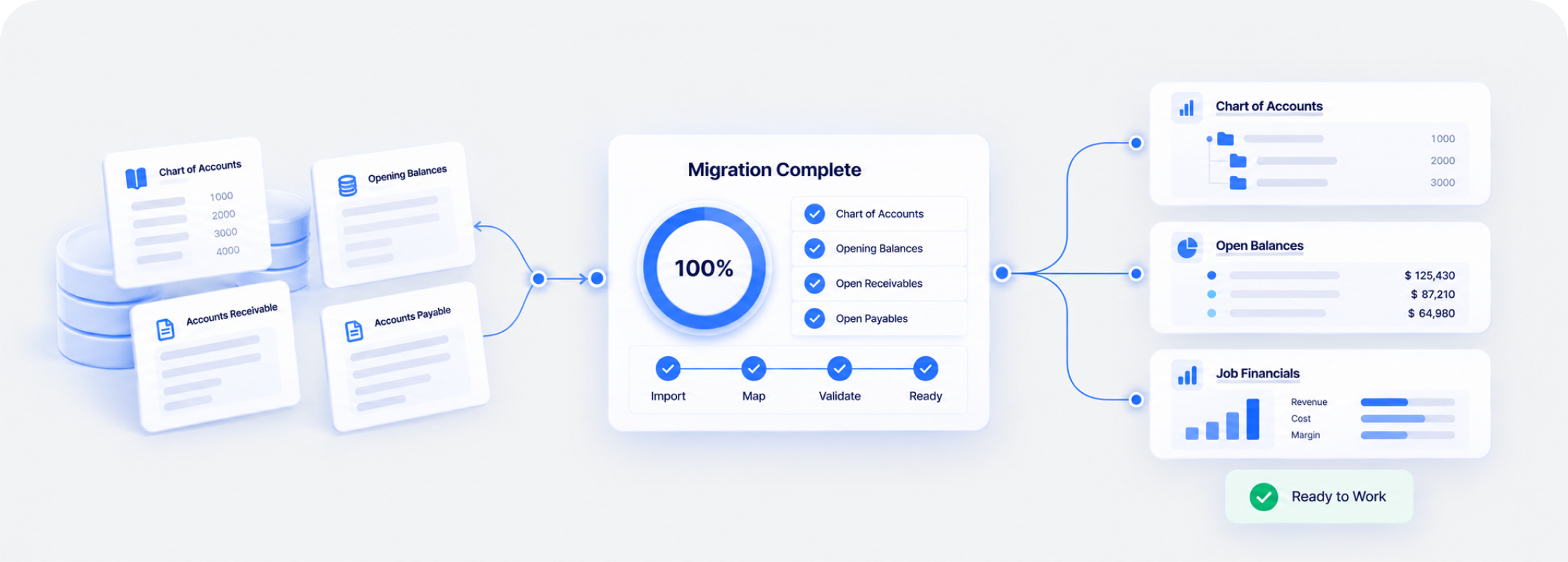
Accounting migration isn’t operational migration: open receivables, payables and jobs mid-cycle can’t pause. Implementation brings across your chart of accounts, opening balances and in-progress jobs, and trains your finance team on the postings and reports they’ll actually use. Most customers are fully operational within 9 weeks.

Bring a Month You’ve Already Closed. Let’s Walk It Through.
The accrual release, the revaluation, the trial balance at the end, on your own numbers, not a demo dataset.
A walkthrough on a month you’ve already closed is the fastest way to know whether this holds up. Prefer to explore first? A free 30-day trial gives your team hands-on access with no commitment.

Accounting & Financial Management Questions, Answered
A real double-entry ledger. Balanced entries checked as they post, with a full journal behind every job.
It’s written from the same charge lines that run the shipment, with cost and revenue on each line, in their own currencies. Invoices, costings and accruals all come from the job itself.
The full sequence posts automatically: receivable, revenue by sale book, tax and withholding, the open-item row with its due date, and the job’s updated margin.
Yes. The estimate posts as work in progress, and the same line clears it when the real vendor bill arrives. It is recomputed from scratch each time, so estimate and actual never double count.
The full sequence posts automatically: receivable, revenue by sale book, tax and withholding, the open-item row with its due date, and the job’s updated margin.
The full sequence posts automatically: receivable, revenue by sale book, tax and withholding, the open-item row with its due date, and the job’s updated margin.