
Every Shipping Document, Generated and Tracked Against the Shipment It Belongs To
Generate delivery orders, bills of lading, AWBs, arrival notices and every other document your shipments need, collect what customers and partners send you without the email back-and-forth, and know whether each document’s status is actually keeping pace with the cargo. Draft, issued, released, surrendered, tracked against the milestone it’s tied to.
No credit card required. Go live within 9 weeks. Implementation team included.
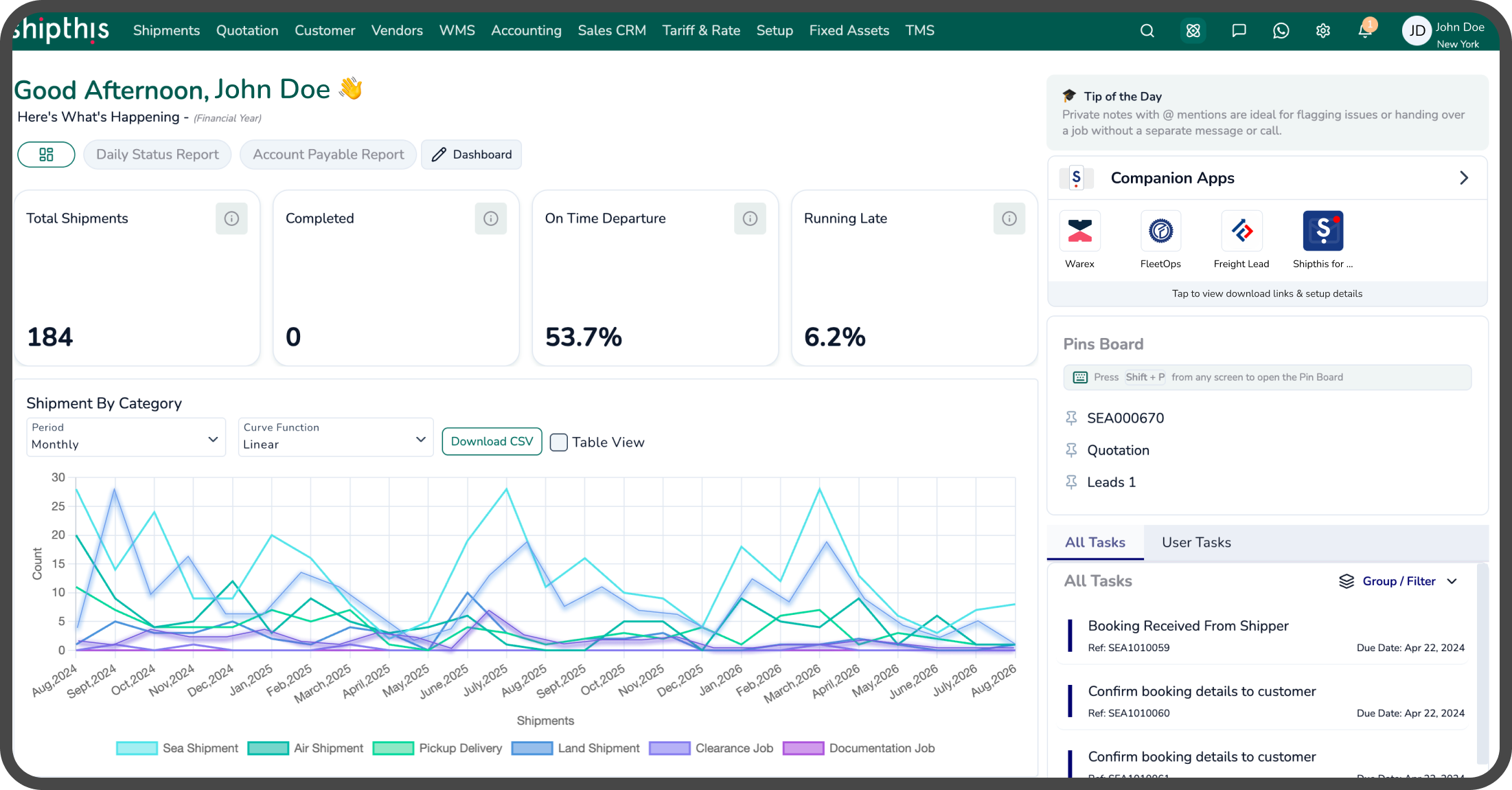



Producing and storing documents digitally solves half the problem. The other half is knowing whether a document’s status still matches where the shipment physically is.
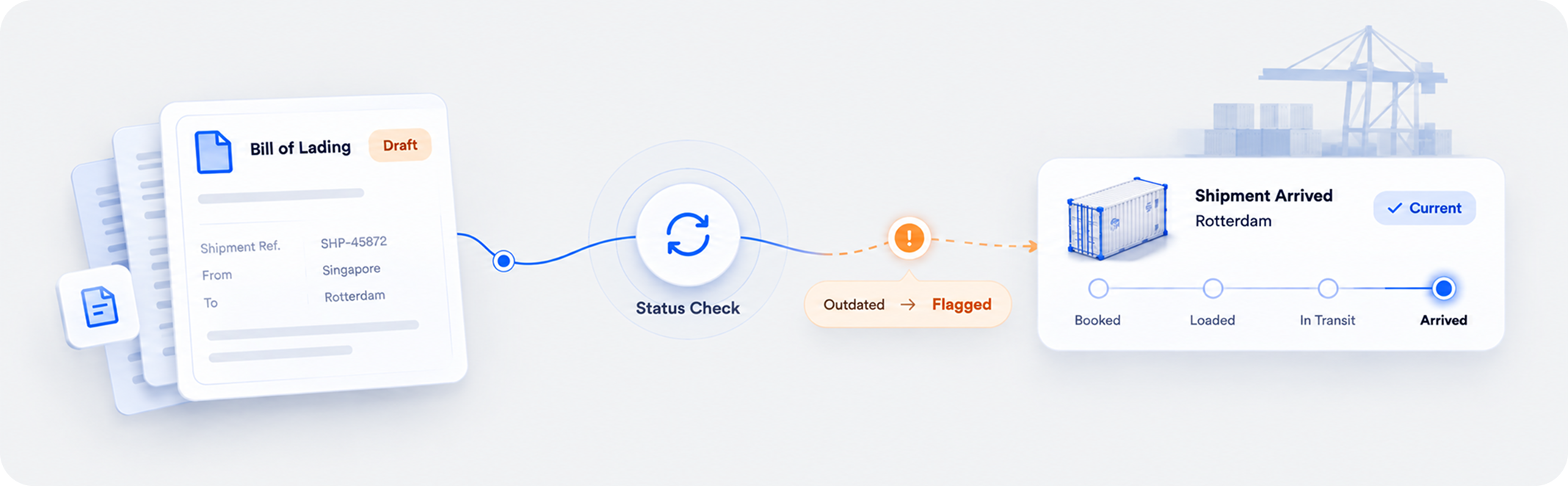
Generating documents, storing them and letting customers drop theirs into a portal solves the paperwork half of the problem. It doesn’t answer the question that actually costs money: is this document’s status still accurate, or has the shipment moved past it? A bill of lading sitting in Draft while the container’s already arrived isn’t a filing problem, it’s a demurrage bill waiting to happen. Shipthis tracks document status against the shipment milestone it corresponds to, so the gap is visible the moment it opens, not at the terminal.


Delivery Orders to Arrival Notices, Generated Inside the System
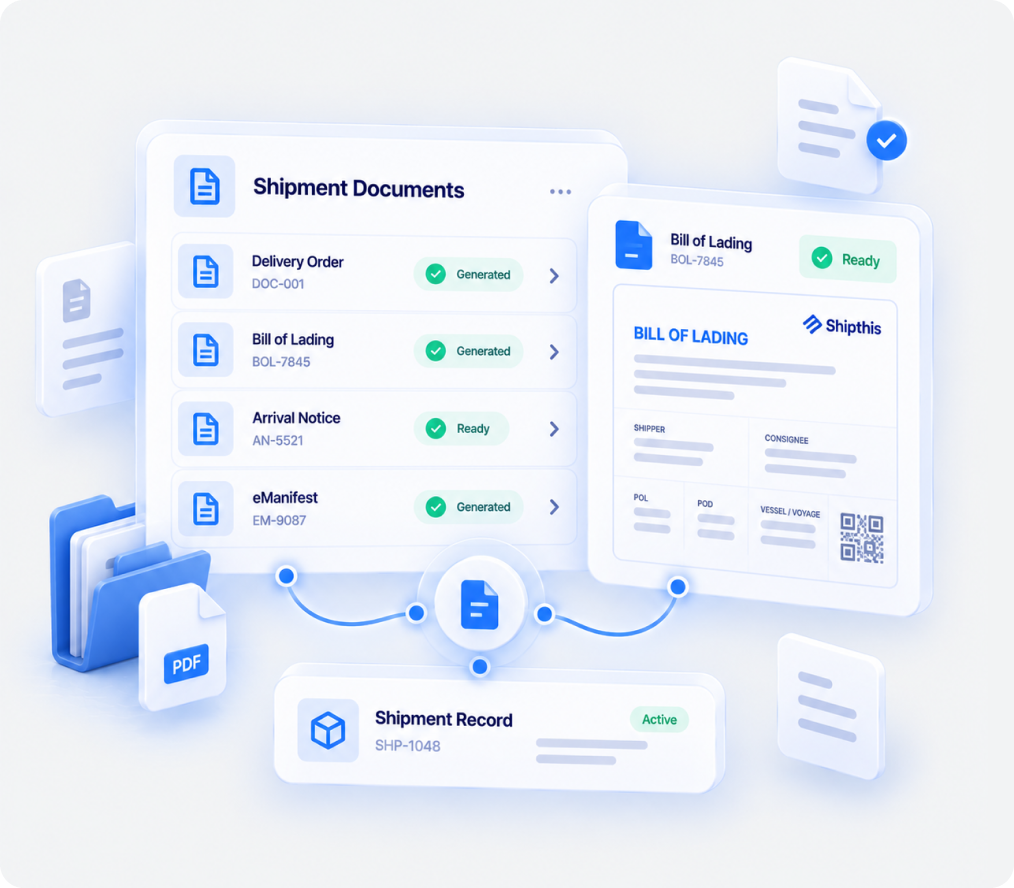
Delivery orders, eManifest HBLs, bills of lading, eAWBs, MAWBs, eHBL close message documents, arrival notices, pre-alerts, and more. Generated as ready-to-go, regulation-compliant documents for every shipment.
Whatever document a shipment needs, Shipthis generates it directly from the shipment record using a built-in PDF generator, from a delivery order or eManifest House Bill to a Bill of Lading, eAWB, Master AWB, eHBL close message, arrival notice or pre-alert. Each is customised and regulation-compliant for wherever the cargo is moving, whether local or crossing several borders.
Four Statuses. Four Milestones. Four Reasons Each One Matters.
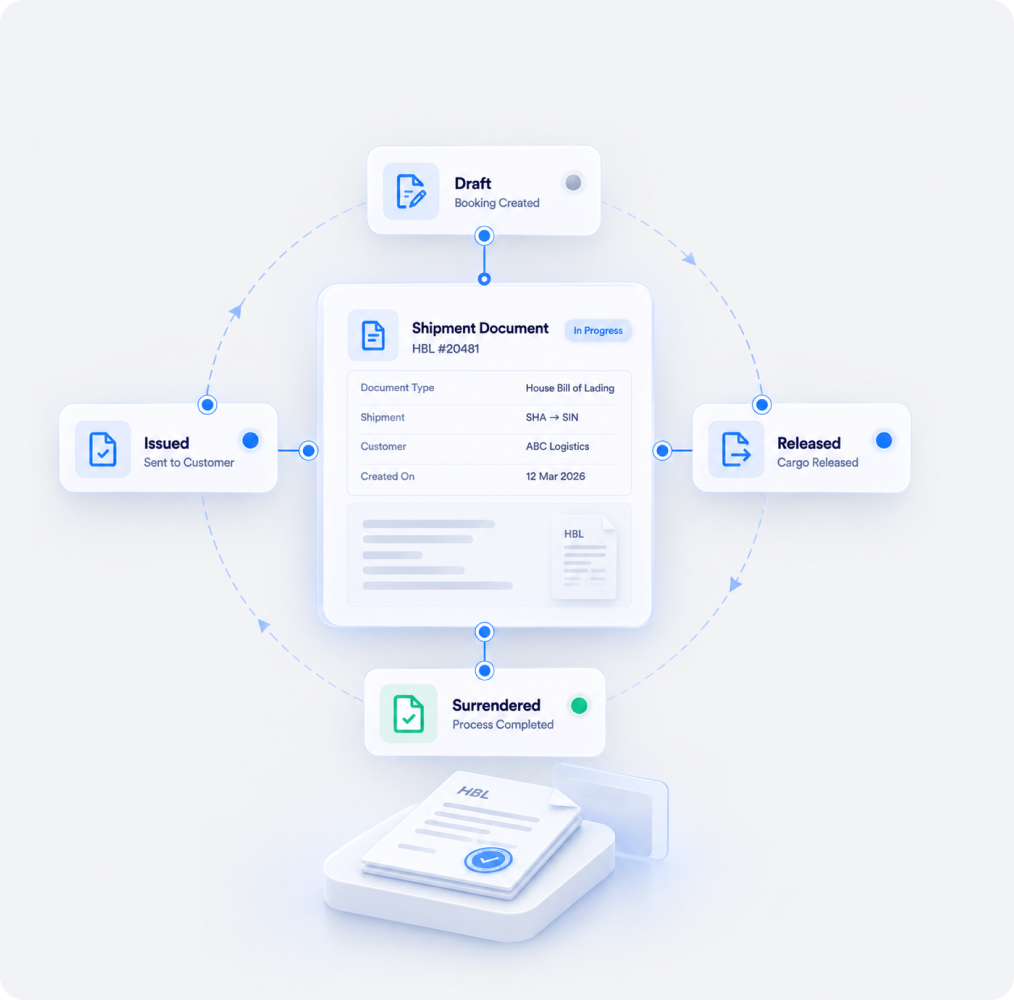
Draft ties to booking confirmed, issued to vessel departed, released to arrival at destination, surrendered to cargo ready for delivery, each pairing serving a specific operational purpose.
Draft maps to booking confirmed or origin pickup, verifying data before cargo departs. Issued maps to vessel departed (ATD), confirming ownership and weight for transit. Released maps to arrival at destination port (ATA), triggering customs entry and import processing. Surrendered maps to cargo ready for delivery, authorising the terminal to release goods to the trucker.
A Master Document Waits for Its Houses, Automatically
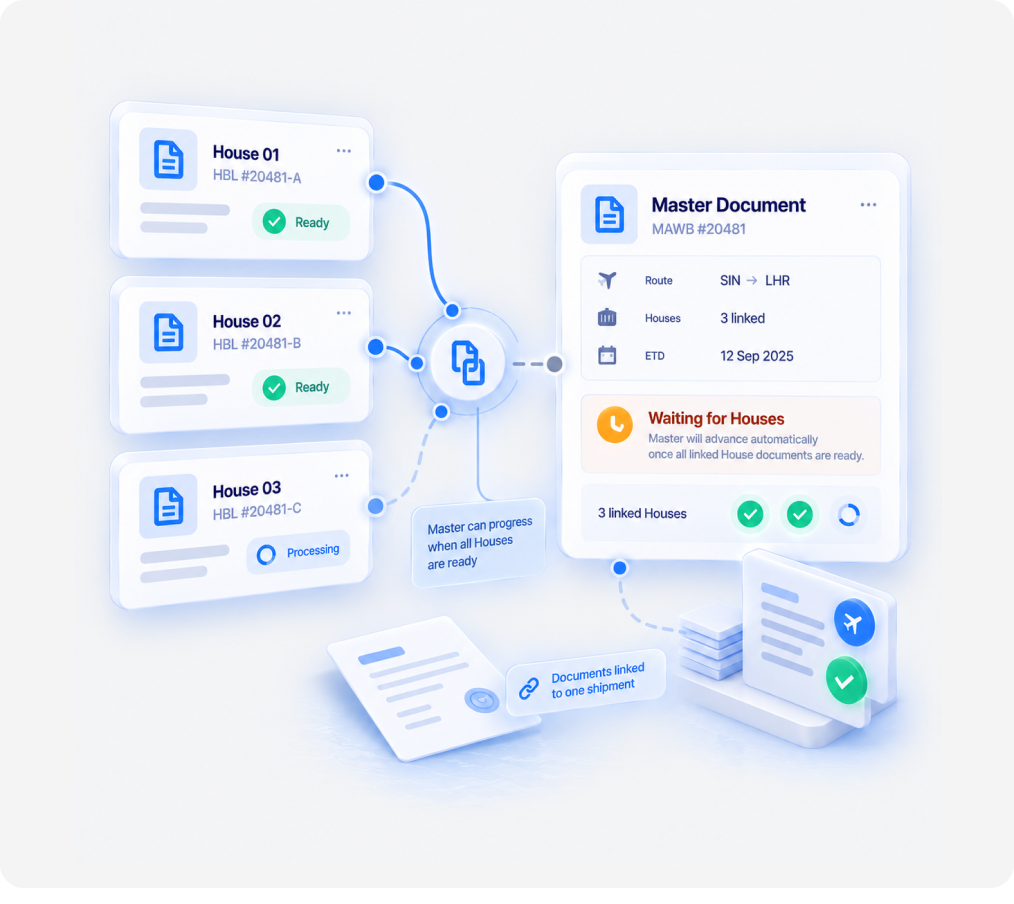
In a consolidation, a Master document’s status isn’t independent of the House documents riding inside it. It can’t reach its next stage until every linked House reaches the status it needs to. Shipthis enforces that dependency directly, blocking the Master’s status transition until its Houses catch up and closing the gap where a consol’s paperwork gets ahead of itself.
Every Document Your Customers Send, Attached to the Shipment, Not Buried in an Inbox
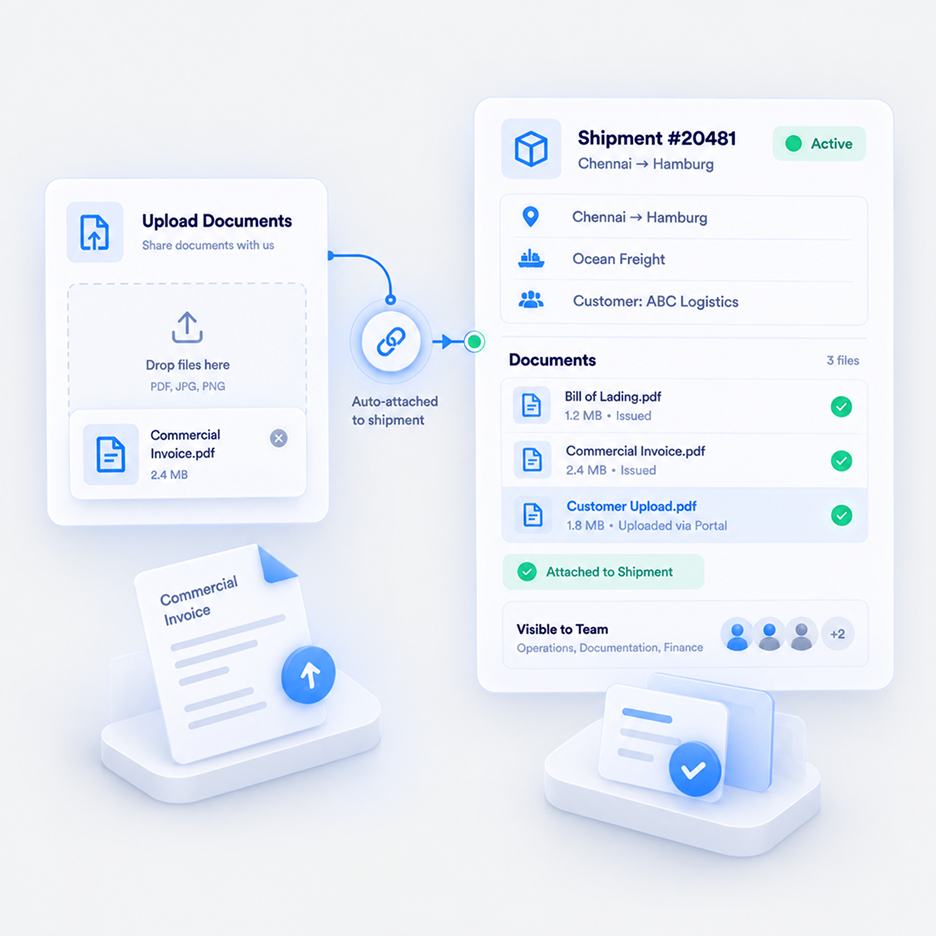
Customers drag and drop documents directly into the portal, contextual to the shipment, visible to everyone who needs them.
Customers and other stakeholders drag and drop documents straight into the portal, attached to the specific shipment they belong to, not forwarded through an email thread that only some people are on. Every document uploaded, by either side, is visible to both and connected to the shipment automatically.
The Data Behind the Document Doesn’t Get Retyped
Which milestone triggers which alert, email, or task is configured by mode, shipment type, or customer — matching how your business actually runs, not a template everyone gets by default.
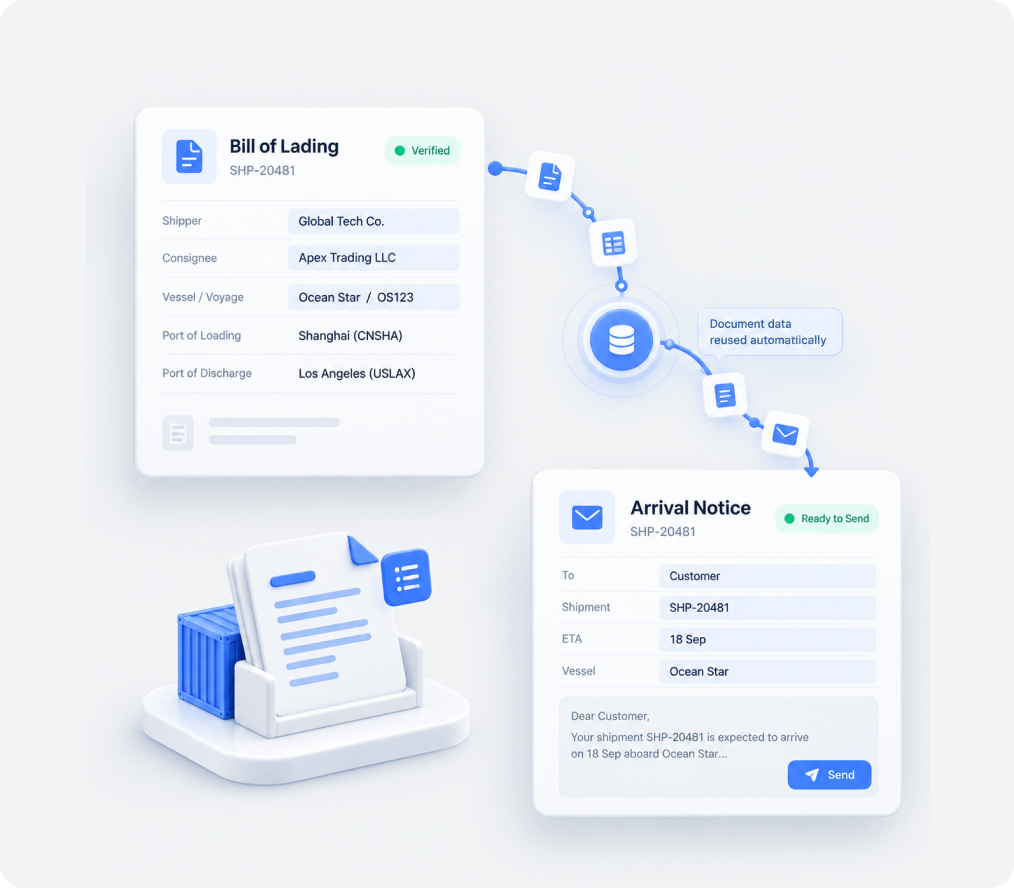
Once a document exists in the system, its data doesn’t need retyping into an email or another form. Shipthis retrieves it instantly and attaches it automatically to outgoing communications directly from the shipment record, removing the duplicate entry that eats time and introduces errors.
A Milestone Doesn’t Just Update a Status. It Can Send the Document Too.
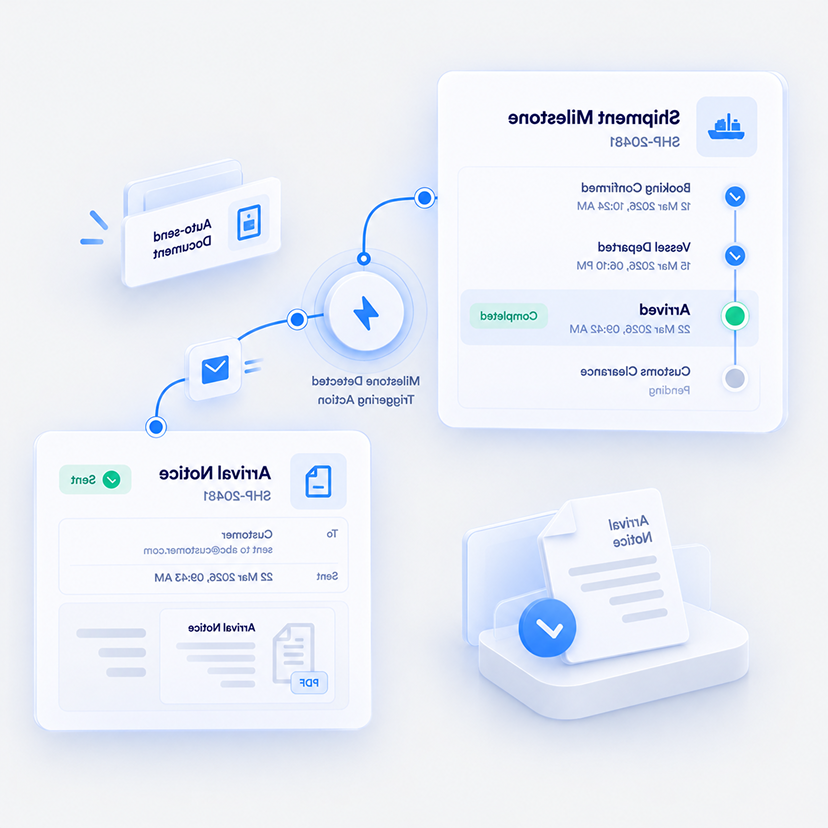
Documentation doesn't have to be a separate manual step from the shipment's actual progress. Built into Shipthis Workflow and Productivity Management, sending and receiving documents can trigger automatically around shipment milestones. An arrival notice goes out the moment a shipment arrives and a pre-alert sends ahead of departure, not a manual task someone remembers to do.


Generating Documents Is Common. Preventing the Fee They Can Cause Isn’t.
Generation, collaboration, paperless reuse, and status tracked, mismatched, and enforced against real milestones. One connected system, not a pile of separate document features.
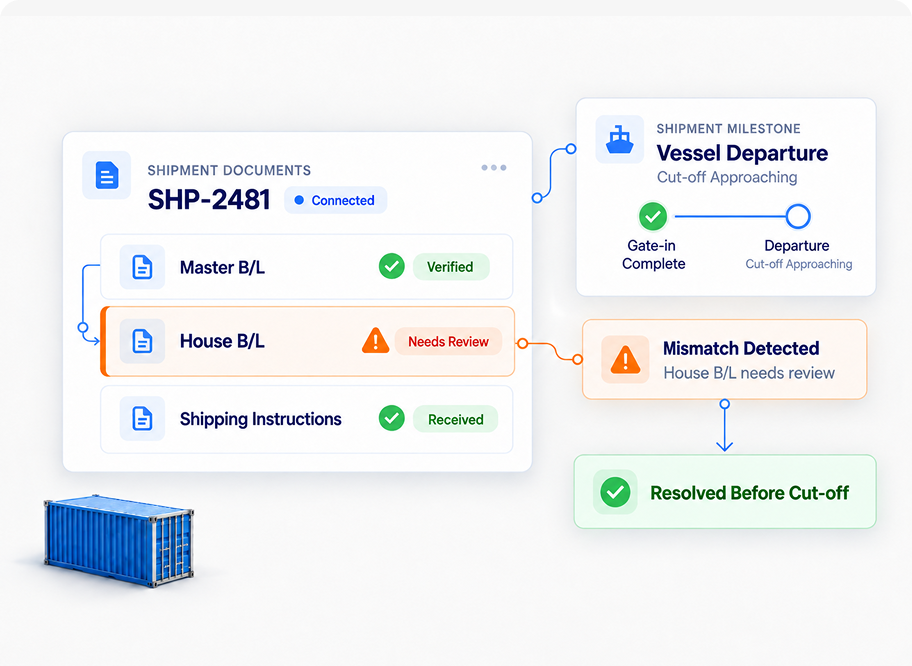
Most platforms can generate and store a document. Fewer let customers drop theirs in without an email thread. Almost none tell you whether a document’s status still matches where the shipment is, catch that mismatch before it becomes a fee, enforce the Master/House dependencies that keep a consol’s paperwork honest, or make sure your broker and carrier see the same fact you do. Shipthis does all of it from the same shipment record, so documentation isn’t just digitised, but accurate, current and connected to the cargo’s physical progress.
Your Document Templates, Brought In, Not Rebuilt From Scratch
A dedicated implementation team brings over your templates and live consolidations, so documents are generated and tracked correctly from your first shipment.
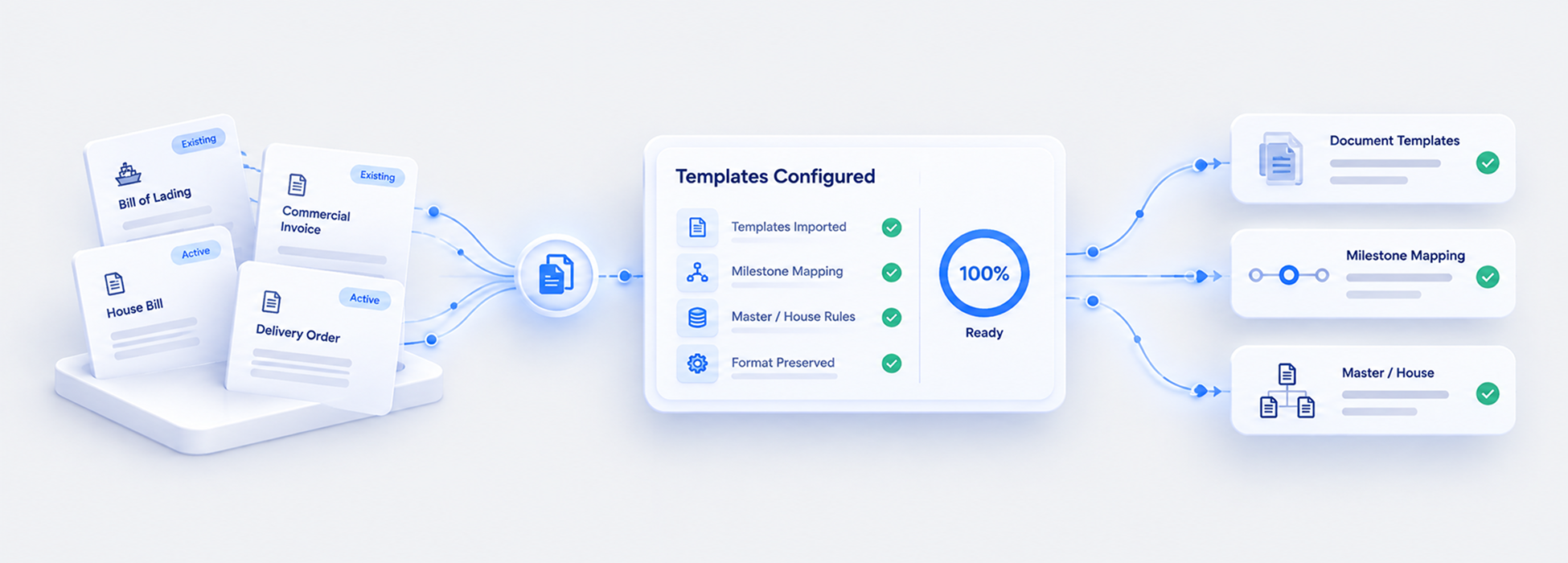
Implementation migrates your existing document templates and formats, maps them to the milestone pairings relevant to your operation, and carries over active consolidations so Master/House dependencies are enforced from day one, not configured gradually after go-live. Most customers are fully operational within 9 weeks.


See Whether Your Documents Are Actually Keeping Up
Book a walkthrough with your own document types and shipment milestones, or start a free trial and check the mapping yourself.
A demo can walk through your own document set and how status tracking would map to your actual milestones, not a generic script. Prefer to explore first? A free trial gives your team hands-on access with no commitment.

Document Management Questions, Answered
Delivery orders, eManifest HBLs, bills of lading, eAWBs, MAWBs, eHBL close message documents, arrival notices, pre-alerts, and more — generated as regulation-compliant PDFs from the shipment record.
Yes. Documents can be dragged and dropped directly into the portal, attached to the specific shipment, and visible to both sides.
Yes, through Workflow and Productivity Management — an arrival notice can send automatically when a shipment arrives, for example, connected to the same milestone tracking.
The Master's status transition is blocked until every linked House document reaches the status it needs to, so the dependency is enforced rather than tracked manually.
Yes. Forwarders, customs brokers, and carriers all work from the same shared status, rather than each tracking their own version.