.png)
From Booking to Return, the Same Container, the Same View
A container's life doesn't end when it's discharged, there's still return to track, and each stage tends to live in a different system or a different person's memory. Shipthis follows every container from booking through discharge, and return, in one continuous view, so your team never has to reconstruct where a container actually stands by piecing together updates from separate stages.
No credit card required. Go live in 9 weeks. Implementation team included.



.avif)
Detention charges, free days deadlines, and empty return delays accumulate after a container's already arrived, exactly where tracking usually gets thinner.
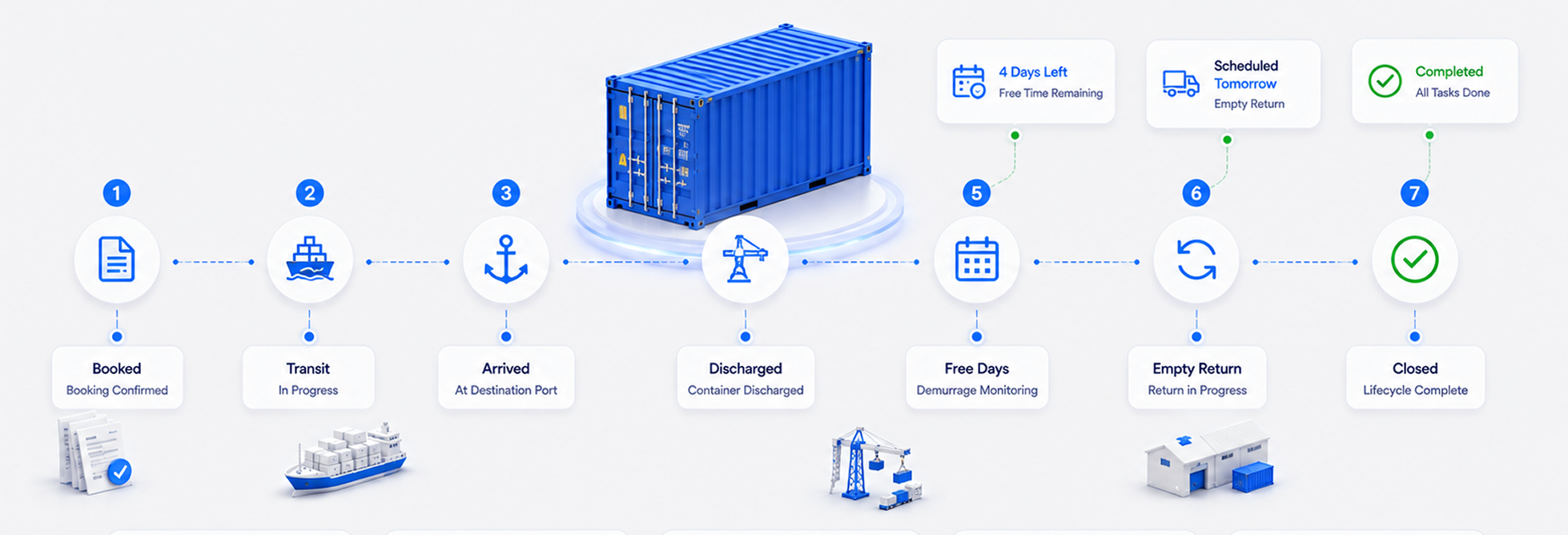
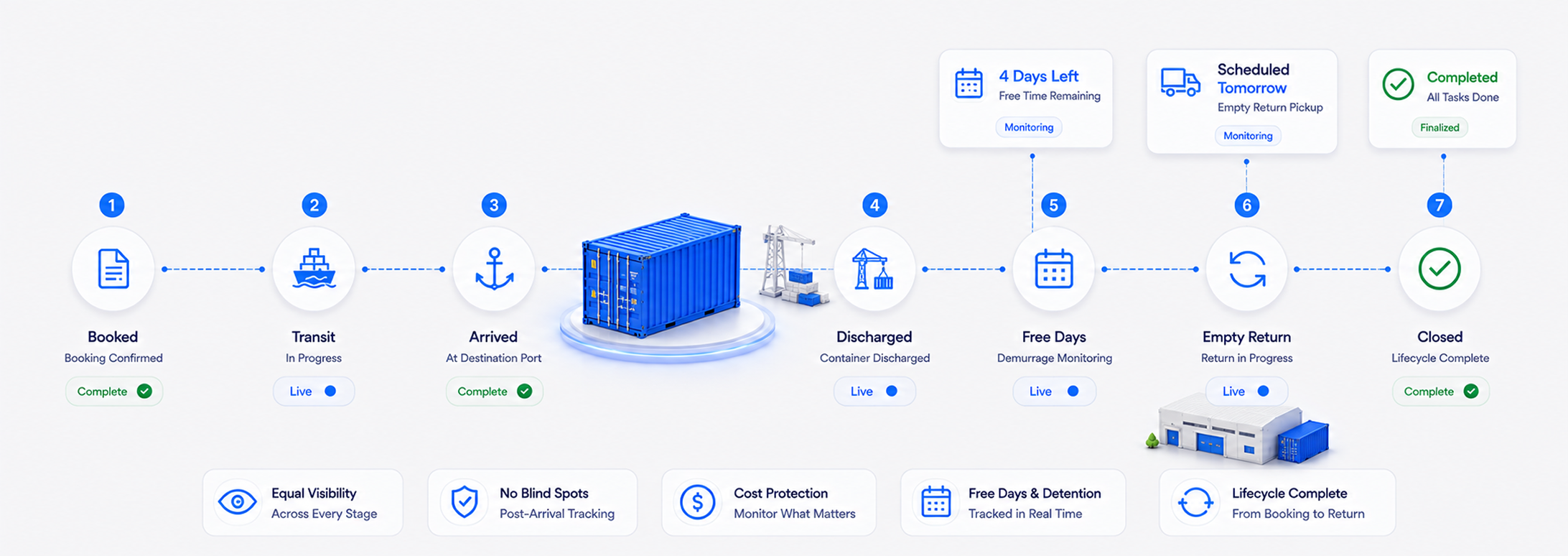
Transit tracking is the part of the container lifecycle most tools handle reasonably well, because it's the most visible stage and the one customers ask about most often. But detention charges, free days deadlines, and delays returning an empty container tend to accumulate after discharge, precisely the stage where visibility usually gets thinner, not stronger. Shipthis tracks the full lifecycle with equal attention at every stage, so the post-discharge period that drives a lot of avoidable cost doesn't become a blind spot just because it's less visible than the transit leg.


Booking, Gate-In, Loaded, In Transit, Vessel Arrived, Discharged, Returned, Named, Not Implied
Every stage of a container's journey tracked explicitly, so "full lifecycle" means a specific, checkable list of milestones, not a vague claim.
Booking confirmation, gate-in at origin, loaded on vessel, discharged at destination, moved from the terminal, and returned empty, each of these is a distinct milestone with its own timing and its own risk if missed. Shipthis tracks every one of them explicitly against the same container record, so a status check tells your team exactly which stage a container is at right now, not a general sense of "somewhere in transit" that doesn't distinguish between a container still on the water and one sitting unreturned past its return deadline.
.png)
.png)
The Tracking Doesn't Get Thinner Once the Container's Off the Ship
Return deadlines and empty return status tracked with the same attention as the transit leg, because that's where avoidable fees actually accumulate.
A container that's been discharged still has a deadline to meet and an empty return to complete, and missing either one usually means a fee that was entirely avoidable if someone had been watching. Shipthis keeps tracking a container through return with the same level of detail as the transit leg, so your team has a clear view of which containers are approaching a free days deadline or still awaiting empty return, instead of that visibility fading the moment the container leaves the vessel
Every Source, One Record, Not One More Place to Check
Carrier data, terminal updates, customs updates and internal records consolidate into a single shipment lifecycle, so nothing requires checking a separate system.
Different stages of a container's lifecycle naturally originate from different places, a carrier's system for vessel and discharge data, a terminal's system for gate and customs information, and your own internal records for booking and return confirmation. Shipthis consolidates all of it into a single lifecycle record, so a status check pulls from every source automatically instead of becoming one more system your team has to check alongside the others.
.png)
.png)
.png)
From Sign-Up to Full Shipment Lifecycle Tracking, in 9 Weeks
A dedicated implementation team connects carrier and terminal data sources and picks up containers already mid-journey without a gap in tracking.
Switching how containers are tracked shouldn't mean losing visibility on everything already in motion. Shipthis onboarding is built around that reality. Your carrier and terminal data connections are set up during implementation, and containers already in transit are picked up mid-journey rather than only starting tracking on new bookings going forward. Most customers are fully operational within 9 weeks.

Bring Your Own Active Containers. We'll Show You the Full Lifecycle Live.
Book a walkthrough with your own active containers tracking, or start a free trial and track one yourself.
A demo can walk through your own containers, at whatever stage they're actually at right now, not a generic script. Prefer to explore first? A free trial gives your team hands-on access with no commitment.

Book a demo or start your 30-day free trial — and talk to a real freight specialist, not a sales script.
Container Lifecycle Monitoring Questions, Answered
Booking, gate-in, loaded on vessel, discharge, and empty return, each tracked explicitly as its own milestone against the same container record.
No. Return status is tracked with the same level of detail as the transit leg, since that's where detention and late-return fees typically accumulate.
Carrier systems, terminal systems, and your own internal records are consolidated into a single container record, rather than requiring separate checks across each source.
Yes. Implementation connects your carrier and terminal data sources and picks up containers already mid-journey, not just new bookings going forward.
Most container tracking tools focus on the transit leg and taper off after discharge. Shipthis treats every stage, including dehire and return, with equal attention throughout the full lifecycle.