
Every Contracted Rate, Tracked, So None of Them Quietly Expire
Contracted rates with carriers, airlines and port operators, and pre-negotiated agreements with your vendors, both stored, versioned, and applied automatically wherever they belong in a quote, with expiry alerts before either one lapses unnoticed.
No credit card required. Go live in weeks, not months. Implementation team included.



.avif)
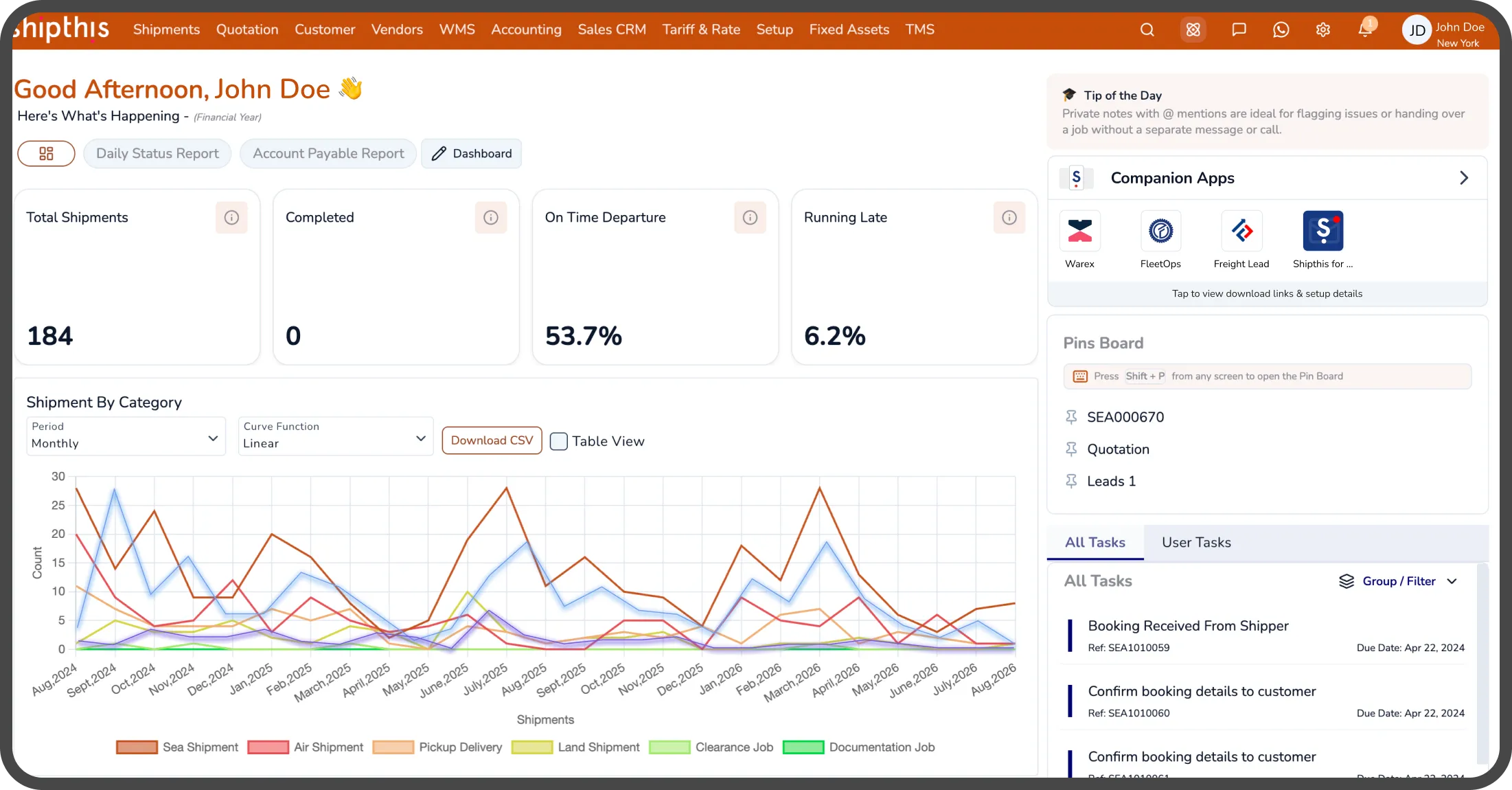
Contracted rates stored as static files get treated as reference material, not as time-bound data that needs active tracking as it approaches expiry.
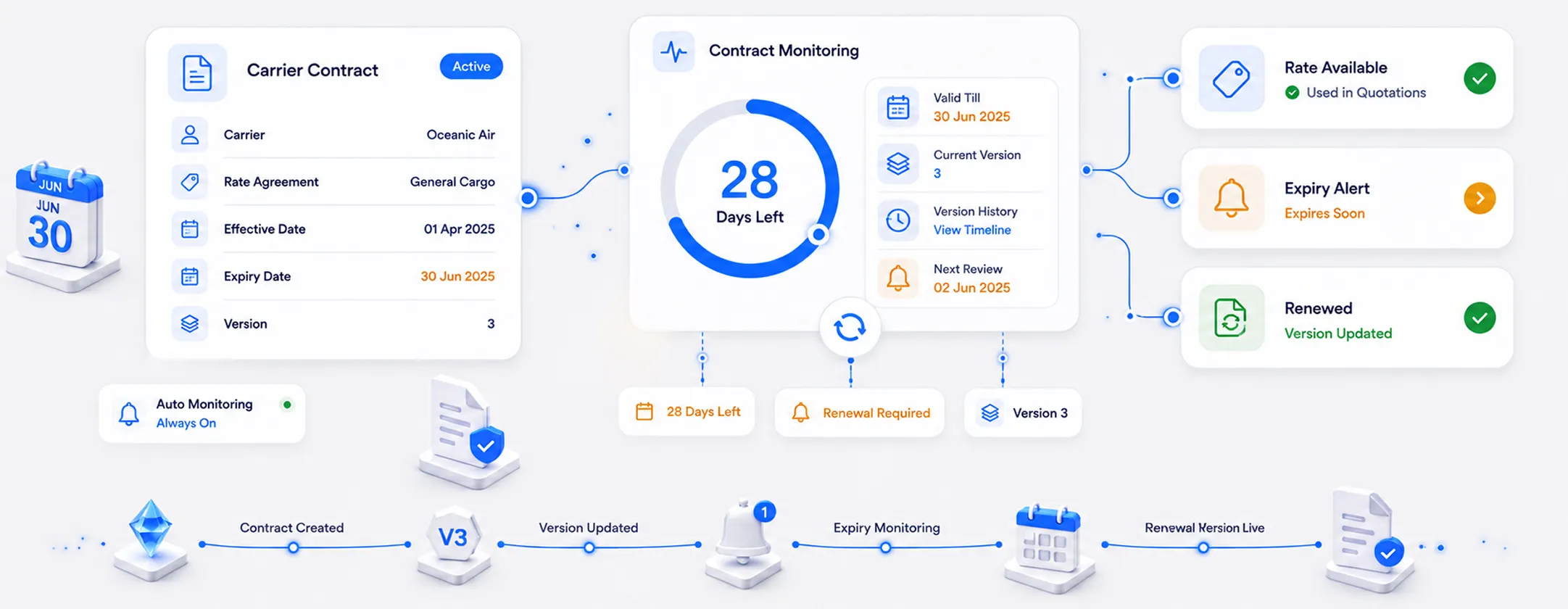
Most forwarders have contracted rates on file — with carriers, with customers — but once a contract is signed and filed away, it tends to get treated as reference material rather than active data. Nobody's watching the calendar for when a specific carrier agreement expires, or when a customer's pre-negotiated rate needs renegotiating before it lapses into whatever the default rate happens to be. Shipthis treats every contracted rate as time-bound data from the start — stored with its validity period, versioned as it's renegotiated, and actively flagged as it approaches expiry, so a contract's status is something the system tracks, not something someone has to remember to check.


Every Vendor's Contracted Rate, Ready to Quote Against
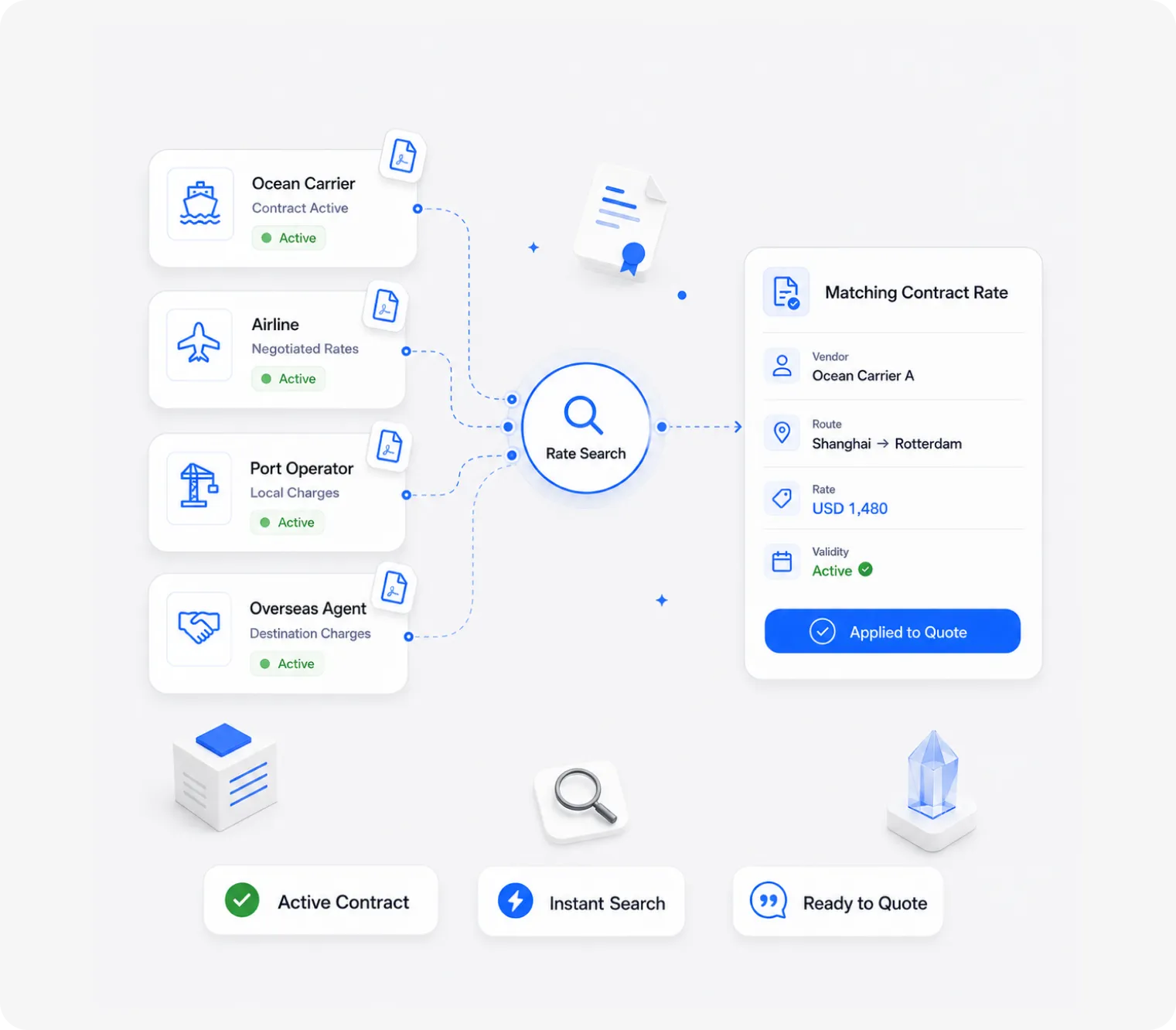
Carrier, airline, Overseas Agent and port operator contracts stored and queryable directly from the same rate search your pricing team already uses.
Negotiated rates from every vendor, ocean and air carriers, port and terminal operators, local charge providers, are stored in the same system your pricing team already searches for rates, so a contracted rate is one query away during quoting, not a separate lookup in a different file. When your team responds to an RFQ, the response can be built directly from these contracted rates using the same rate search functionality used for spot and other rate types.
Your Customer's Agreed Rate, Applied the Same Way Every Time
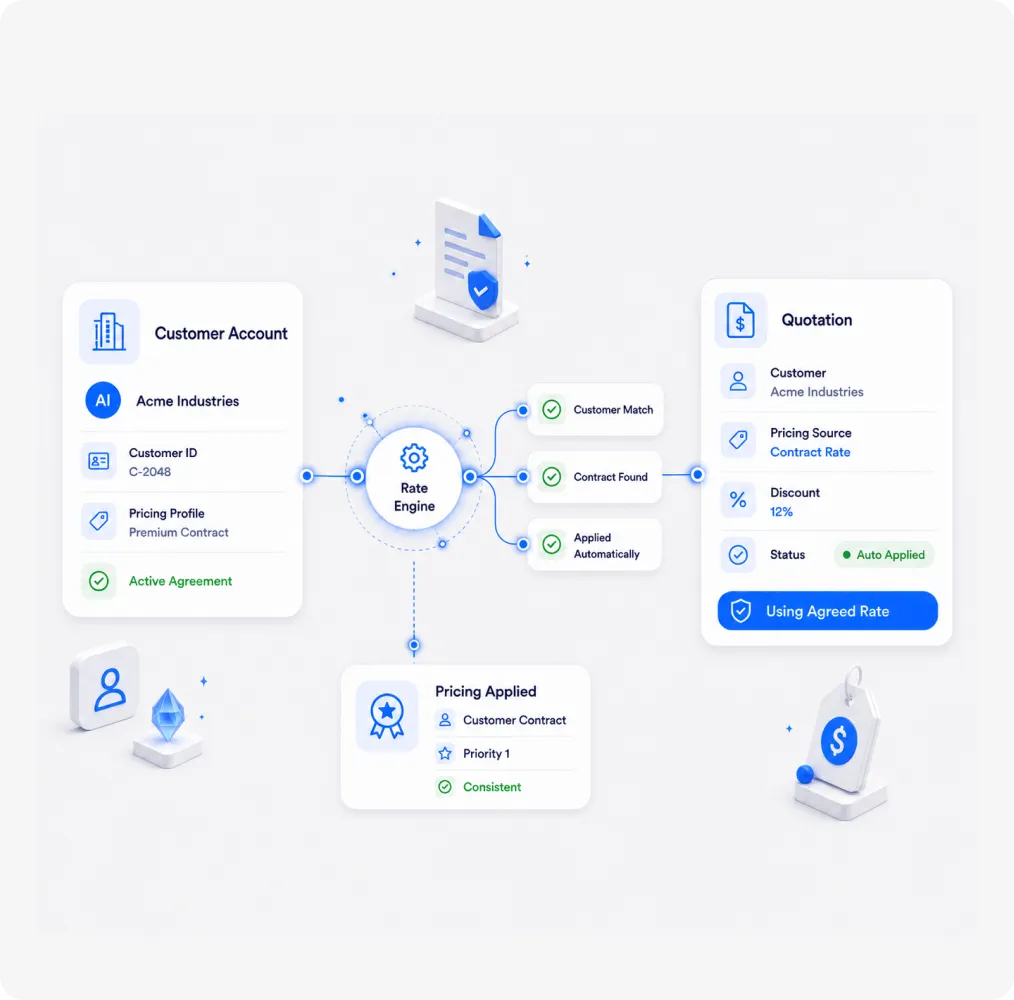
Pre-negotiated customer rates stored and prioritized automatically during quote generation, consistent pricing that doesn't depend on who's building the quote.
A pre-negotiated customer rate is only as reliable as the consistency of applying it, and consistency is hard to guarantee when it depends on whichever pricer happens to remember the specific terms of that account. Shipthis stores pre-negotiated rates against each customer and applies them automatically during quote generation, so pricing stays consistent with what was actually agreed, regardless of who's building the quote or how well they remember that particular customer's terms.
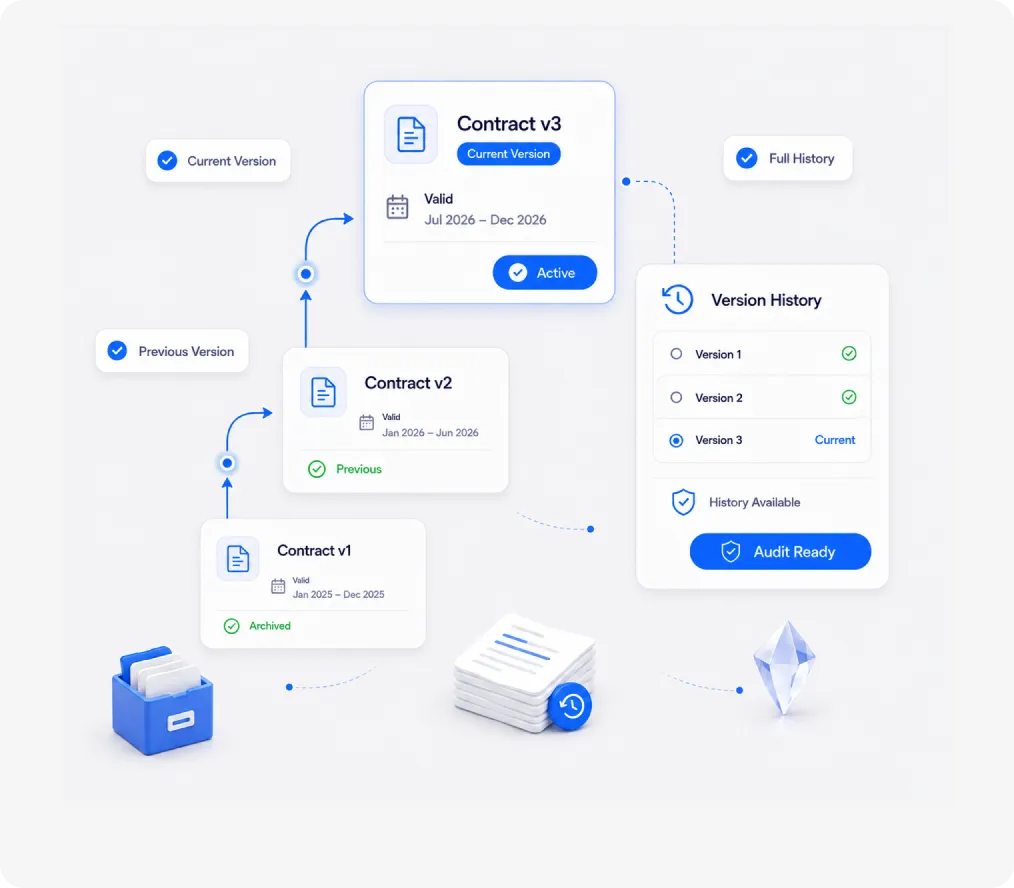
Renegotiated Doesn't Mean Erased
Every contract version preserved with its own validity range, so historical terms stay available even after a renegotiation.
A contract renegotiation shouldn't overwrite the record of what the previous terms were, that history matters for resolving disputes about a shipment quoted under the old terms, understanding how a customer's or vendor's pricing has moved over time, and simply having an accurate audit trail. Shipthis maintains every contract version with its own defined validity range, so renegotiating a rate creates a new version rather than erasing the old one, and the full history stays queryable whenever it's needed.
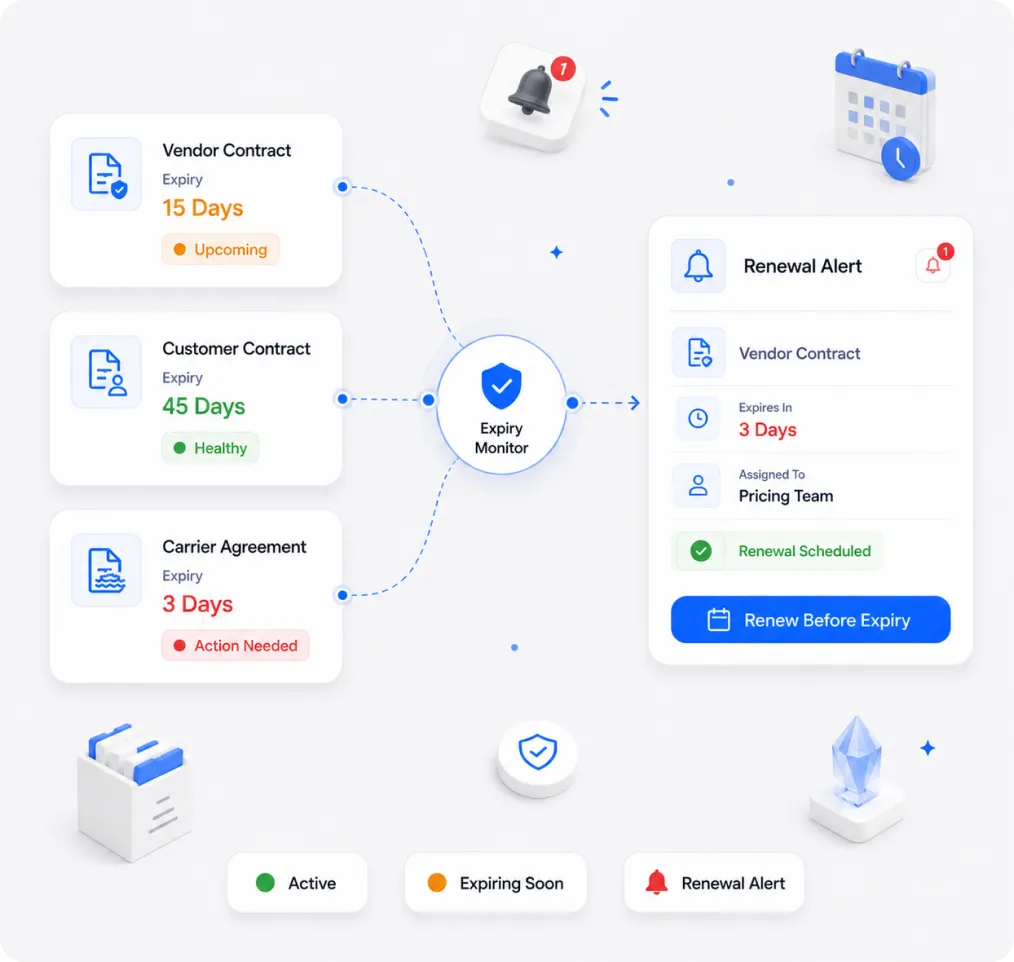
Know a Contract Is Expiring Before It Actually Does
Automatic alerts as a vendor or customer contract approaches its expiry date, so renegotiation happens on your schedule, not after the fact.
The moment a contract lapses without anyone noticing, two things can go wrong: quotes start going out on rates that are no longer accurate, or a renewal window closes before anyone got around to renegotiating. Shipthis flags contracts automatically as they approach expiry, giving your team advance notice to renegotiate a vendor agreement or reach out to a customer before the current terms simply run out, turning contract renewal into a scheduled task instead of something discovered after it's already a problem
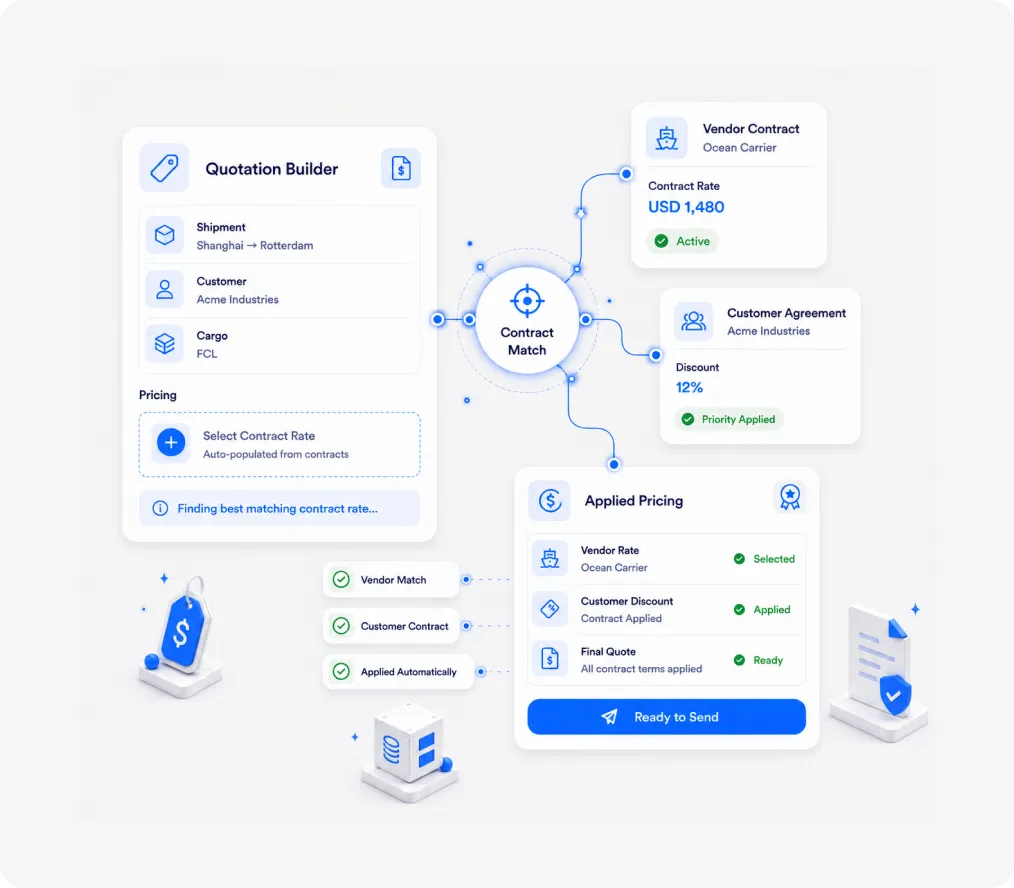
Contracted Rates, Built Into the Quote — Not Checked Separately From It
Every applicable vendor and customer contract rate surfaces directly in the quote response screen, ready to apply.
Contract storage only pays off if it actually speeds up quoting, not if it becomes one more system a pricer has to check separately. Shipthis surfaces the relevant contracted rates, vendor and customer, directly within the quote response screen, so building a quote off a pre-negotiated agreement means selecting it, not searching for it in a different part of the platform or, worse, in a filing cabinet.


The Rate Library Your Contracts Live In
Contracted rates sit alongside every other rate type, uploaded by AI, searchable across modes, and marked up automatically.
AI-Based Rate Upload
AI reads tariff sheets from carriers, PDF, Excel, or email, and converts them into structured, ready-to-use rate tables automatically, no manual entry.
Every Mode, One Rate System
FCL, LCL, air, rail, and road rates all stored and managed in one place, not split across separate tools per mode.
Local & Port Charges Included
Terminal, documentation, handling, CFS, and drayage charges captured alongside the base rate, not tracked separately.
Automated Margin & Markup Rules
Fixed, percentage-based, tiered, or conditional pricing logic calculates the sell price from your cost rate automatically.
Invoice Charge Templates
Reusable bundles of charges for a specific customer, mode, or lane, inserted instantly during quoting or invoicing.
One Rate Search Engine, Every Mode
Search tariffs by lane, carrier, or service type across every mode from a single search.
Automatic Volumetric & Weight-Break Conversion
LCL and rail rates calculated with weight and volume conversions handled automatically, no manual math.
Lane-Based and Zone-Based Pricing
FTL priced by lane and vehicle type, LTL priced by zone and weight slab, matched to how each mode actually prices freight.



Not a Filing Cabinet for PDFs. An Active Part of How You Quote.
Vendor and customer contracts, versioned, alerted before expiry, and surfaced directly in the quoting workflow — not a document repository that happens to hold contracts.
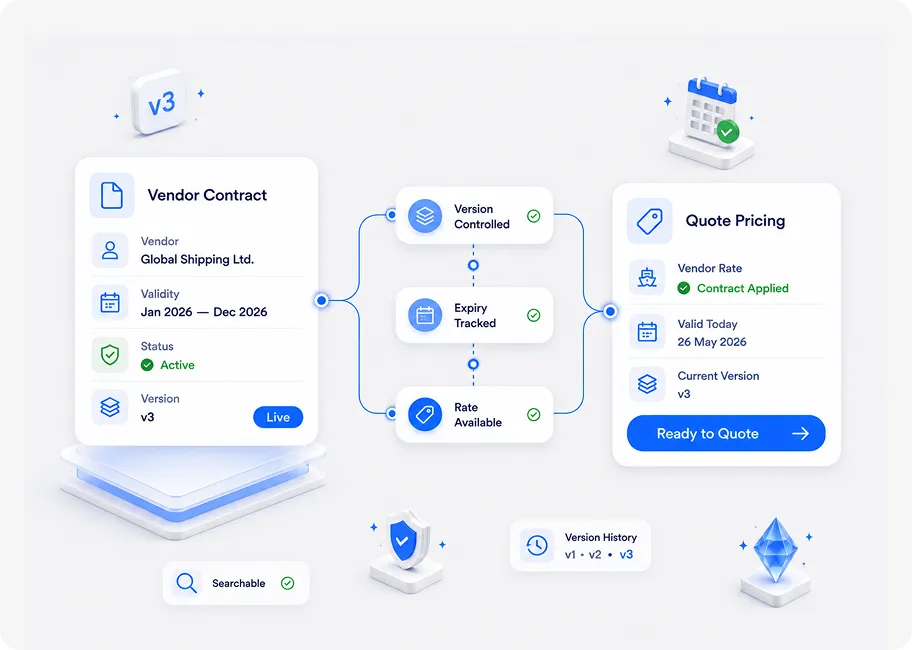
Uploading a contract as a PDF and calling it "managed" doesn't solve the actual problem. The risk was never that the document didn't exist somewhere, it was that nobody was tracking its terms actively. Shipthis treats every contracted rate, vendor and customer side, as structured, time-bound data: versioned as it changes, flagged automatically before it expires, and surfaced directly in the quote response screen where it actually gets used. That's the difference between contract storage and contract management.
Bring Your Existing Contracts In, However They're Currently Stored
A dedicated implementation team migrates your existing vendor and customer contracts into structured, tracked records with expiry dates captured from day one.
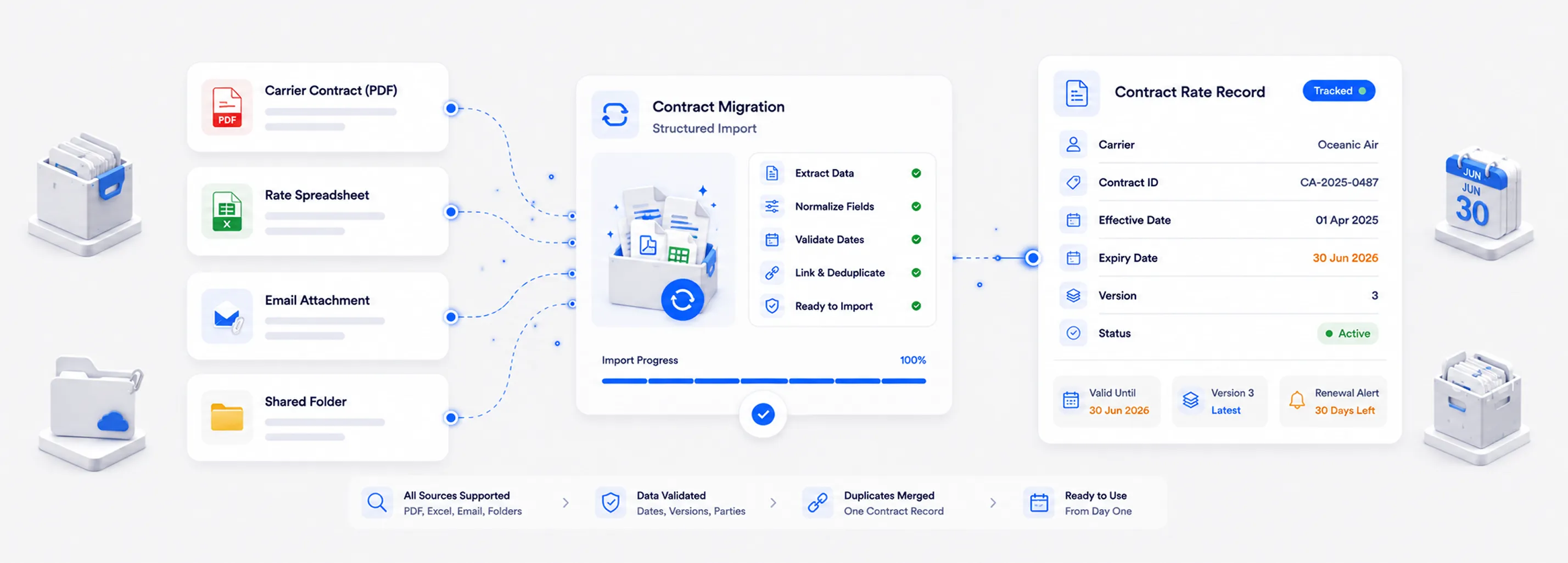
Most forwarders' contracts exist today as signed documents with no structured expiry tracking behind them, exactly the gap this page is built to close. Shipthis onboarding is built around that reality. Existing vendor and customer contracts are migrated and structured, with validity dates captured so expiry alerts start working immediately, not months after go-live once someone gets around to entering them. Most customers are fully operational within 9 weeks.

Find Out How Your Contracts Rates Translates to Quotation Response
Book a walkthrough with your own carrier rates, or start a free trial and see your contract rates are tracked yourself.
A demo can walk through your own mix of vendor and customer contracts — not a generic script. Prefer to explore first? A free trial gives your team hands-on access with no commitment.

Book a demo or start your 30-day free trial — and talk to a real freight specialist, not a sales script.

Contract Rate Management Questions,
Answered
Both. Vendor contracts (carriers, airlines, port operators) and customer-specific pre-negotiated rates are both stored, versioned, and tracked to expiry.
Every contract carries a validity period, and the system flags it automatically as it approaches expiry, giving your team advance notice to renegotiate before the current terms lapse.
The previous version is preserved, not overwritten. Every contract version is stored with its own validity range, so historical terms remain available for audit or dispute resolution.
They surface directly in the quote response screen alongside other rate types, so applying a contracted rate means selecting it, not searching for it separately.
Yes. Implementation includes migrating existing vendor and customer contracts and structuring their validity dates, so expiry alerts start working from day one.
Yes. Implementation configures group quote structures around your existing customer groups and common multi-lane requests.