Every Mode. Every Rate. One Library, Not Five Spreadsheets.
Sea FCL and LCL, air freight, rail FCL and LCL, land FTL and LTL, each with its own tariff structure, its own surcharges, its own local and port charges. Shipthis centralizes all of it into one rate library, with automatic surcharge detection and validity controls, so pricing a shipment never depends on which spreadsheet someone remembers to check.
No credit card required. Go live in 9 weeks. Implementation team included.



.avif)
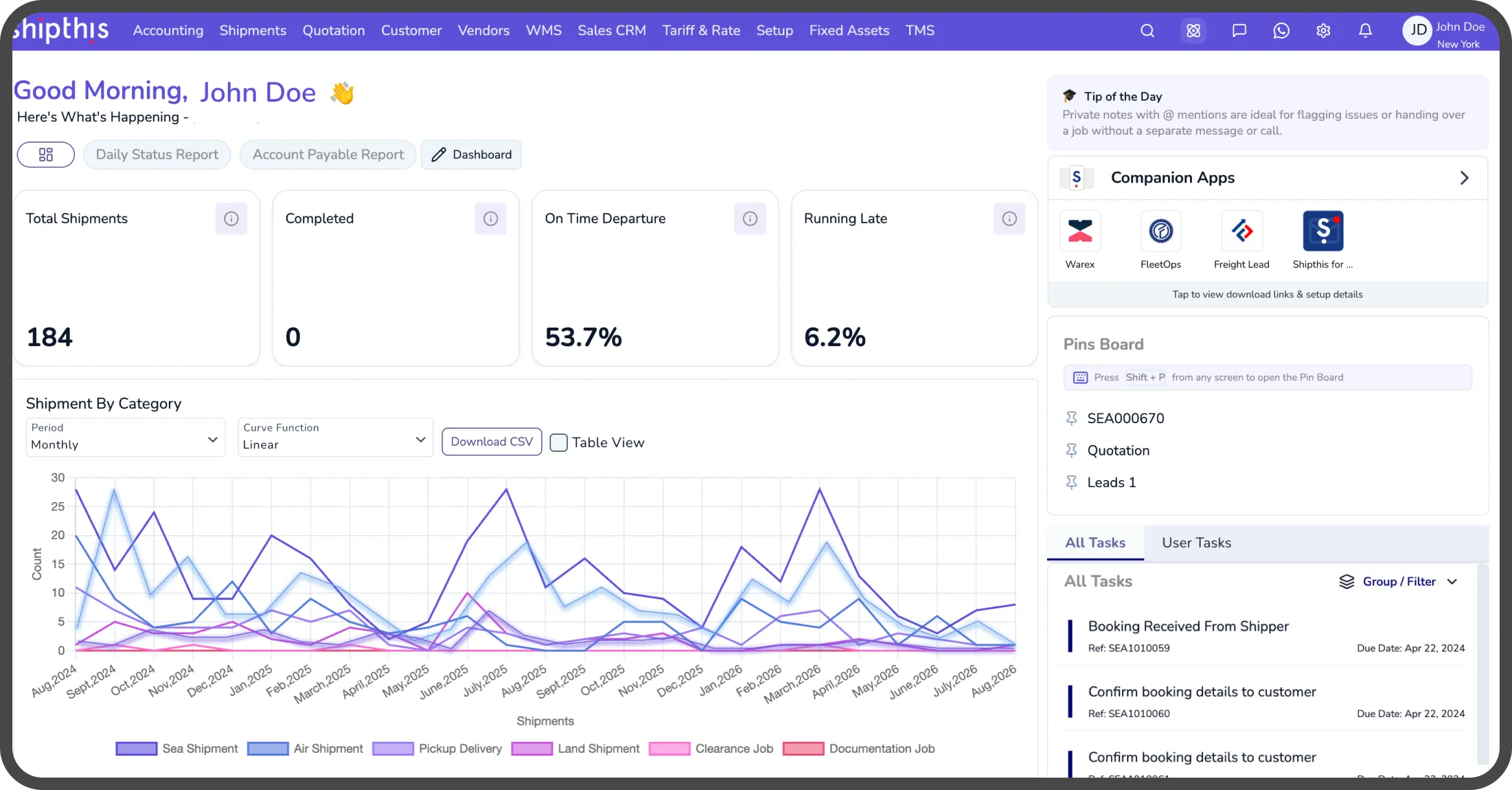
One rate library, covering every mode and every charge type, so pricing a shipment means a search, not a hunt across spreadsheets, emails, and someone's memory.
.webp)
Most forwarders already have their rates, the problem is where they live. An ocean rate sheet in one file, air tariffs in another, rail and land rates wherever they were last updated, and local or port charges that live mostly in an experienced pricer's memory. When a quote needs to combine several of these, someone is manually cross-referencing multiple sources under time pressure. Shipthis brings every rate and every charge type, by mode, by carrier, by lane, into one searchable library, so pricing a shipment is a query against structured data, not a hunt across however many places a rate might currently live.


Priced the Way Each Mode Actually Prices
FCL by container and lane, LCL with automated volumetric conversion, air by weight break, rail across borders, FTL by lane and vehicle type, LTL by zone and weight slab.
Sea FCL rates are managed by carrier and lane; Sea LCL rates apply automated volumetric pricing for consolidated cargo. Air freight tariffs are uploaded with the weight breaks airlines actually price by. Rail FCL rates handle cross-border pricing between operators, and rail LCL applies the same automated weight and volume conversion as ocean LCL. Land FTL rates store lane-based pricing by vehicle type, and land LTL rates apply zone-based pricing across weight slabs. Every mode is represented the way it actually prices, not squeezed into a single generic rate format that works for none of them well.
.webp)
.webp)
The Freight Rate Was Never the Whole Cost
Terminal, handling, documentation, CFS, drayage and accessorial charges, managed by mode, alongside the core rate, not tracked separately.
The freight rate itself is rarely the full cost of a shipment, terminal handling, documentation fees, CFS and de-vanning charges for LCL, air terminal and screening charges, rail terminal access and drayage, and accessorials like waiting time, tolls, or residential delivery surcharges all add up, and they're usually the least rigorously tracked part of a forwarder's rate data. Shipthis manages local and port charges for every mode alongside the core rate, so a quote reflects the full cost picture from the start, not a freight rate that gets adjusted upward later once someone remembers the accessorials.
Search Once. Every Mode, Every Carrier, One Result Set.
Search tariffs by lane, carrier, or service type, across every mode, from a single search, no separate lookup depending on how the cargo is moving.
A rate library is only as useful as how fast someone can find the right rate inside it. Shipthis's rate search works across every mode from one interface, search by lane, by carrier, or by service type, and get results whether the answer is sitting in the ocean, air, rail, or land rate tables, without switching tools depending on how a specific shipment happens to move.
.webp)
.webp)
Your Customer's Agreed Rate, Applied Automatically, Not Remembered Manually
Special rates negotiated with a specific customer, applied automatically the moment that customer's quote is built.
Special customer agreements shouldn't depend on someone remembering the specific terms every time that customer requests a quote. Shipthis stores customer-specific tariffs and prioritizes them automatically during quote generation, so an agreed rate is applied by default rather than relying on a pricer's memory of which customers have which arrangement. Full contract lifecycle management, versioning, validity tracking, and expiry alerts, is covered in depth on the dedicated Contract Rate Management page.
Never Quote Off a Rate That Already Expired
Historical rate versions maintained with validity ranges, so quoting always reflects the currently valid rate, not last quarter's.
A rate that's expired but still sitting in a spreadsheet is a margin risk waiting to happen, someone quotes off it, and the gap between the quoted price and the actual current cost comes straight out of margin. Shipthis maintains historical rate versions with defined validity ranges, so every rate in the system carries a clear expiry, and quoting automatically reflects what's currently valid rather than whatever version happened to be open last.
.webp)
.webp)
Getting Rates In, and Margin Applied on Top, Are Their Own Stories
Rates uploaded without manual entry, and margin calculated on top of them automatically, two separate capabilities covered in depth elsewhere.
Everything above assumes rates are already in the library, but getting them there without manual entry, and applying consistent margin logic on top of them, are substantial capabilities in their own right. Shipthis's AI rate parser reads carrier tariff sheets in PDF, Excel, or email format and converts them into structured rate tables automatically, and the Margin Rules Engine applies fixed, percentage-based, or tiered markup logic on top of every rate to protect margin automatically. Both are covered in full on their own dedicated pages.
.png)
.png)
Not an Ocean Rate Tool With Everything Else Added Later
Sea, air, rail and road rates, each handled the way that mode actually prices, plus local charges, search, and validity control, all in the same library.
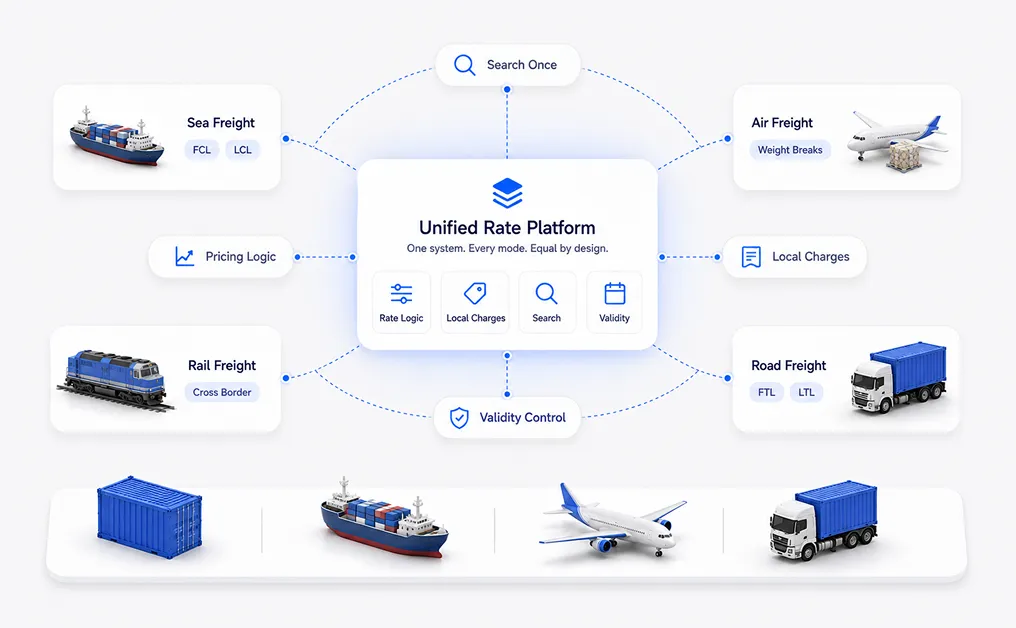
Rate management tools often start with ocean freight and add other modes later, shallower, and less rigorously, which shows up the moment a pricing team actually tries to use air or land rate features and finds them thinner than expected. Shipthis was built to handle every mode's actual pricing logic from the start, FCL and LCL conversion, air weight breaks, rail cross-border rates, FTL and LTL by lane, zone, and vehicle type, with local charges, one search engine, and validity control applied consistently across all of it, not just the mode the platform happened to be designed around first.
Bring Your Rates In From Wherever They Currently Live
A dedicated implementation team migrates your existing rate data, however scattered it currently is, into one structured library.
.webp)
Most forwarders' rate data lives exactly where it shouldn't, scattered spreadsheets, carrier emails, and institutional memory. Shipthis onboarding is built around that reality. Existing rate data, however fragmented, is migrated into the structured library, and your pricing team is trained on search and rate management workflows specific to the modes you actually run. Most customers are fully operational within 9 weeks.


Bring a Quote You're About to Send. See Its Odds First.
Book a walkthrough with your own rate structures across the modes you run, or start a free trial and search it yourself.
A demo can walk through your own mix of modes and rate types — not a generic script. Prefer to explore first? A free trial gives your team hands-on access with no commitment.
No credit card, no commitments.
Book a demo or start your 30-day free trial — and talk to a real freight specialist, not a sales script.
Tariff & Rate Management Questions, Answered
Every mode, Sea FCL and LCL, Air, Rail FCL and LCL, and Land FTL and LTL, each managed with the pricing logic specific to that mode, not a single generic rate format.
Local and port charges, terminal, handling, documentation, CFS, drayage, and accessorial, are managed by mode alongside the core freight rate.
Yes. The rate search engine works across every mode from a single interface, searchable by lane, carrier, or service type.
Yes. Rates carry validity ranges with version history, so quoting reflects the currently valid rate rather than an outdated one still sitting in the system.
Customer-specific tariffs are stored and prioritized automatically during quote generation. Full contract lifecycle management, including versioning and expiry alerts, is covered on the dedicated Contract Rate Management page.
Manually, or automatically through the AI rate parser, which reads carrier tariff sheets in PDF, Excel, or email format and converts them into structured rate tables, covered in full on the AI Tariff Sheet Upload page.