
Know the Odds Before You Send the Quote, Not After You've Already Lost It
Using your own historical quote data, past margins, win and loss patterns, customer behavior, Shipthis predicts the win probability and recommends the margin for the specific quote you're about to send, before it goes out. Not a report on what happened last quarter. A recommendation for the quote in front of you, right now.
No credit card required. Go live in 9 weeks. Implementation team included.
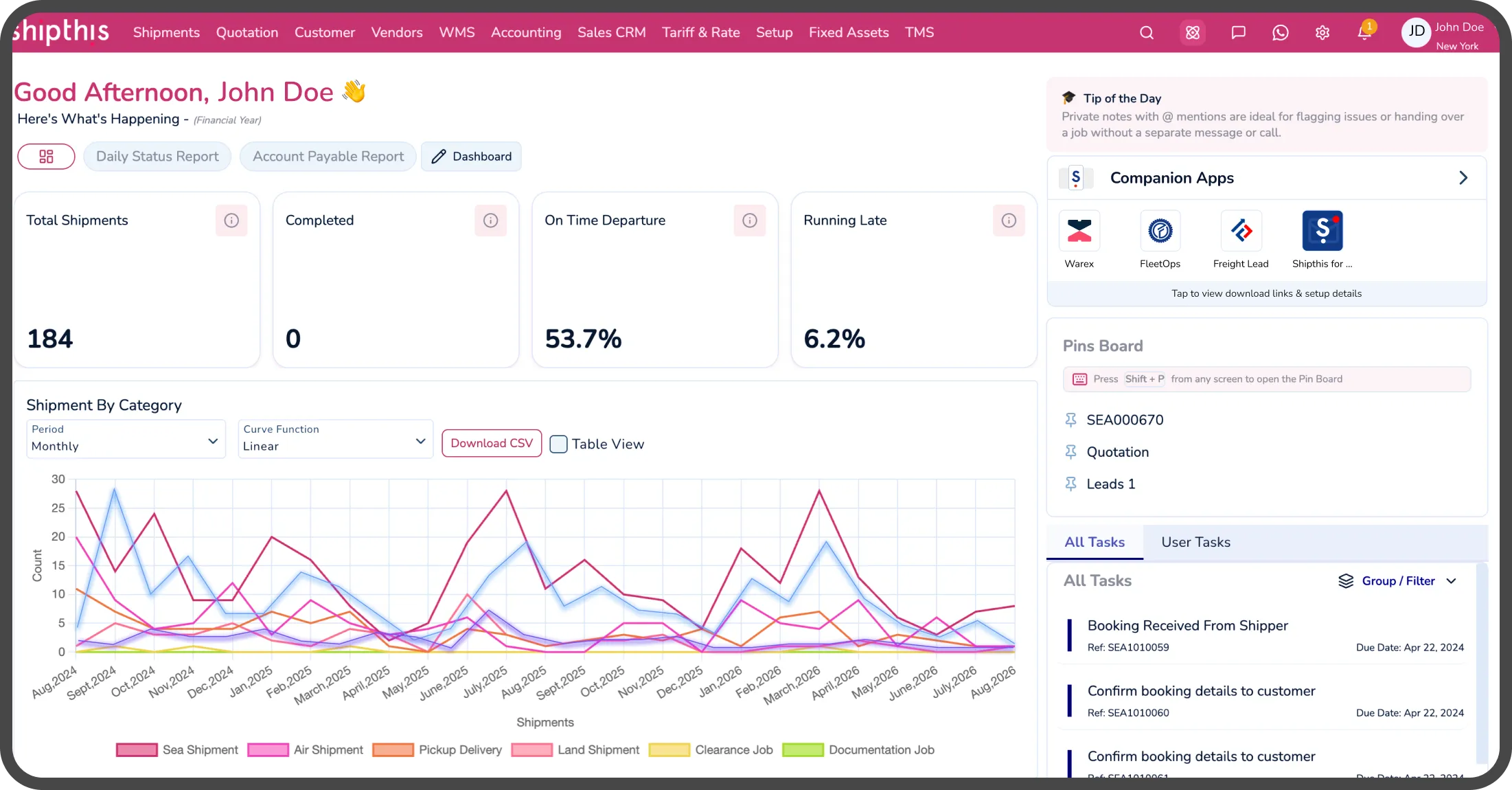


.avif)
An experienced pricer's instinct is valuable. Pricing Intelligence gives that instinct a quantified backup, grounded in your own actual win/loss history.
.webp)
An experienced pricer's instinct for what a customer will accept is genuinely valuable, built from years of deals, but instinct alone can't account for every pattern hiding in months or years of quote history, and it doesn't transfer easily to a newer team member without that same experience. Shipthis analyzes your own historical quote data, past margins, win and loss patterns, and customer behavior, and turns it into a specific recommendation for the quote being built right now, giving every pricer, experienced or new, a data-grounded backup to their judgment rather than replacing it.

.png)
A Real Number, Not a Vague Confidence Label
Historical win and loss patterns, analyzed against the specifics of the current quote, produce an actual win probability, not a green/yellow/red guess.
Shipthis analyzes your historical quote outcomes, which prices won, which lost, under what conditions, for which customers and lanes, and applies those patterns to the specific quote currently being built, producing an actual win probability rather than a vague confidence indicator. Your pricing team sees not just what a customer might accept, but how confident that estimate actually is, grounded in real historical outcomes rather than a general sense of the market.
.webp)
.webp)
Not Just the Odds on Your Price. The Price That Improves the Odds.
A recommended price point that balances margin against the likelihood of acceptance, based on how similar quotes have actually performed.
Knowing the win probability of a price you've already decided on is useful, but the more valuable question is often what price would actually improve your margin while keeping acceptance likelihood strong. Shipthis recommends a price point based on how similar historical quotes have actually performed, balancing margin and win probability together, rather than optimizing for one at the expense of the other, so the recommendation reflects a genuinely better outcome, not just a higher number.
This Customer's History, Not Just the Market's Average
Understanding a specific customer's historical shipping and pricing patterns tailors the recommendation to that account, not a generic market trend.
Different customers behave very differently, some are price-sensitive on every lane, others prioritize transit time and rarely negotiate, and understanding those patterns for a specific account is what makes a pricing recommendation actually useful rather than a generic market average. Shipthis analyzes a customer's historical shipping and quoting patterns specifically, so the recommendation for their next quote reflects how that particular account has actually behaved, not just broad trends across your whole customer base.
.webp)
.webp)
How Your Price Compares, Not Just How It's Performed Before
Benchmark a proposed rate against broader market pricing, so a quote reflects competitive positioning, not just internal historical performance.
Internal historical data tells you how your own past quotes have performed, but it doesn't tell you how your pricing sits relative to the broader market on a given lane. Freight rate benchmarking gives your pricing team that outside reference point, so a quote can be evaluated not just against "did prices like this win for us before" but also "is this price actually competitive right now," a second, complementary lens on the same pricing decision.

.png)
Analytics Tells You What Happened. This Tells You What to Do Next.
Win probability, margin recommendation, customer-specific insight, and rate comparisons, combined into a forward-looking recommendation for the quote in front of you.
.webp)
A lot of platforms offer some form of quote analytics, and that's valuable, but analytics fundamentally looks backward, explaining what already happened. Pricing Intelligence looks forward. It takes everything your historical data can tell you and turns it into an actual recommendation for the specific quote your team is building right now. That's the difference between understanding your pipeline and actively improving the next decision in it.
Three Quotes In. The Fourth Gets a Recommendation.
Every quote you send through Shipthis builds toward a working recommendation, no historical backlog required to get started.
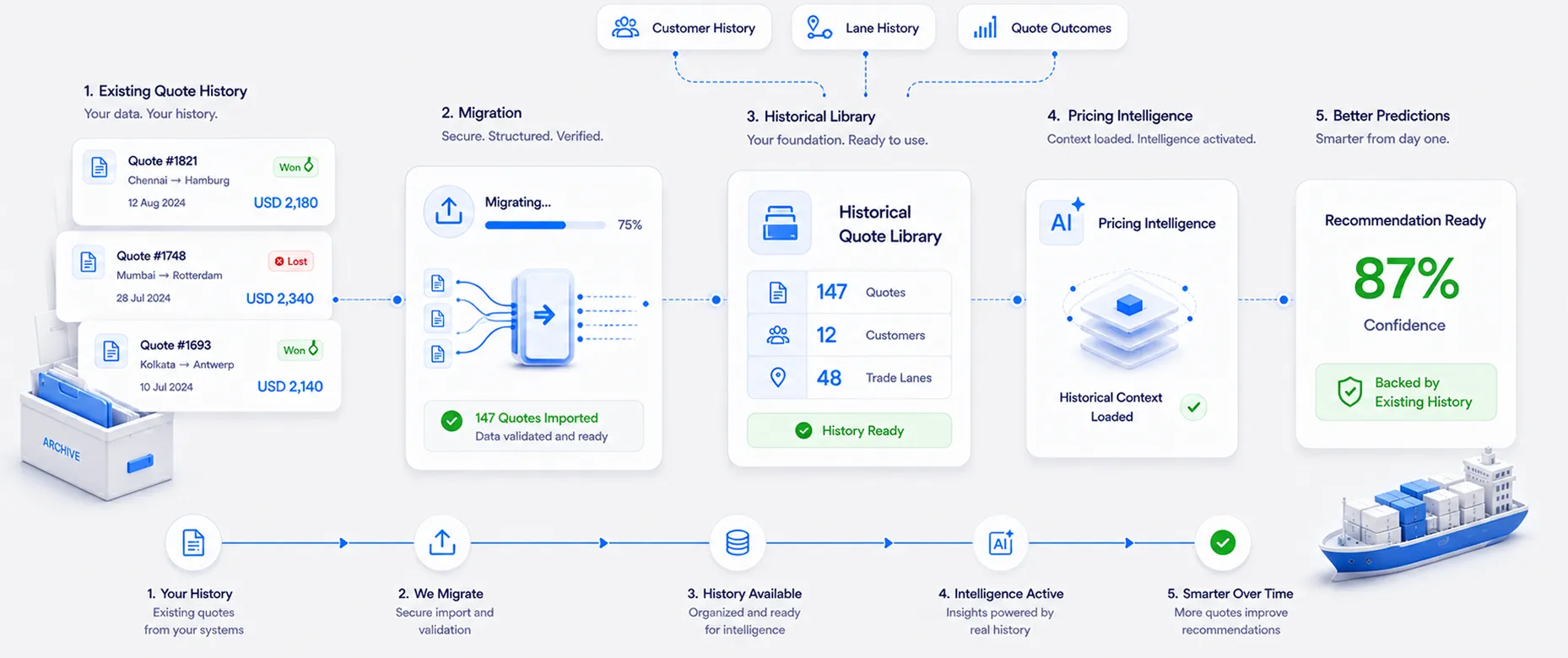
Pricing Intelligence doesn't need years of past data before it's useful, it needs a handful of real quotes for a given customer to start spotting the pattern. Send the first three quotes for a customer through Shipthis as normal, and by the fourth, the system has enough to recommend a win probability and a margin. Keep quoting, and the recommendations keep sharpening as more data comes in. Most customers are fully operational within 9 weeks.



Bring a Quote You're About to Send. See What Shipthis Recommends.
Book a walkthrough with a real quote you're working on, or start a free trial and watch the recommendations sharpen as you quote.
A demo can walk through a real quote you're currently working on, not a generic script. Prefer to explore first? A free trial gives your team hands-on access with no commitment, recommendations get sharper after a few quotes per customer, not on day one.

Book a demo or start your 30-day free trial — and talk to a real freight specialist, not a sales script.
Pricing Intelligence Questions, Answered
Alongside it. Pricing Intelligence gives every pricer a data-grounded recommendation as a backup to their own judgment, not a replacement for experience.
By analyzing historical win and loss patterns from your own quote data and applying them to the specifics of the quote currently being built — an actual calculated probability, not a general confidence indicator.
No. It balances margin against the likelihood of acceptance, based on how similar quotes have historically performed, aiming for the best outcome rather than the highest number alone.
Both. Customer-specific historical behavior informs the recommendation directly, and freight rate benchmarking adds a broader market reference point alongside it.
Conversion reports look backward at what already happened across your pipeline. Pricing Intelligence looks forward, recommending a price for the specific quote you're about to send.
Existing quote history is migrated during implementation wherever available, so recommendations start with real data from day one, becoming more precise as more quotes flow through the system.