
A Lead Record Built for Freight, Not Just a Name and a Phone Number
A generic CRM asks for a name, a company, and a follow-up date. Shipthis Sales CRM asks for that plus the freight detail that actually determines whether a lead is worth chasing, trade lane, commodity, shipment type, customer type, and who else is quoting the business. When a lead is qualified enough to forecast, it becomes an Opportunity with its own expected revenue, probability, and expected close date, still carrying the shipment mode and lane you're bidding on. Nothing about the freight context gets lost between first contact and a forecast number.
Pipeline visibility built around how freight is actually sold.
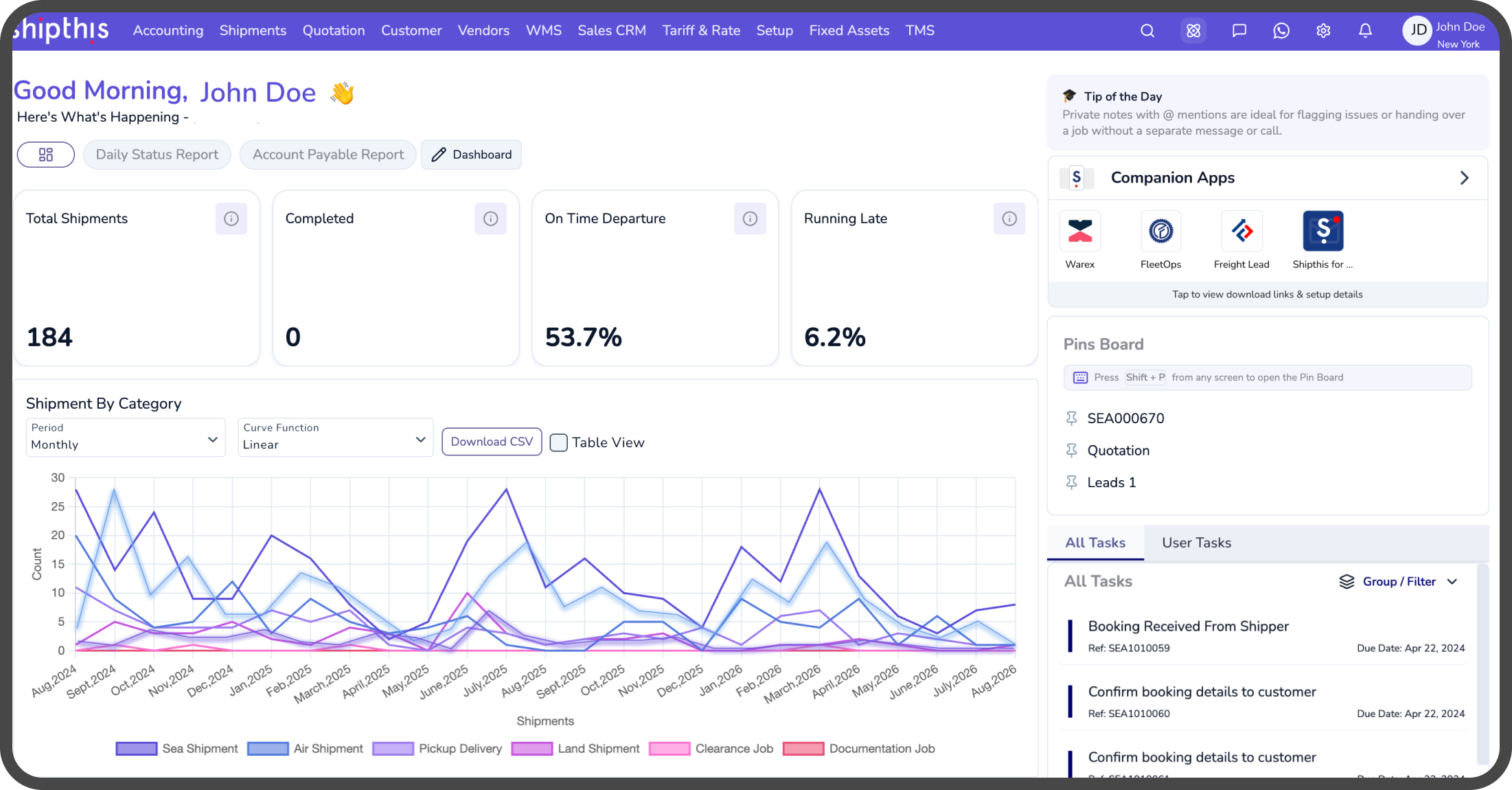




Generic CRM fields tell you who to call. Freight-specific fields tell you whether the business is worth calling about.
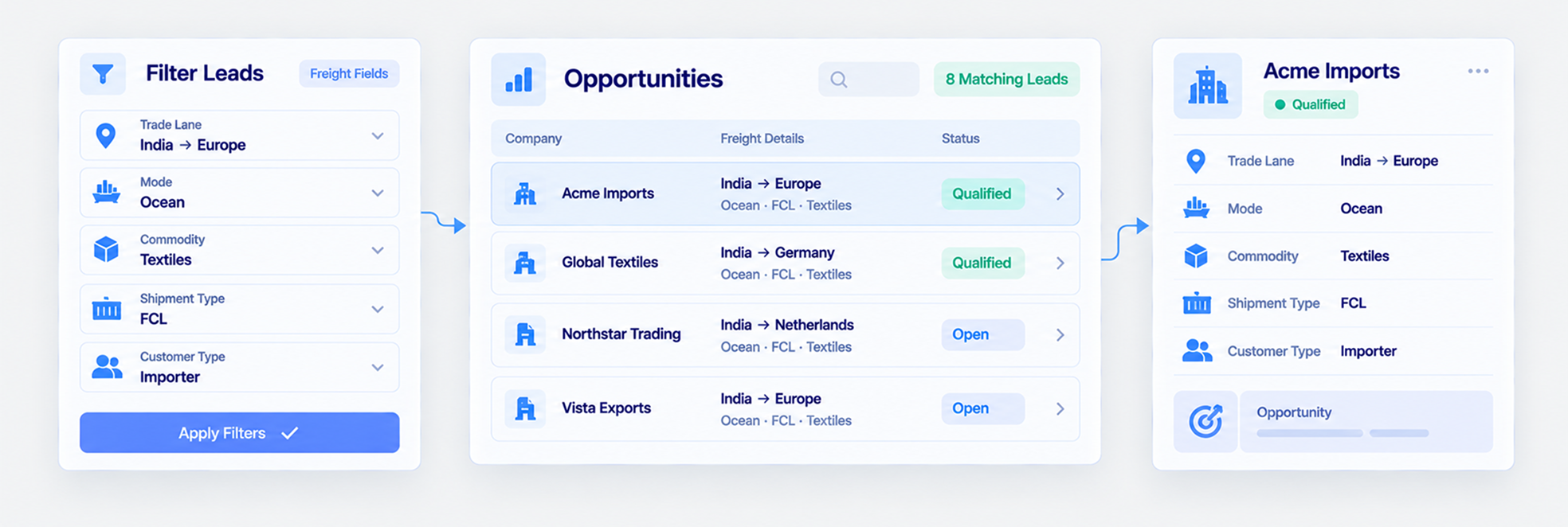
Revenue potential in freight forwarding depends on lane, mode and commodity as much as it depends on the account. A CRM that doesn’t capture this at the lead stage forces someone to reconstruct it later, usually by opening every record or asking the salesperson who remembers. Shipthis captures trade lane, commodity and shipment type as structured fields on the lead itself, so a manager reviewing the pipeline can filter by the business that matters, not just by name and date.


Commodity, Trade Lane, Shipment Type. A CRM Built for Freight.
Capture the details that turn a new lead into a real freight opportunity, right from the start.
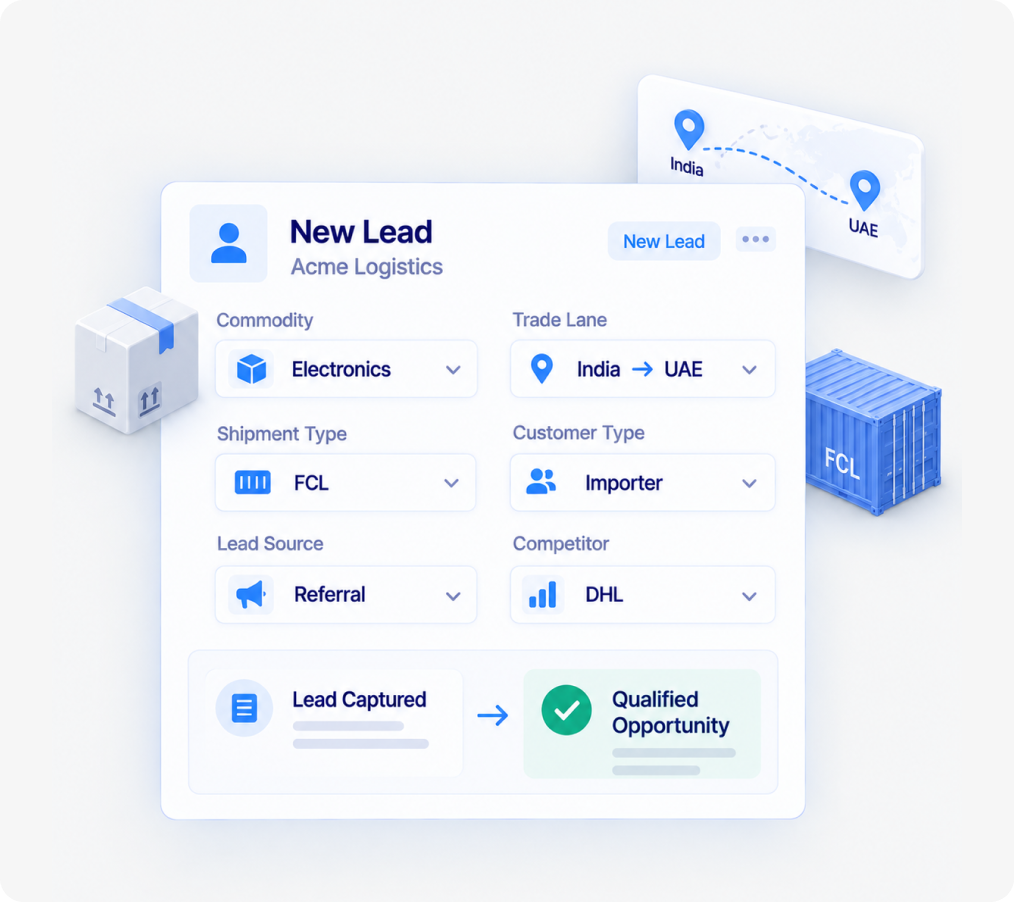
Shipthis captures commodity, trade lane, shipment type, lead source and competitors alongside company and contact details, right on the standard lead form. Every lead carries what your team needs to qualify the opportunity, see where the business comes from and know who else is competing for it, captured consistently from day one without building a CRM from scratch.
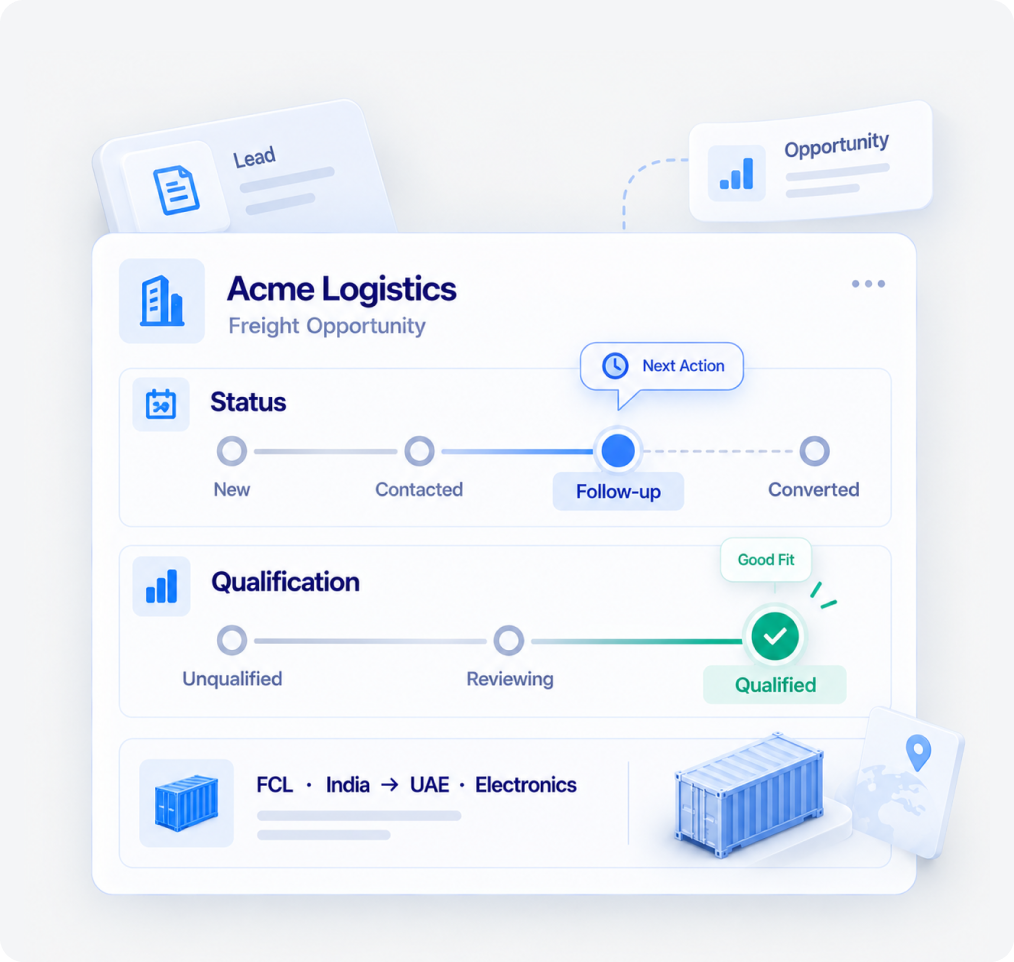
A Lead’s Status and Qualification Stage Move Independently
Track where a lead is in your workflow and how qualified it is, without forcing both into the same stage.
Sales conversations don’t move in a straight line. Shipthis tracks status and qualification separately, so a lead can progress through qualification without losing its place in your workflow. Kanban boards by Status or Lifecycle give your team the view it needs, while every interaction, task and change stays attached to the lead, so everyone knows what happened and what’s next.
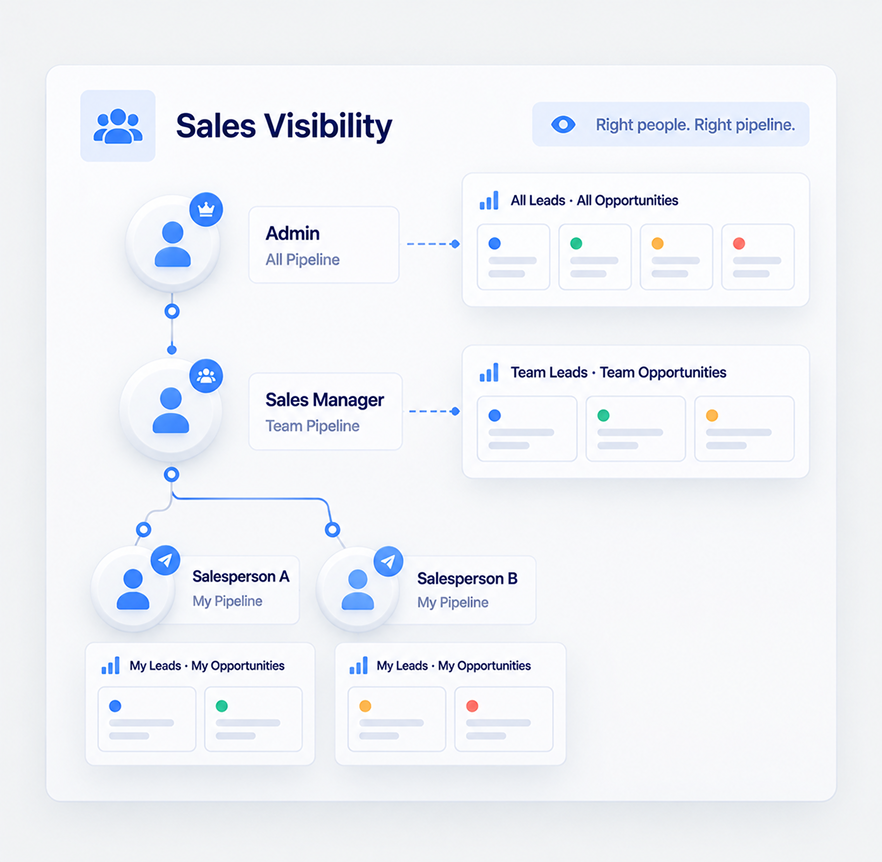
Visibility That Follows Your Actual Org Chart
The right people see the right pipeline automatically, based on their role and where they sit in your organisation.
Managers see their team’s leads, salespeople see what they own and administrators have the full picture. Visibility follows your employee hierarchy, so when teams or reporting lines change, access stays aligned without separate lists or chasing permissions. Every level of your sales team gets the pipeline view it needs, with everything else kept appropriately scoped.
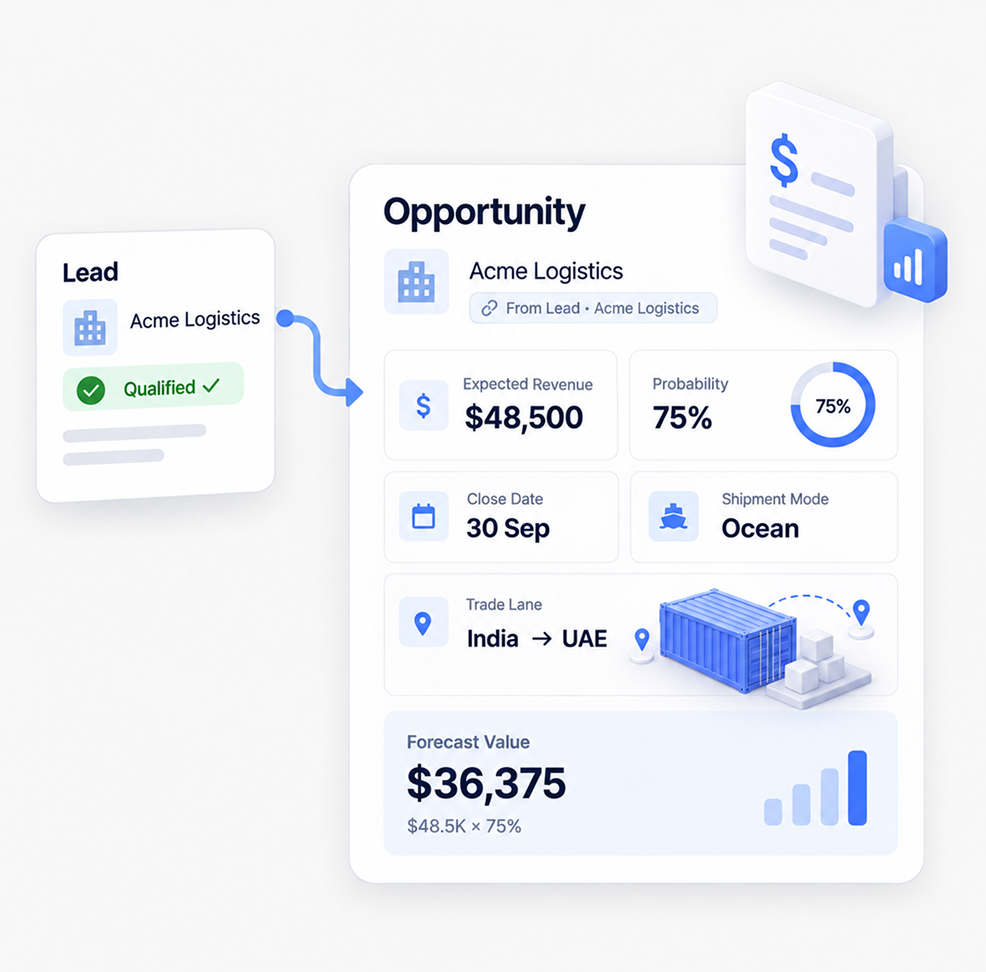
Leads Track the Prospect. Opportunities Track the Deal. Both Stay Connected.
Turn qualified prospects into forecastable deals, with the commercial and shipment context your sales team needs to move them forward.
When a prospect becomes a real opportunity, the deal gets its own record with expected revenue, close date, probability, shipment mode, trade lane and other key details. It stays connected to the lead or customer it came from, so the story behind the deal is never lost, and consistent probability data gives sales leaders a clearer forecast without separate spreadsheets.
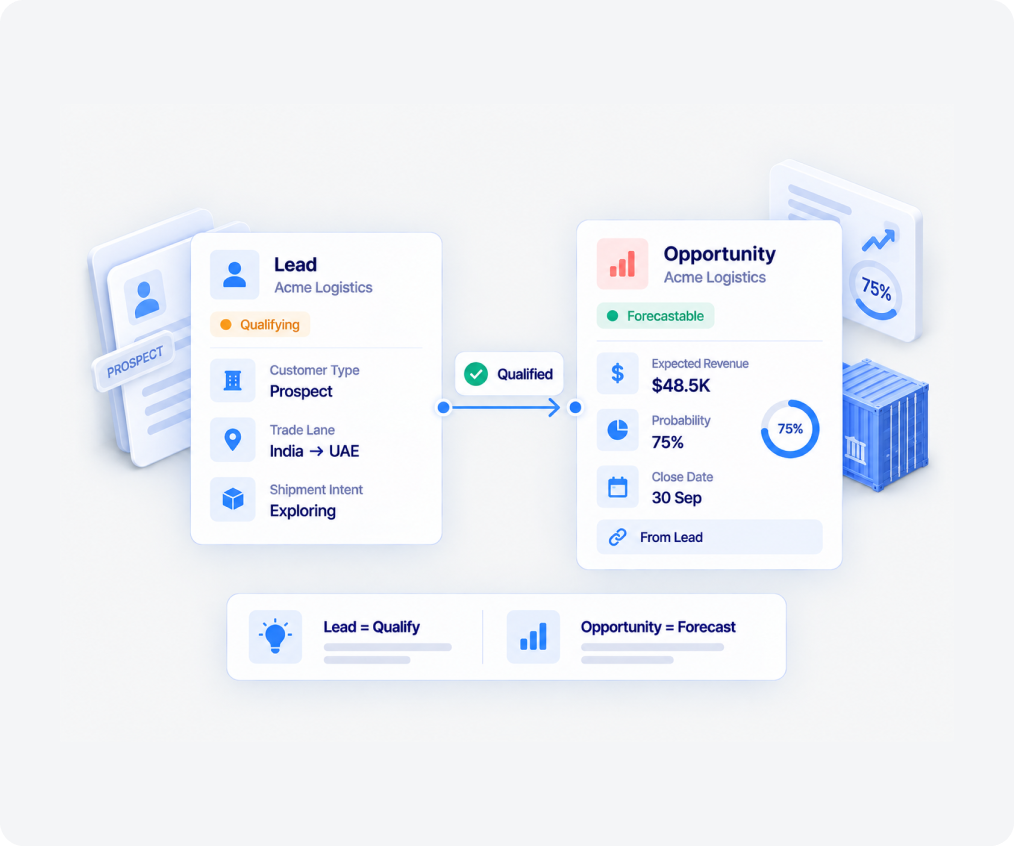
Not Every Lead Deserves an Opportunity. Not Every Opportunity Started as a Bare Lead.
Use a lead while you’re still qualifying whether the business is real. Use an opportunity once it’s worth forecasting.
Open a lead while the account is still an early-stage prospect and you’re qualifying whether the business is real, so leads stay quick to create. Open an opportunity once the deal is worth forecasting, with probability, close date and lane detail. Opportunities don’t replace leads wholesale, and once a formal offer is needed, pricing moves into Quotations.
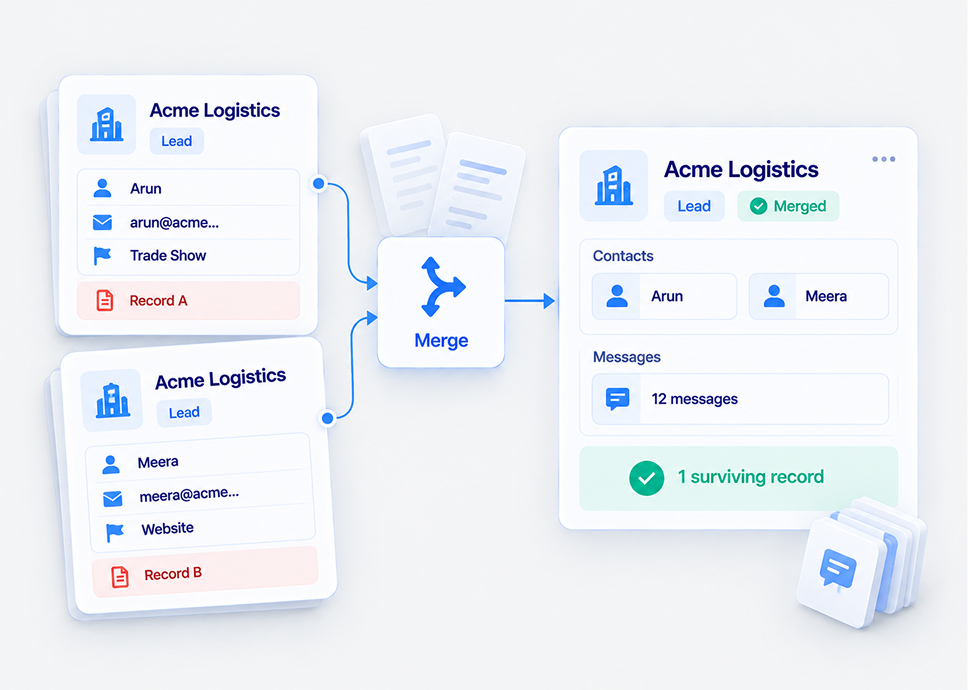
The Same Company, Captured Twice? Merge It in One Step.
Duplicate leads and opportunities, combined into one clean record without manual clean-up.
If the same company was captured twice, often when a trade-show lead and an inbound enquiry land separately, select both records and use Merge. Shipthis keeps one lead, folds in the other’s contacts without duplicating anyone by email or name, and moves messages to the surviving record. Merge works on Opportunities too, so duplicate deals never split your forecast.

A CRM That Asks the Freight Questions
Trade lane, commodity and shipment type are built into the lead, because freight sales needs more context than a name, company and phone number.
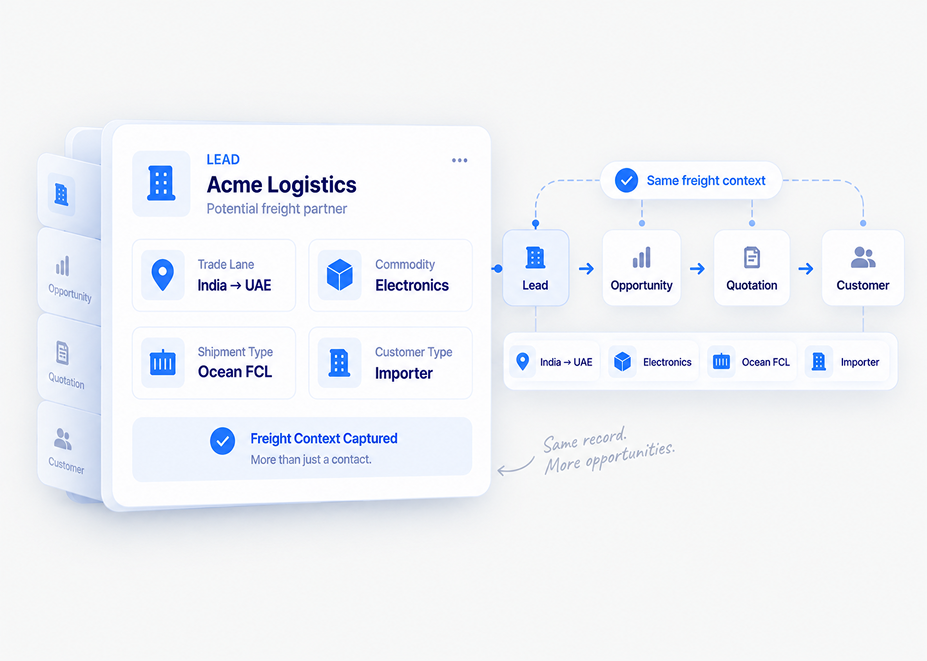
Shipthis starts with the information your freight sales team actually works with. Capture commodity, trade lane, shipment type and competitive context from the first interaction, without building your own CRM schema around it. That context stays with the record from Lead to Opportunity to Quotation to Customer, so your team never recreates the story at each stage and sales leaders see a pipeline that reflects the business you’re actually trying to win.
Your Statuses, Your Stages, Your Role Visibility. Configured Before Go-Live.
A dedicated implementation team sets up Sales CRM around how your team actually sells, so the pipeline your reps open on day one already reflects your process.
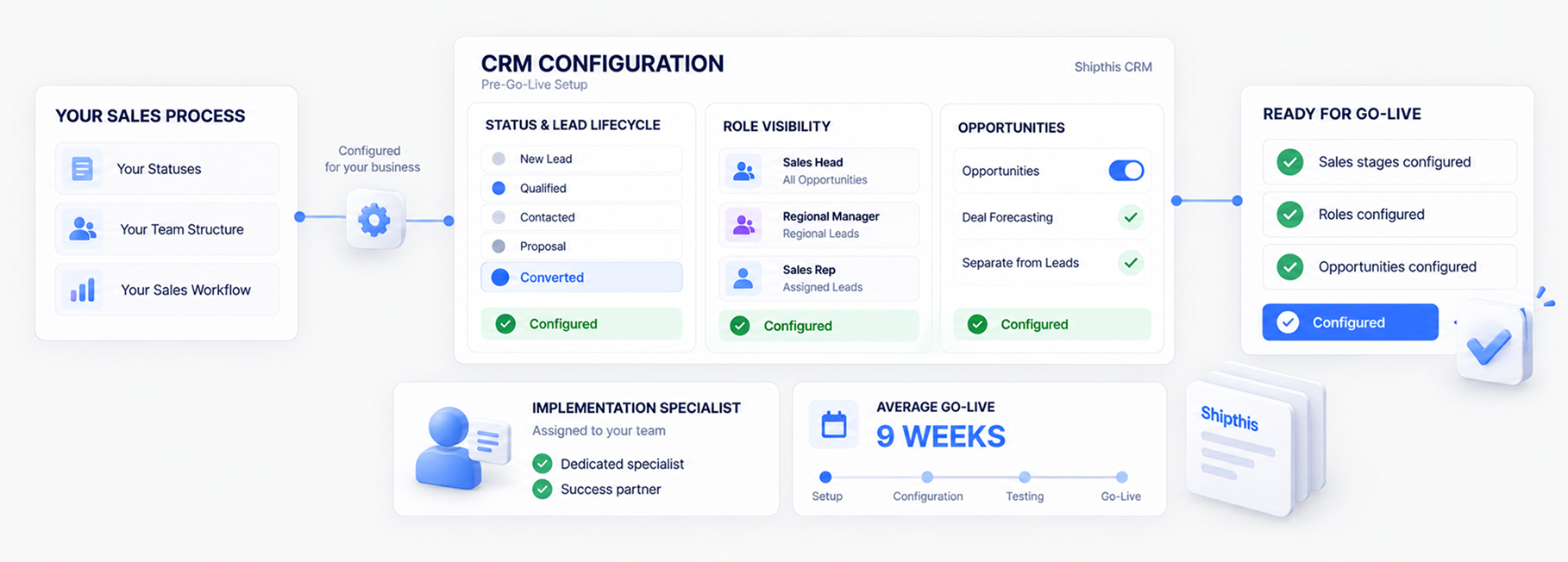
Implementation configures the Status and Lead Lifecycle values your team actually uses, sets up role-based visibility to match your reporting hierarchy, and switches on Opportunities if your sales process needs deal-level forecasting separate from lead qualification. Shipthis customers go live within 9 weeks, with a dedicated implementation specialist rather than a generic support queue.

Bring Your Actual Sales Process. We’ll Show You Where It Fits.
The fastest way to evaluate this is against how your team actually captures and qualifies leads today.
Book a demo scoped to your sales process, or start a free 30-day trial to see the lead and opportunity forms yourself.
No credit card required. Implementation team maps your workflow before go-live.
Lead & Opportunity Management Questions, Answered
Opportunities is a separately switched-on part of Sales CRM. Where it’s enabled for your organisation, it appears in the menu after Leads, and your implementation team sets it up if your sales process needs deal-level forecasting.
Screening is a configurable feature of the customer record itself, covering customers, vendors, customer parties, vendor parties, shipping lines, airlines, and vessels, with a configurable match threshold and frequency.
Yes. Customer Roles scope portal access by function, an accounts role sees invoices and statements, an operations role sees shipments and tracking, and a contact only gets portal access when a role is explicitly assigned.
It moves to Inactive lifecycle status. History is preserved, the account simply drops out of some default active-account views.
Yes. A customer flagged Is Also Agent carries a Linked Vendor record for the money owed in the other direction, so the relationship stays on one account viewed from either side.
Yes, from the customer list, select the duplicate rows and use the bulk Merge action.