

Shipment-Level P&L, Provisional and Actual Side by Side, On Every Job You Run
Profitability visibility on every job: revenue, costs and margin at the shipment level, with provisional and actual figures side by side and drill-down to the individual charge line. Because expected costs post as accruals as work progresses, margin stays current rather than waiting on the last supplier invoice to arrive.
No credit card required. Fully operational within 9 weeks. Implementation team included.

Recognise the cost when the service happened, not when the paperwork caught up. Otherwise, every late vendor invoice distorts two months at once.
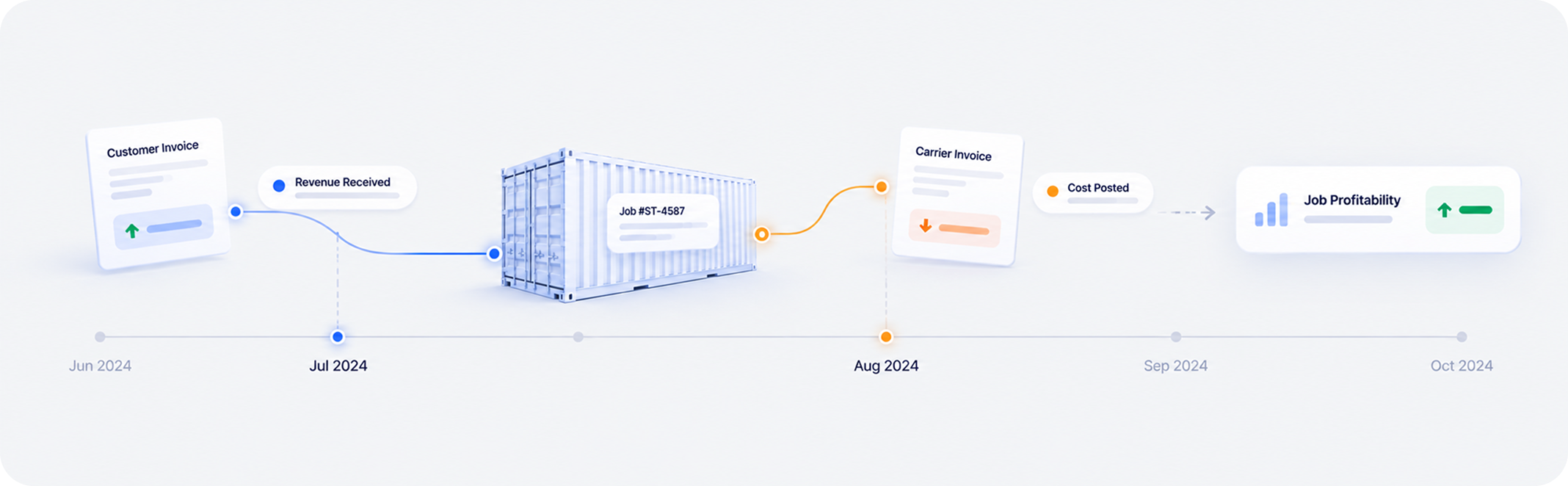
Invoice a customer in one month and receive the carrier’s invoice in the next, and a cash-basis view splits the shipment across both, with revenue landing in one period and cost in the other. The first month reads better than reality, the second reads worse, and neither tells you what the shipment actually earned. Shipthis provisions the expected cost against the job as the work happens, so both sides of a shipment sit in the same period. When the real supplier invoice arrives, the provision clears against it and only the difference between estimate and actual moves into the later month. The shipment’s margin stays honest throughout, and the variance surfaces where it belongs.


Every Job, Expected Against Actual, on One Screen
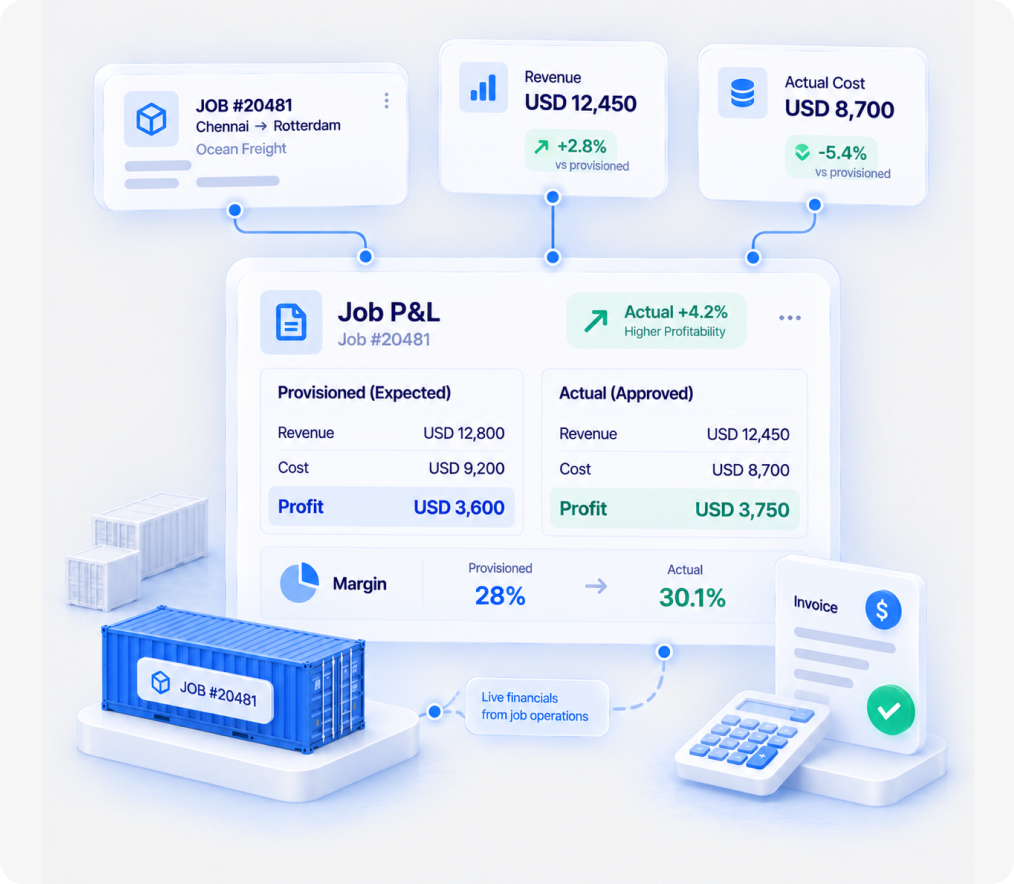
Provisional revenue, provisional cost and provisional profit alongside approved revenue, approved cost and actual profit, across every job in the period.
The Profit & Loss by Job report lists every job for whatever period you choose, carrying both sides: what the job was provisioned to earn, and what it actually earned once documents were approved. The comparison is the point. Jobs that came in under their provisioned margin stand out immediately, alongside the ones that came in ahead.
Line-Level Variance, Attributable and Recoverable
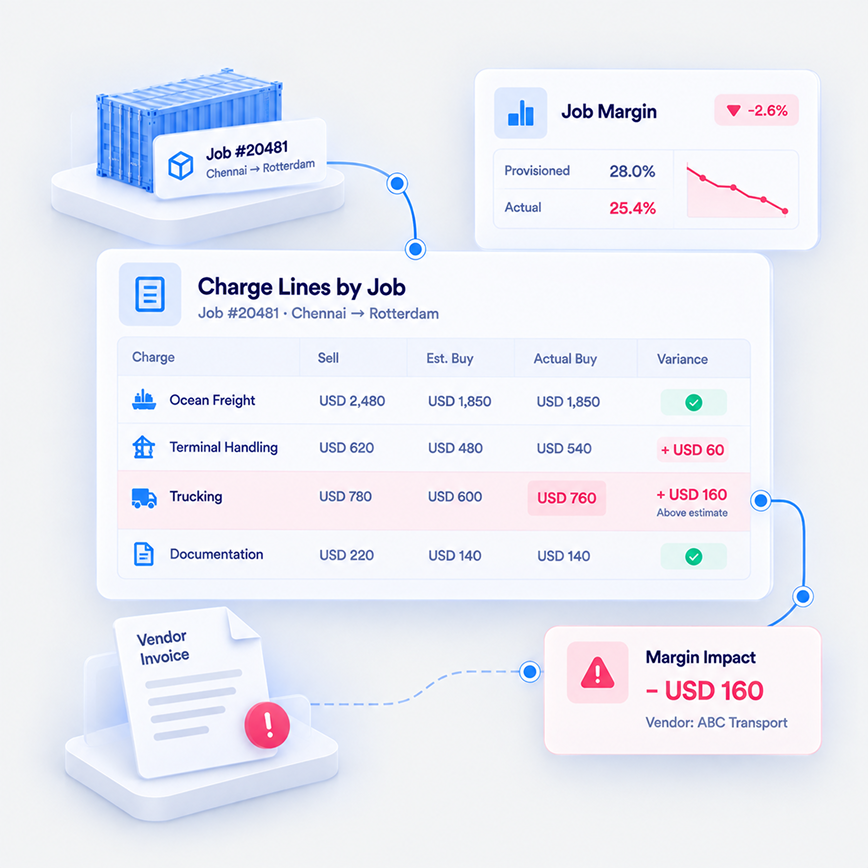
Sell amount, buy amount and actual buy amount for every charge line on a job, so a margin miss traces to the specific charge that caused it.
Aggregate margin tells you a job underperformed. The Charge Lines by Job report tells you why, with every line’s sell, estimated buy and actual buy side by side. A charge that came in above its estimate is right there, attributable to a specific line and vendor. That’s the difference between knowing you lost margin and being able to act on it.
Partial Invoicing Shouldn’t Break Your Margin Number
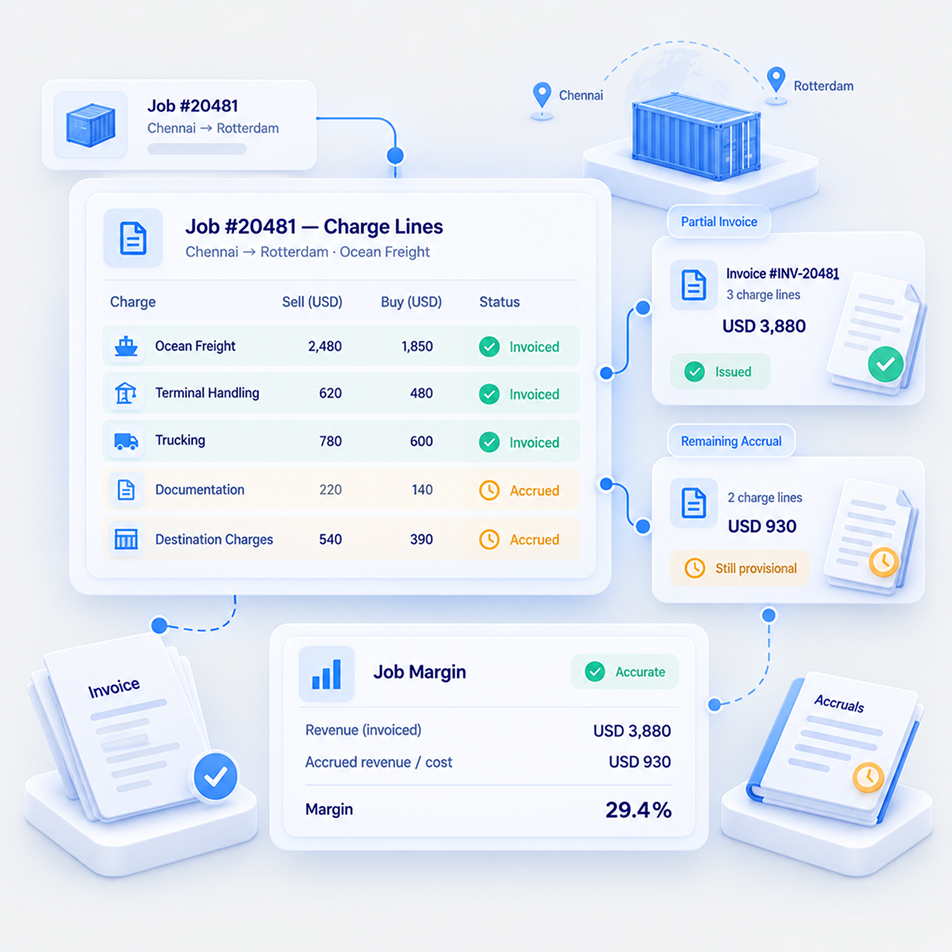
Charge lines give you control at the line level rather than the whole transaction, so partial invoicing doesn’t break the margin figure.
A job rarely invoices all at once. Group charge lines by customer to invoice only those ready, or by supplier to cost only those billed. Each line carries its own buy, sell, supplier and accrual, so a job with three lines invoiced and nine provisional still reports honest margin, and reversing one line’s accrual leaves the rest untouched.
Ten Houses, One Master Cost, Margin That Still Adds Up
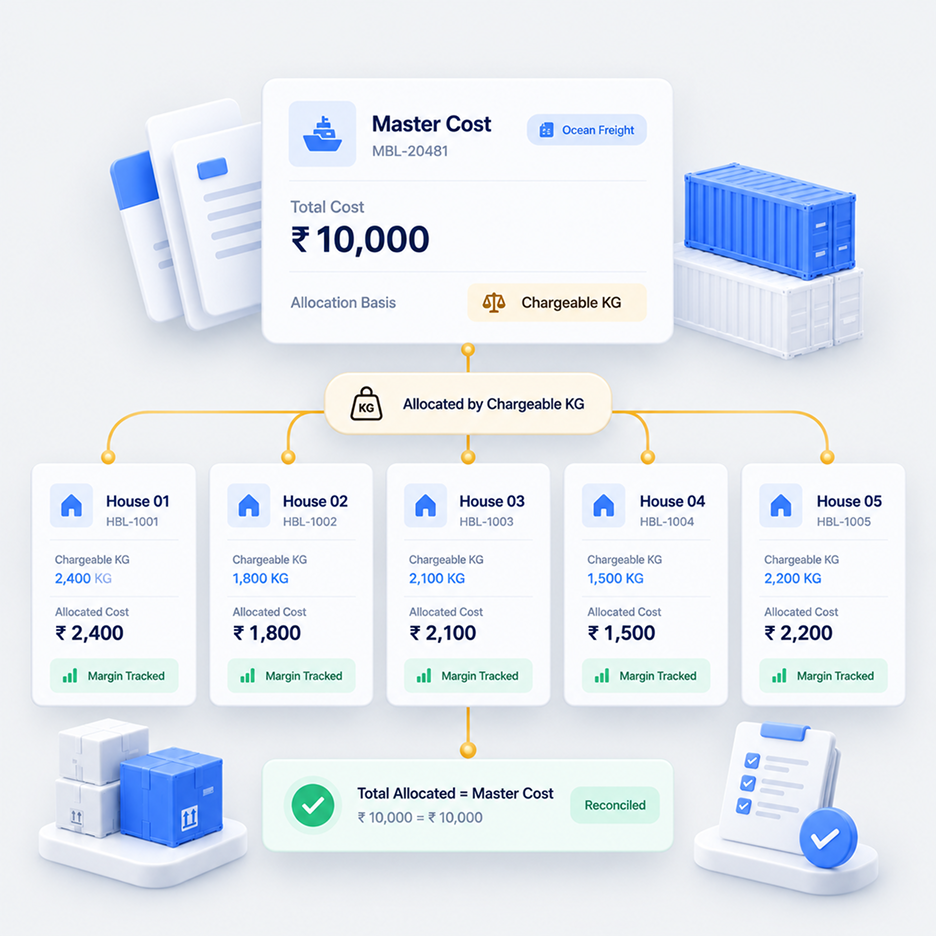
Master costs allocate across houses by chargeable kilos, CBM, TEU, container count or equal share, and each house’s accrual reverses proportionately as it’s invoiced.
Add the cost at the master and it allocates across houses on whichever basis the trade uses: kilogram, CBM, TEU, container count or equal shares. As each house is invoiced, its share reverses with it, so every house reports honest margin and the master reconciles exactly. The accrual logic matches a straight job, with allocation on top.
Every Open Accrual, Visible and Clearable
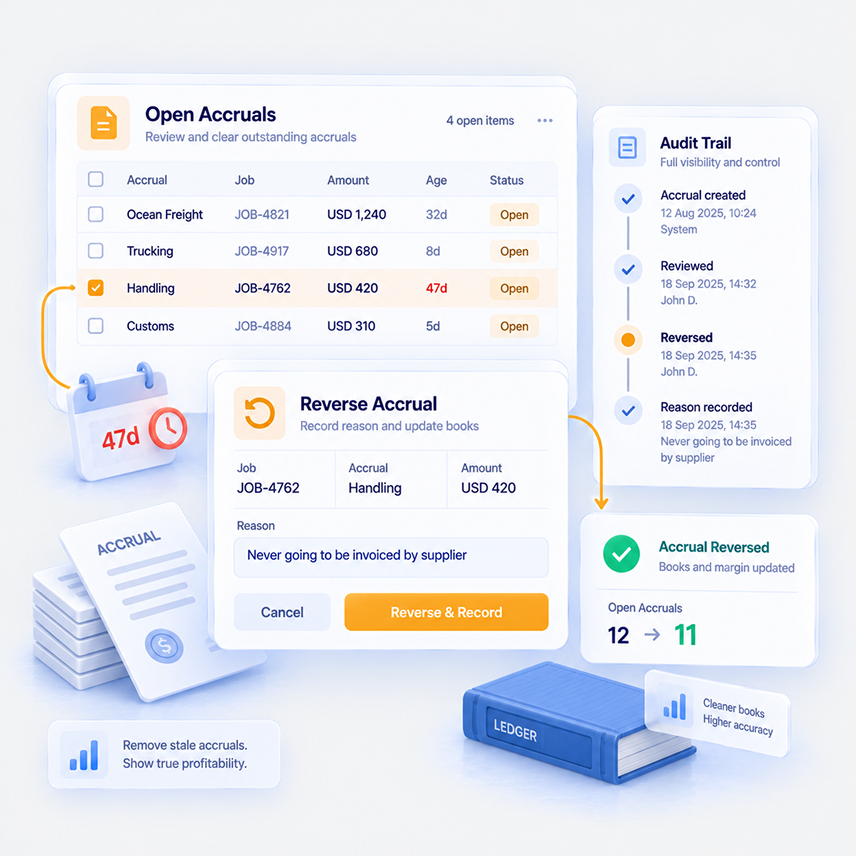
A dedicated view of every open accrual, with reversal against a stated reason, so nothing sits unexplained on the balance sheet indefinitely.
Sometimes the invoice never comes. An accrual review report lists every open accrual, showing what’s outstanding and for how long. Select the lines that won’t be billed, reverse them with a recorded reason, such as “never going to be invoiced by supplier”, and the entry posts with it attached. The margin corrects and the audit trail explains why.

Most Systems Show You Margin. Fewer Show You Margin That’s Already True.
Provisioned against actual, line by line, with the expected cost already posted, so the figure doesn’t move when the vendor invoice finally arrives.
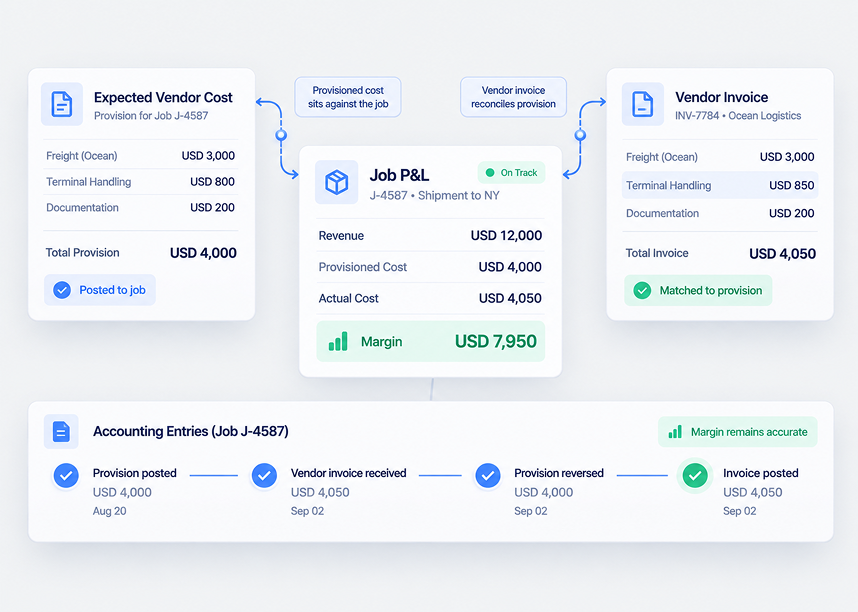
Job profitability isn’t hard to display. What’s hard is displaying a number that’s still correct three weeks later, when the carrier’s invoice lands at a figure nobody predicted.
Because the accrual posts the moment you invoice, and reverses against the real document line by line, margin here doesn’t lurch when paperwork catches up. Only the variance moves, and it moves where it belongs. Ask a system whether its job margin is a calculation or a consequence of the ledger. That’s the whole difference.
Accrual Accounts Mapped to Your Chart of Accounts, Not a Template
A dedicated implementation team sets up your accrual accounts and provisioning rules before go-live, so margin is accurate from your first job.
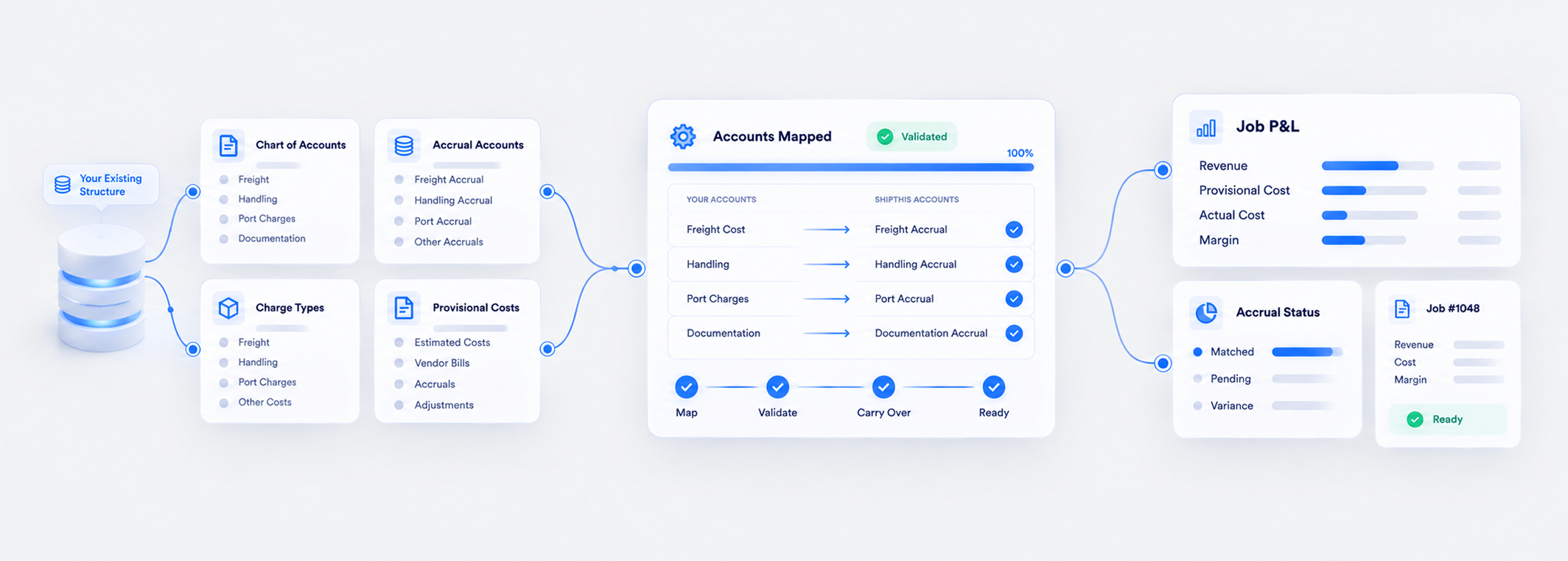
Accrual accounts, variance thresholds and how provisional costs get populated, whether from tariff sheets, charge templates or manual entry, are all set up during implementation against your actual charge types and chart of accounts. Jobs already in progress carry over with their provisional positions intact. Most customers are fully operational within 9 weeks.

Bring a Job Where the Vendor Invoice Surprised You
We’ll walk through what the margin would have shown at the time, and where the variance would have landed.
The fastest way to judge this is against a job you already know went sideways. Prefer to explore first? A free 30-day trial gives your team hands-on access with no commitment.



Job P&L Management Questions, Answered
The expected cost posts as an accrual when you invoice the customer, so both sides sit in the same period. When the real invoice arrives, the accrual reverses and only the difference lands in the later month.
Profit & Loss by Job gives provisional and actual revenue, cost and profit for every job in a period. Charge Lines by Job drills into a single job, showing sell, estimated buy and actual buy per line.
Yes. Charge lines are handled individually, each with its own buy, sell and accrual, so partially invoiced jobs still report honest margin.
Master costs allocate across houses by chargeable kilos, CBM, TEU, container count or equal share, and each house’s proportionate accrual reverses as that house is invoiced.
An accrual review report lists every open accrual. You select the lines that won’t be billed and reverse them with a recorded reason, which stays on the entry.
Accruals work without it, but charge lines are what give you line-level control, selecting specific lines to invoice or reverse rather than acting on the whole transaction.