
One Charge Line. Both Sides. The Same Record Finance Bills From.
Every charge carries what you’re selling and what you’re buying, in their own currencies, from the same line operations entered. It drives the invoice, the vendor bill, the accrual, and the job’s margin. It isn’t a code that classifies a cost after the fact, but the record the whole financial picture is built from.
The charge line that drives the whole job




A single organisation-wide record per charge, carrying the accounts, tax defaults, and behaviour that every charge line, rate card, and quotation built from it inherits.
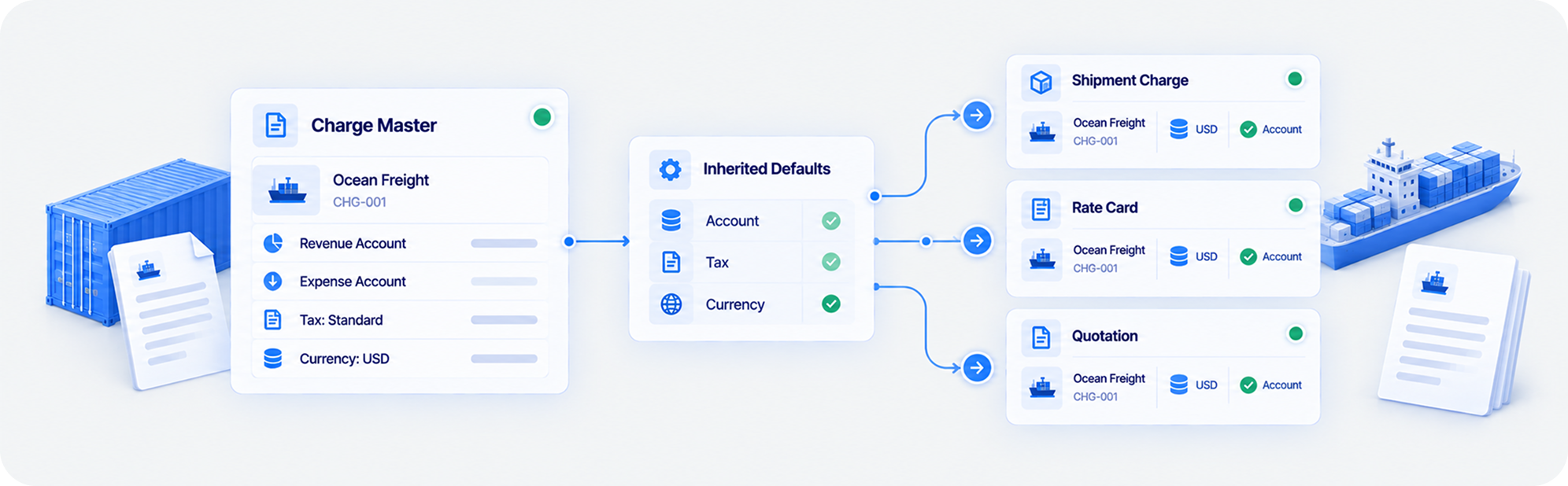
Every charge used anywhere in the system, whether a shipment charge line, a rate card, a quotation response or an invoice template, traces back to one Charge Master record. Selecting a code doesn’t just label the line; it pulls in the correct revenue and expense accounts, tax defaults, currency, and accrual behaviour, so consistency isn’t something your team has to enforce manually. Rates and tariffs can still override the specifics for a transaction, but the underlying identity and defaults come from one place, standardised once.


See the Margin While You’re Still Building the Shipment
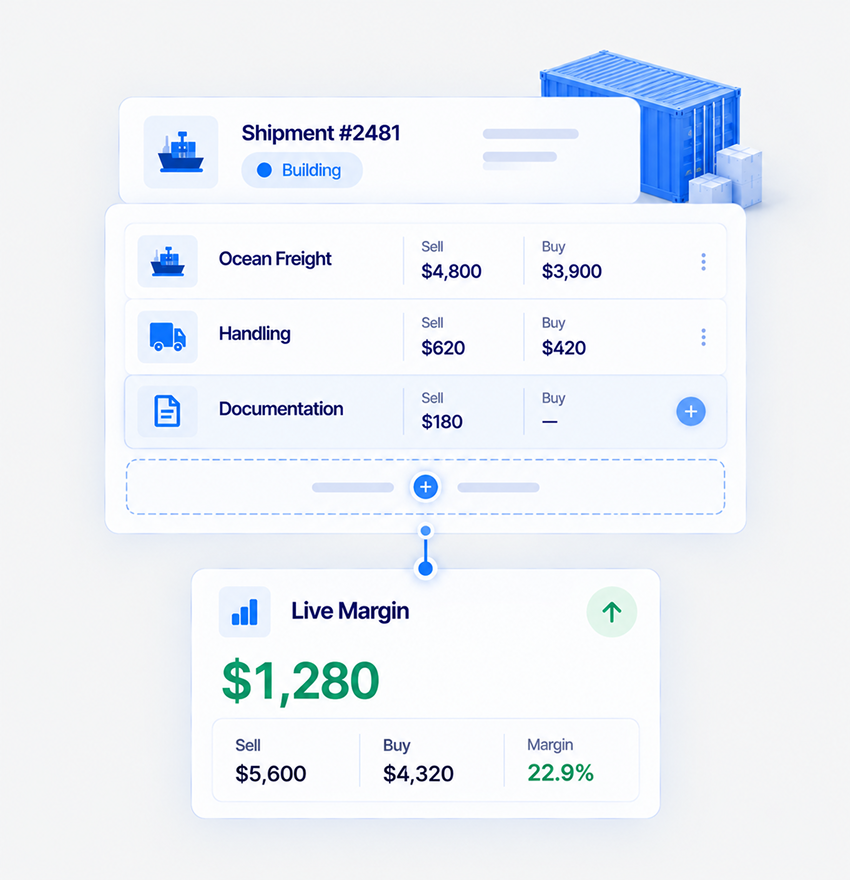
Each line carries its customer and sell side, its vendor and buy side, in their own currencies, with a running profit total visible before any invoice or vendor bill exists.
A charge line holds both sides of a transaction at once: who you’re billing and what you’re charging them, who you’re paying and what they’re charging you. Add lines as you book the shipment (even rough estimates are useful), and a running sell, buy and margin total updates immediately, giving operations a live profitability check long before finance generates anything.
Lines can be revenue-only, where there’s no vendor cost to track, or cost-only, for expenses you absorb rather than bill forward, so the P&L reflects what’s actually being charged, not just what’s on both sides by default.
A Line Can’t Be Billed Twice. Its Vendor Bill Can Draft Itself.
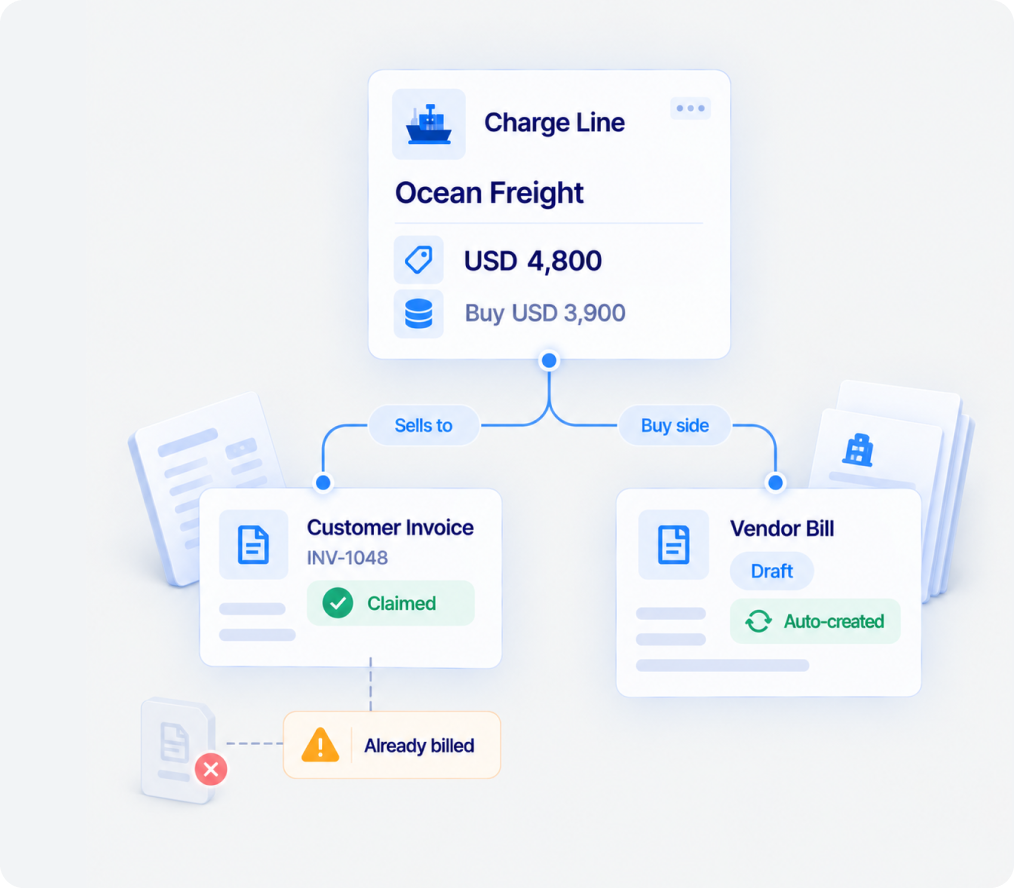
Each charge line can only appear on one invoice and one cost, and eligible buy-side lines can raise their own draft vendor bill automatically when the linked invoice is created.
With charge mode on, a charge line is claimed the moment it’s added to an invoice or cost. Attempting to reuse it is refused outright, which closes off accidental double-billing structurally rather than relying on someone catching it. At the same time, saving a charge-linked invoice can automatically raise draft vendor bills for every eligible buy-side line, so the cost side of a job doesn’t quietly wait for someone to remember it.
The Zero-Value Line Never Gets This Far
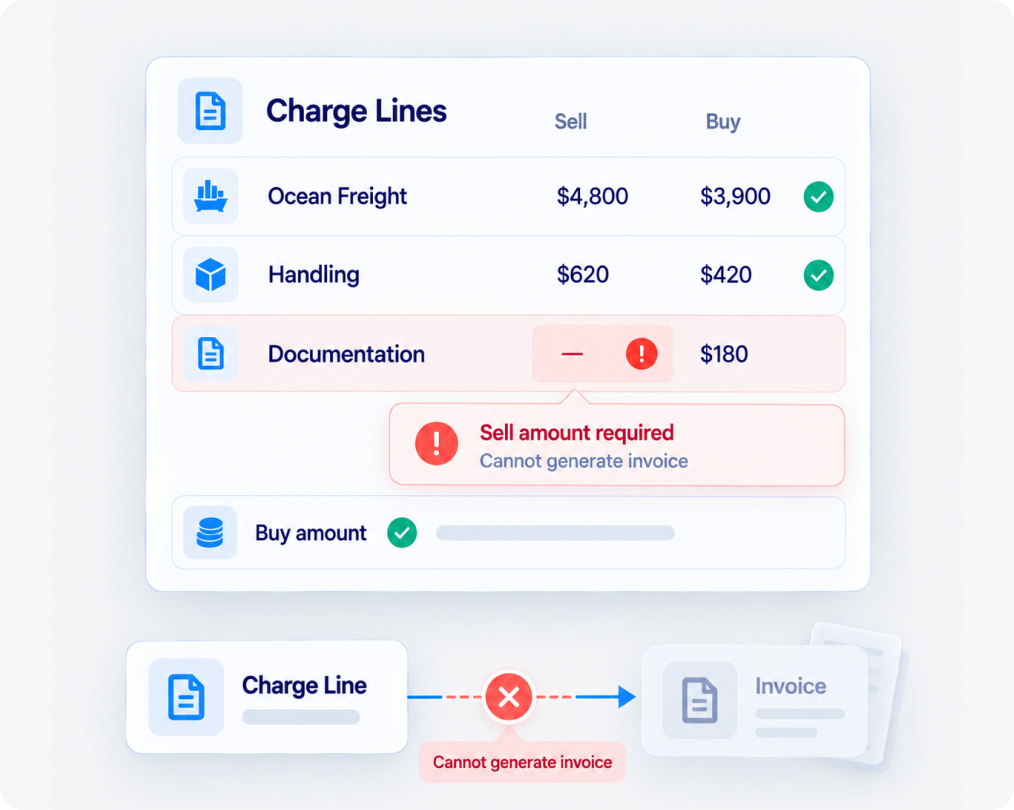
A visible warning flags any charge line missing a declared sell or buy amount, before it becomes an invoice or cost that has to be corrected afterward.
A charge line missing its sell or buy amount is easy to miss in a long list, and the cost of missing it is a zero-value invoice or cost line that has to be credited, corrected and re-issued after the fact. Shipthis flags it visibly on the line itself, so a scan across the charges before generating an invoice catches it while it’s still a two-second fix instead of a correction cycle.
Every Charge Follows the Master’s Split, Except the Ones You Choose to Override
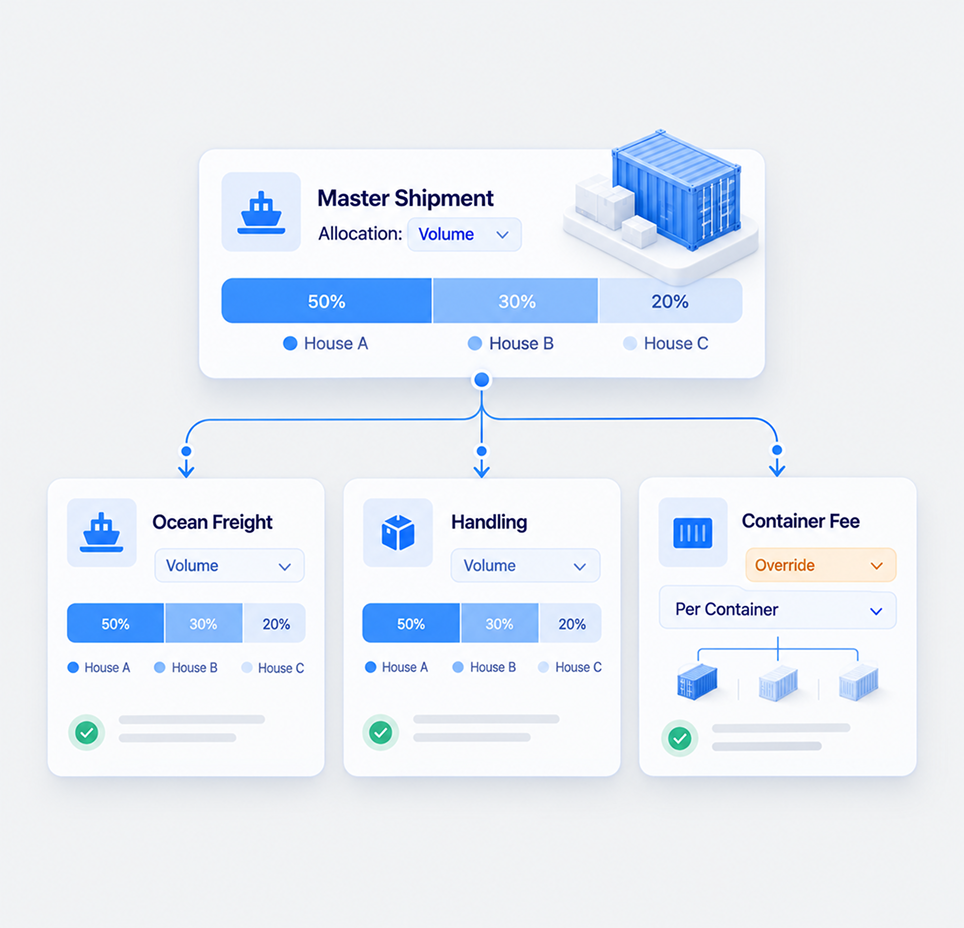
A master’s charges allocate across its houses by the trade’s basis, with any individual line free to use a different method when it genuinely needs one.
A master shipment’s default allocation, by weight, volume, container count or another basis, applies across every charge automatically, and each split line’s financial impact lands correctly on its house through the Billing Shipment field. Where one specific charge doesn’t fit the default, such as a flat per-container fee on an otherwise per-volume master, that single line can override the method without changing anything else on the shipment.
Full detail on consol margin and how splits feed job profitability lives on the Job P&L Management page; this is the mechanism underneath it.
One Line Became Three Vendors’ Worth of Cost. Split It, Don’t Rebuild It.
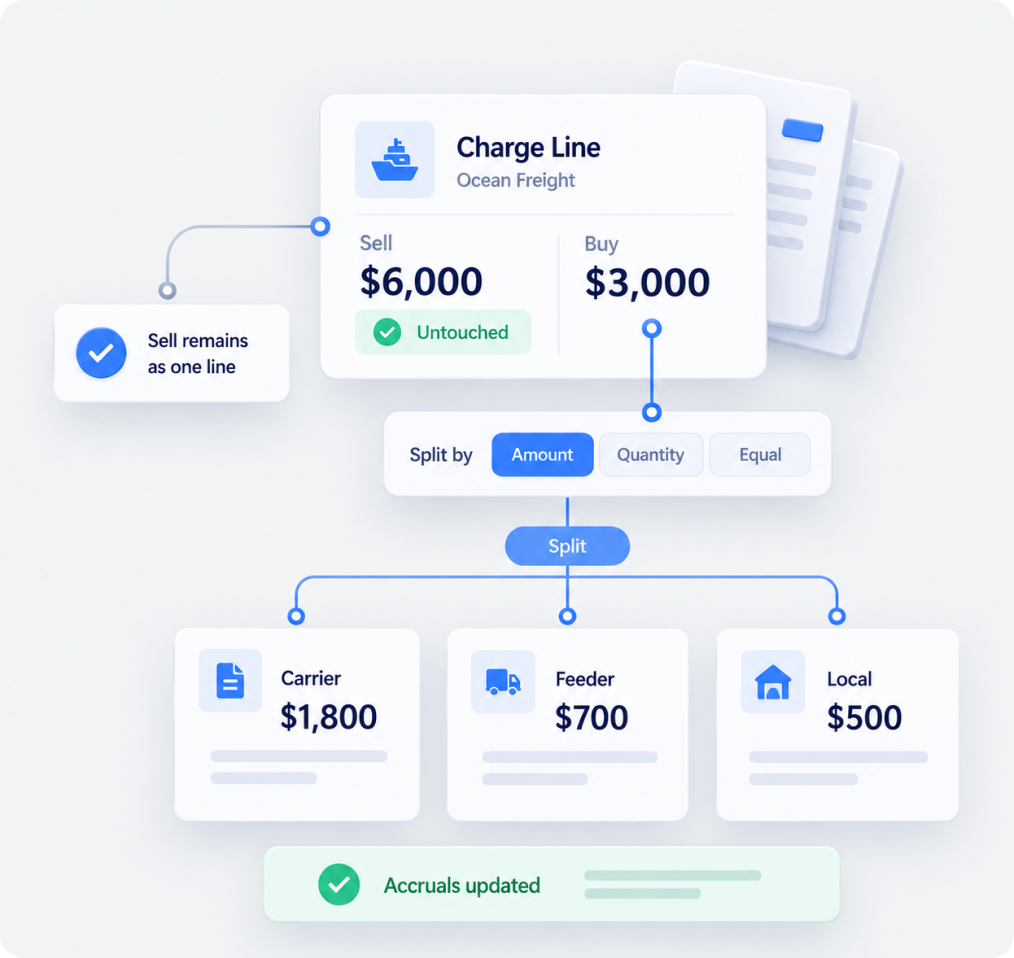
Extract a specific amount, extract a quantity with the cost following proportionally, or divide a line into equal parts. The sell side stays untouched throughout.
A carrier’s bill sometimes bundles a main leg with a feeder service from someone else, or a shared cost needs dividing across units going to different places. Rather than deleting and recreating the charge, split the buy side directly: pull out a specific amount, extract a quantity with cost following proportionally, or divide the line into equal parts across multiple new cost lines. The sell side is never touched, and accruals recompute automatically for every resulting line.
Reverse One Accrual on the Line. Keep the Line, and the Other Side, Intact.
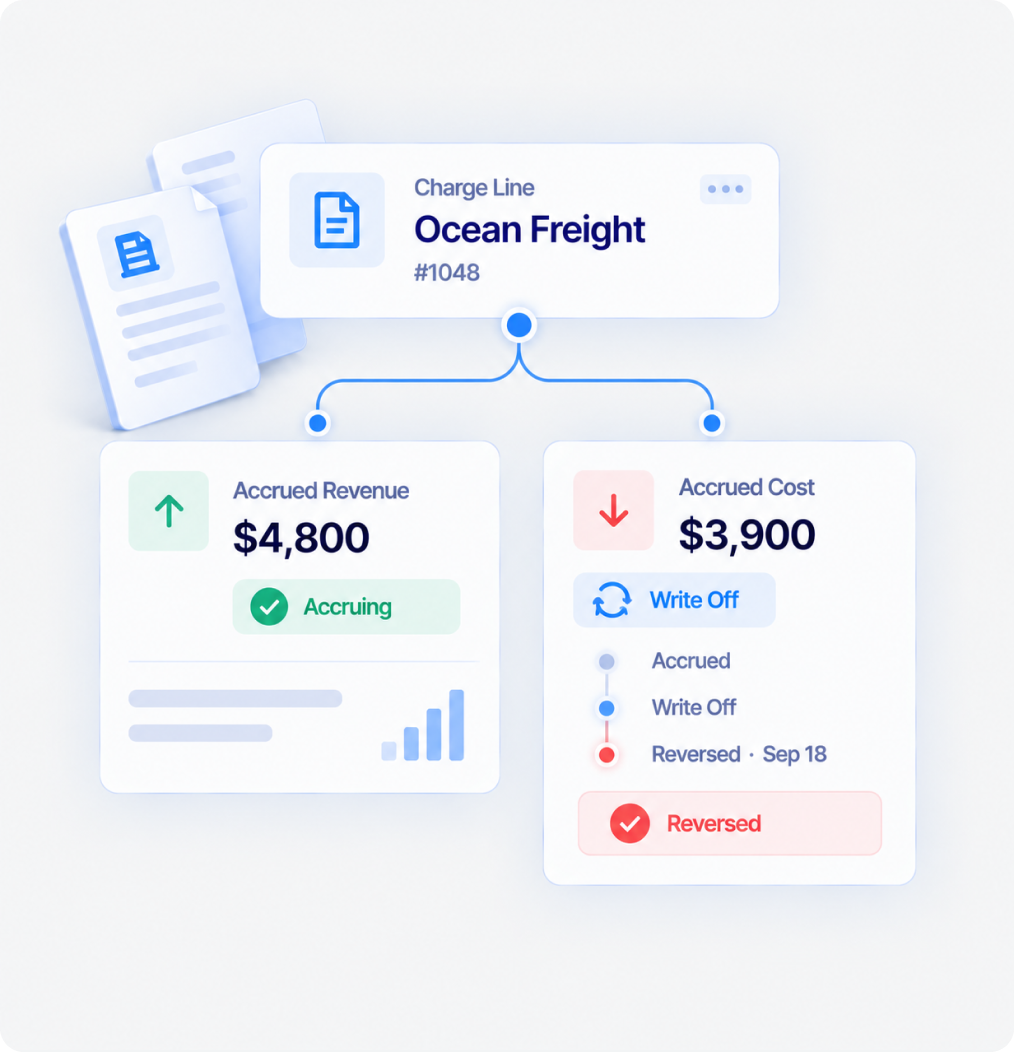
Reverse the accrued cost or the accrued revenue on a charge line independently, on its own date, without touching the other side or losing the line.
An accrued cost that will never be billed, or accrued revenue that will never be invoiced, used to mean editing or deleting the whole charge line. That’s awkward once an accrual already exists, and worse once it sits in a closed period. A per-side reversal writes off just the wrong side, on a date you choose in an open period, while the other side keeps accruing normally. The line stays, the correction is visible in the ledger, and that side settles cleanly rather than continuing to block the job.



A Code Classifies a Cost. A Charge Line Runs the Job.
Sell and buy together, driving the accrual engine, splitting across a consol, catching what’s missing before you invoice, and settling cleanly when an estimate turns out wrong.
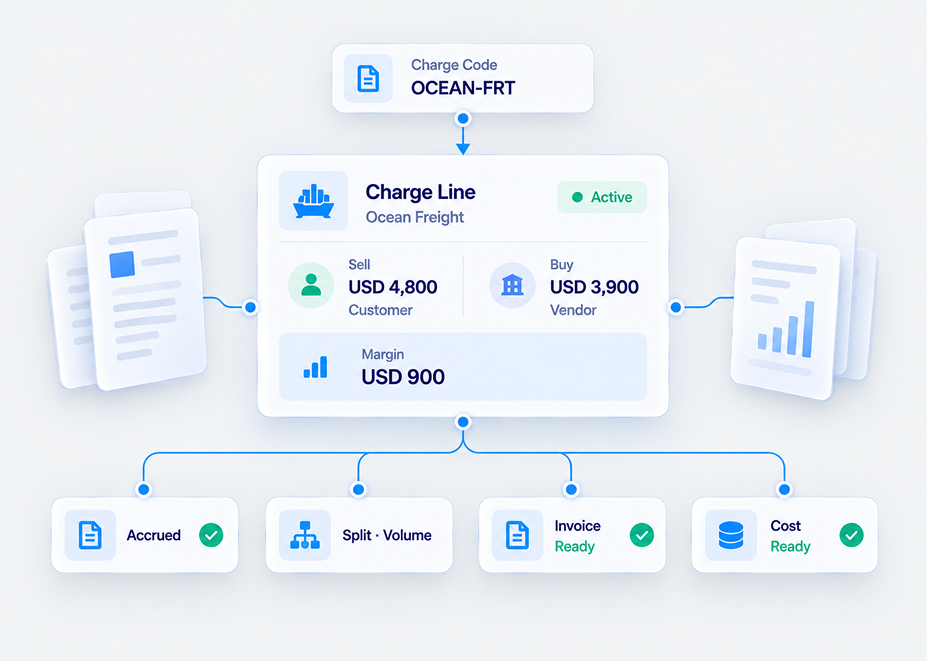
A predefined, customisable charge code that classifies costs consistently is a reasonable baseline, and most systems, including the major ones, offer that. What’s different here is what the charge line actually carries: both sides of the transaction, live margin as the job is built, automatic accrual and reversal, consol allocation with room for exceptions, and a warning before a gap becomes an invoice you have to correct.
Ask what a charge code in your current system actually knows about a job’s margin, its accrual state, or its consol split. If the answer is nothing (it’s a label the amount sits next to), that’s the gap this module closes.
Your Charge Codes, Rationalised, Not Imported As-Is
A dedicated implementation team cleans up and configures your Charge Master before go-live, so every charge line starts from consistent codes and defaults.
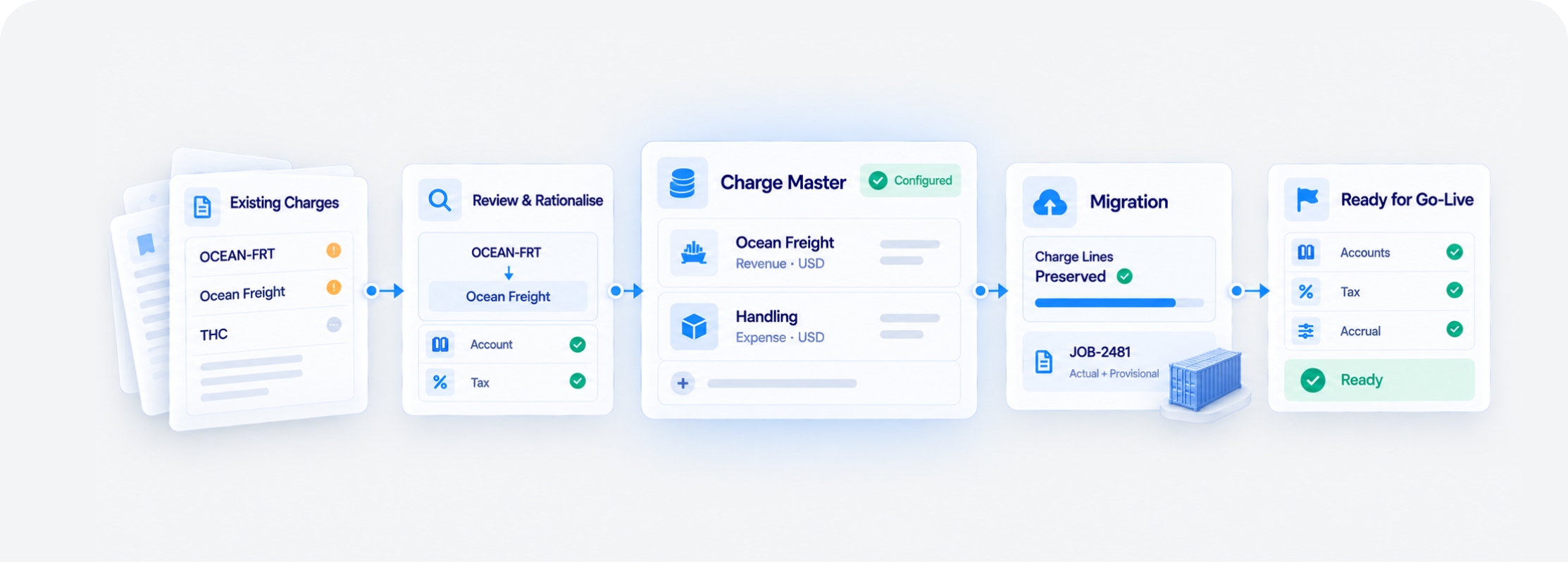
Implementation reviews your existing charge codes against your chart of accounts, consolidates inconsistent naming, and sets the accrual and tax defaults each one needs before go-live, since a messy Charge Master undermines everything built on top of it. Existing shipments and their charge lines migrate in with their provisional and actual positions intact. Most customers are fully operational within 9 weeks.
Bring a Job With a Messy Charge. We’ll Show You How It’s Handled.
A bundled vendor bill, a consol split, an accrual that turned out wrong, whichever is most familiar.
The fastest way to judge this is against a real charge situation rather than a clean demo shipment. Prefer to explore first? A free 30-day trial gives your team hands-on access with no commitment.

Charge Module Questions, Answered
Both, on the same line — its own customer and sell side, its own vendor and buy side, each in its own currency.
No. With charge mode on, a line can only appear on one invoice and one cost. Attempting to reuse it is refused.
Yes, visibly on the line itself, before it can slip through into a zero-value invoice or cost.
By the master’s default allocation basis, with any individual charge line free to override that method when it needs to.
Yes. By a specific amount, by extracting a quantity with cost following proportionally, or by dividing into equal parts. The sell side is never affected.
Reverse just that side on its own date, in an open period. The other side keeps accruing normally and the line itself stays in place.
Yes. Implementation reviews and rationalises them against your chart of accounts before go-live, and existing shipments migrate with their charge positions intact.