
Every Shipment Type You Actually Move. Not Just the Standard Ones.
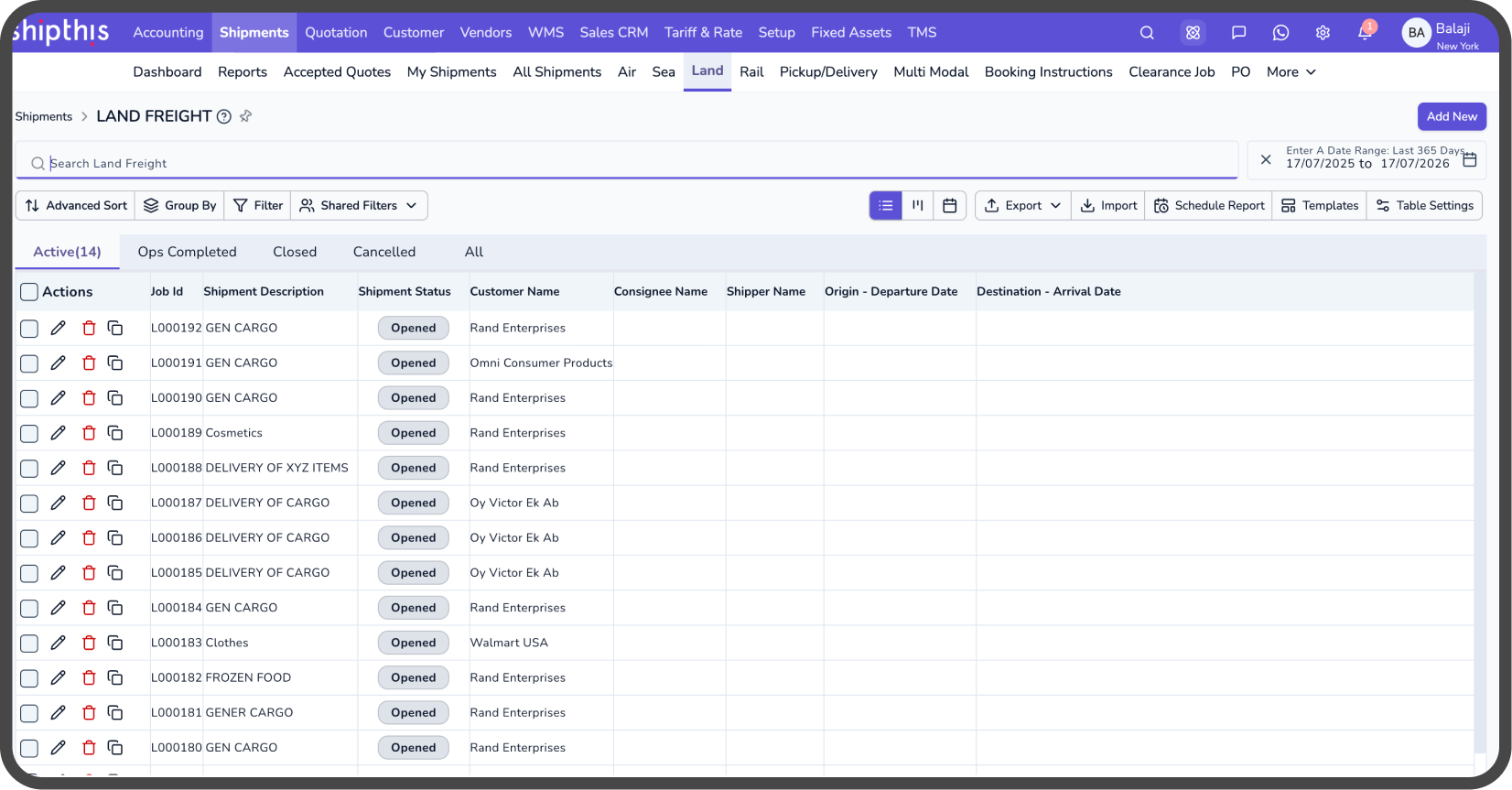
Groupage and consolidation management built for how LCL and groupage actually work, buyer consols, seller consols, and everything in between. Shipthis matches every House Bill to its Master automatically, optimizes how cargo is packed and grouped, splits cost fairly across every shipper in the consol, and keeps the whole shipment visible from origin warehouse to final-mile delivery.




.avif)
Every House Bill inside a consol has to tie back to the right Master, the right cost share, and the right destination. Shipthis keeps all of it reconciled automatically.
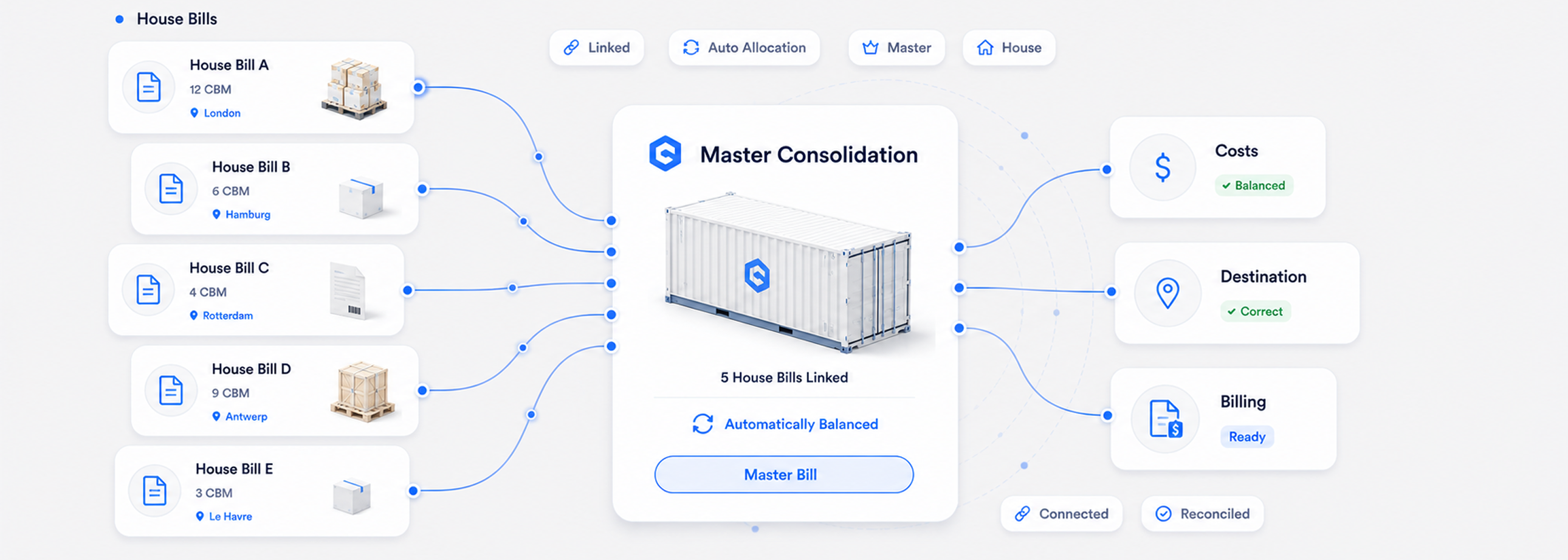

A single consolidated container might carry cargo for a dozen different shippers, each with their own House Bill, their own cost share, and, in a seller consol, their own destination once the container is broken down. When that reconciliation happens by hand, a mismatched House Bill, a miscalculated cost split, or a misdirected package at degroupage isn't a rare mistake, it's a predictable outcome of the volume involved. Shipthis treats every House Bill as a linked record against its Master from the moment the consol is built, so weight, cost allocation, and destination stay correct automatically as shipments are added, changed, or broken down at the other end.


What Changes When Freight Forwarding Runs on One System
Buyer Consols and Seller Consols Aren't the Same Workflow. Shipthis Treats Them That Way.
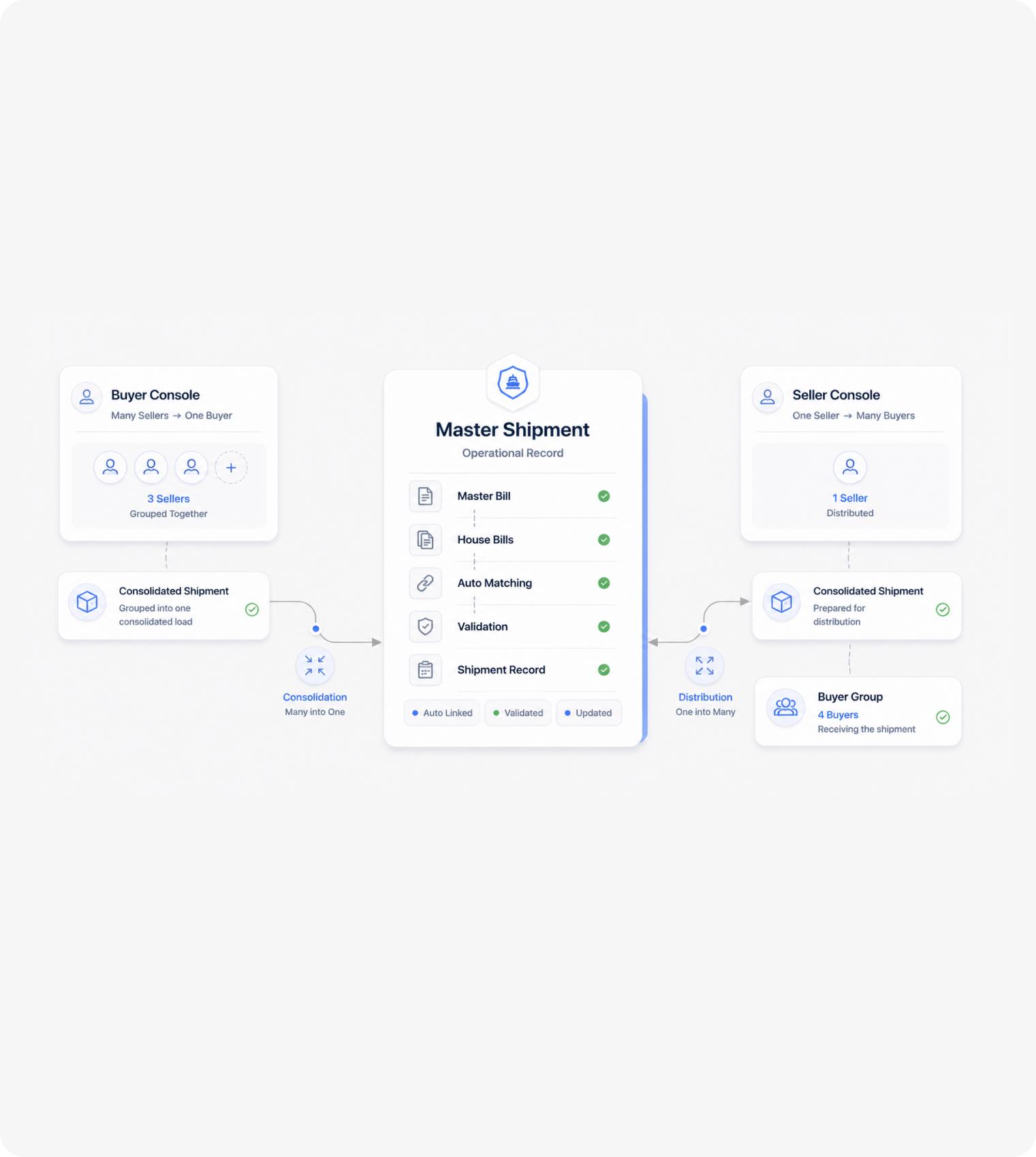
Many sellers to one buyer, or one seller to many buyers, each consolidation type is managed the way it actually works, with House Bills matched to the Master automatically either way.
A buyer consol groups cargo from multiple sellers into one shipment moving to a single buyer, common in import consolidation programs where a buyer wants everything from different suppliers to arrive together. A seller consol runs the other direction: one seller's cargo, grouped with other shippers' cargo, moving to multiple different buyers who each get their goods broken out at destination. Shipthis manages both, with every House Bill matched to its Master automatically, so whether cargo is converging toward one buyer or fanning out to many, the shipment record stays accurate without a manual cross-check.

Fill the Container. Know the Margin. Before It Ships.
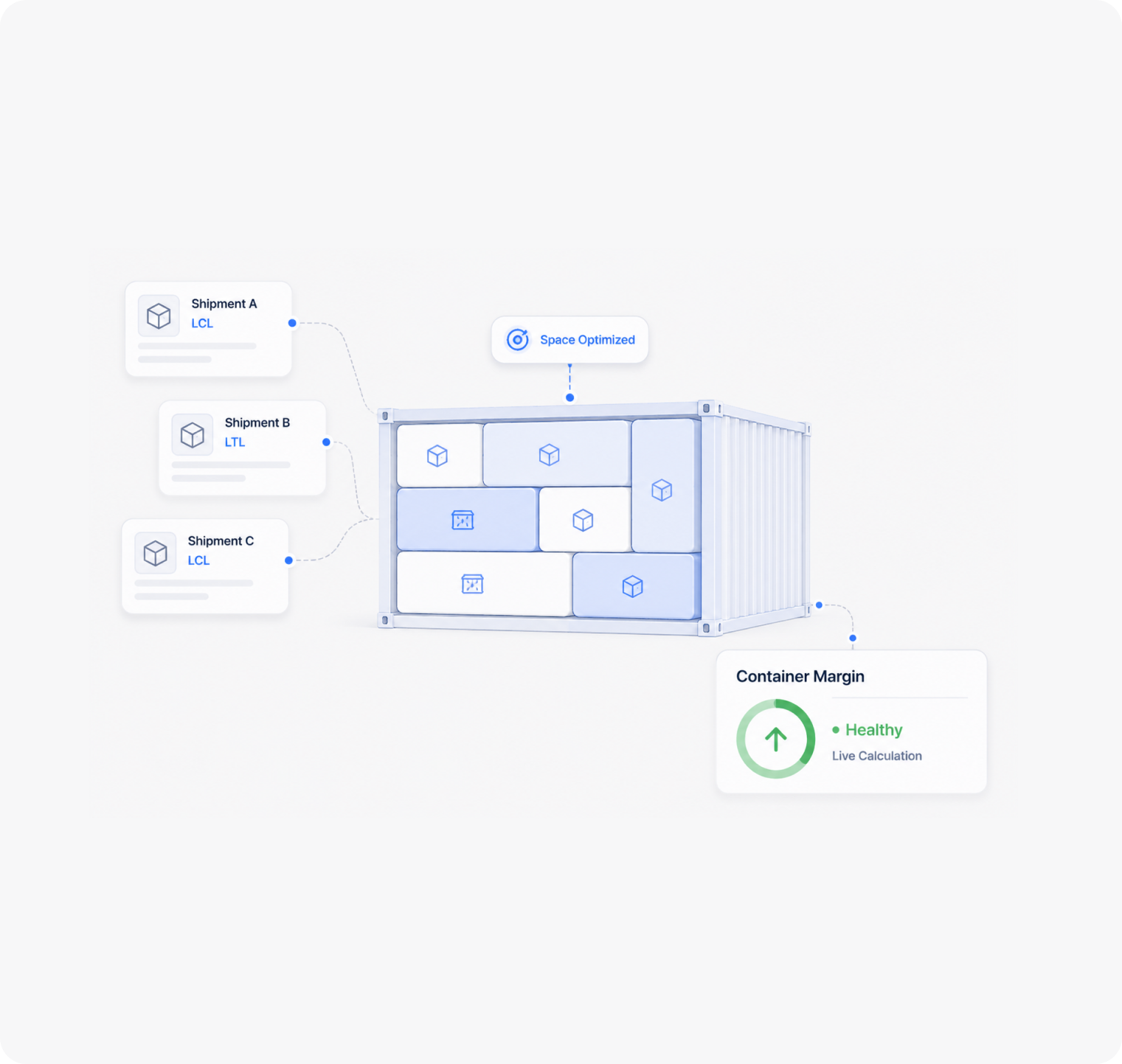
Group LCL and LTL shipments from multiple clients into consolidated units, sized to maximize space and calculated to show profit per container immediately.
An under-filled container is wasted revenue, and an overloaded one is a compliance risk, the difference between the two is getting the packing and grouping right before the container leaves. Shipthis automatically groups LCL and LTL shipments from multiple clients into consolidated units sized to maximize the space actually available, while calculating profit margin per container immediately, so you know what a consol is worth before it ships, and can charge each shipper for exactly the space their cargo occupies.

One Master Bill. Every House Bill. Generated, Not Retyped.
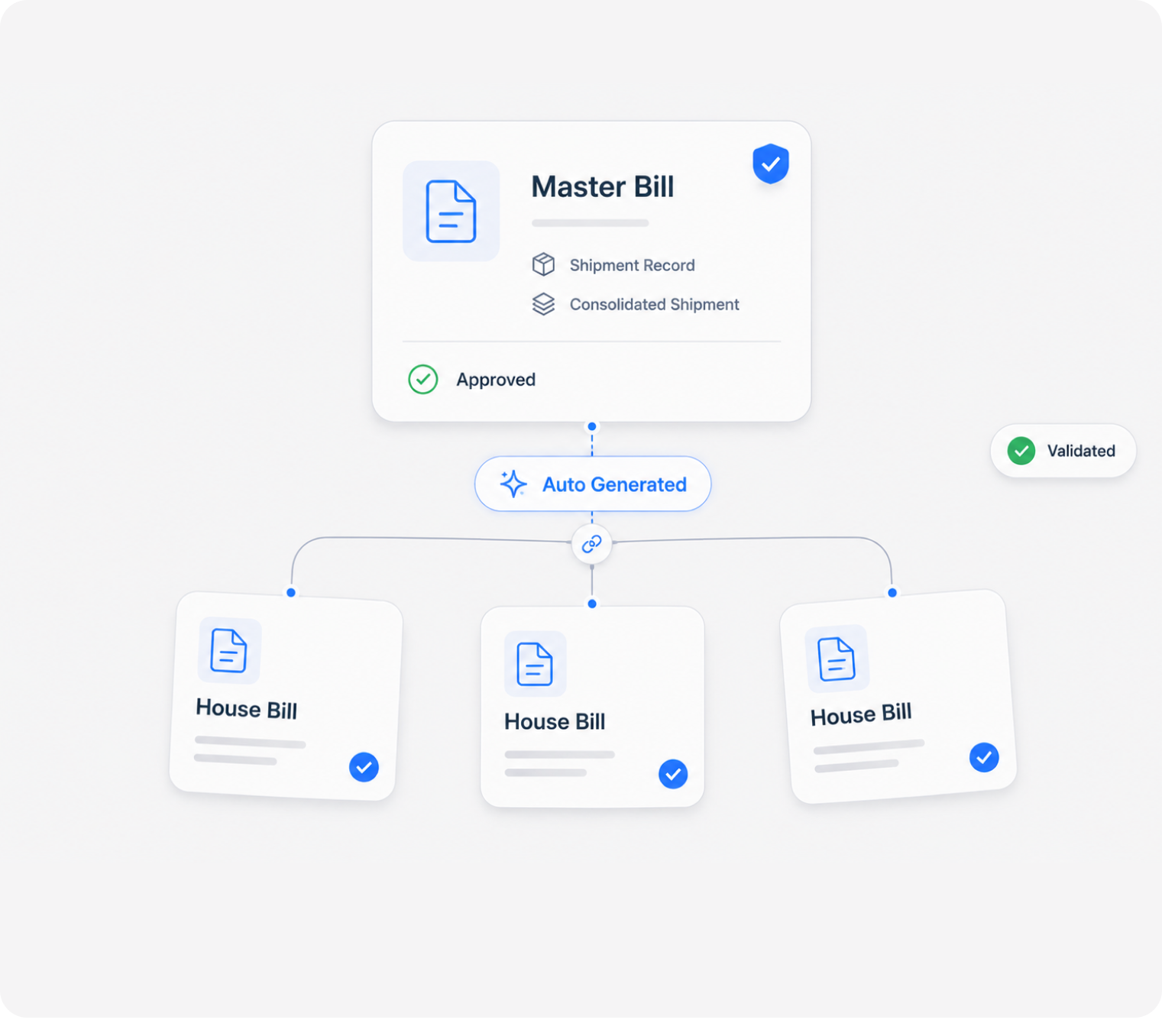
A single Master Bill of Lading for the combined container, and individual House Bills for every shipper inside it, generated directly from consol data.
Once a consol is built, someone still has to produce a Master Bill of Lading for the combined container and a separate House Bill for every distinct shipper inside it, and doing that by retyping shipment details into each document is where documentation delays and compliance errors creep in. Shipthis generates the MBL and every individual HBL directly from the consol's own data, so the paperwork matches what's actually in the system, and your team isn't re-entering the same shipment details once for every House Bill in the group.
The Consol Was Never the Hard Part. The Breakdown Is.
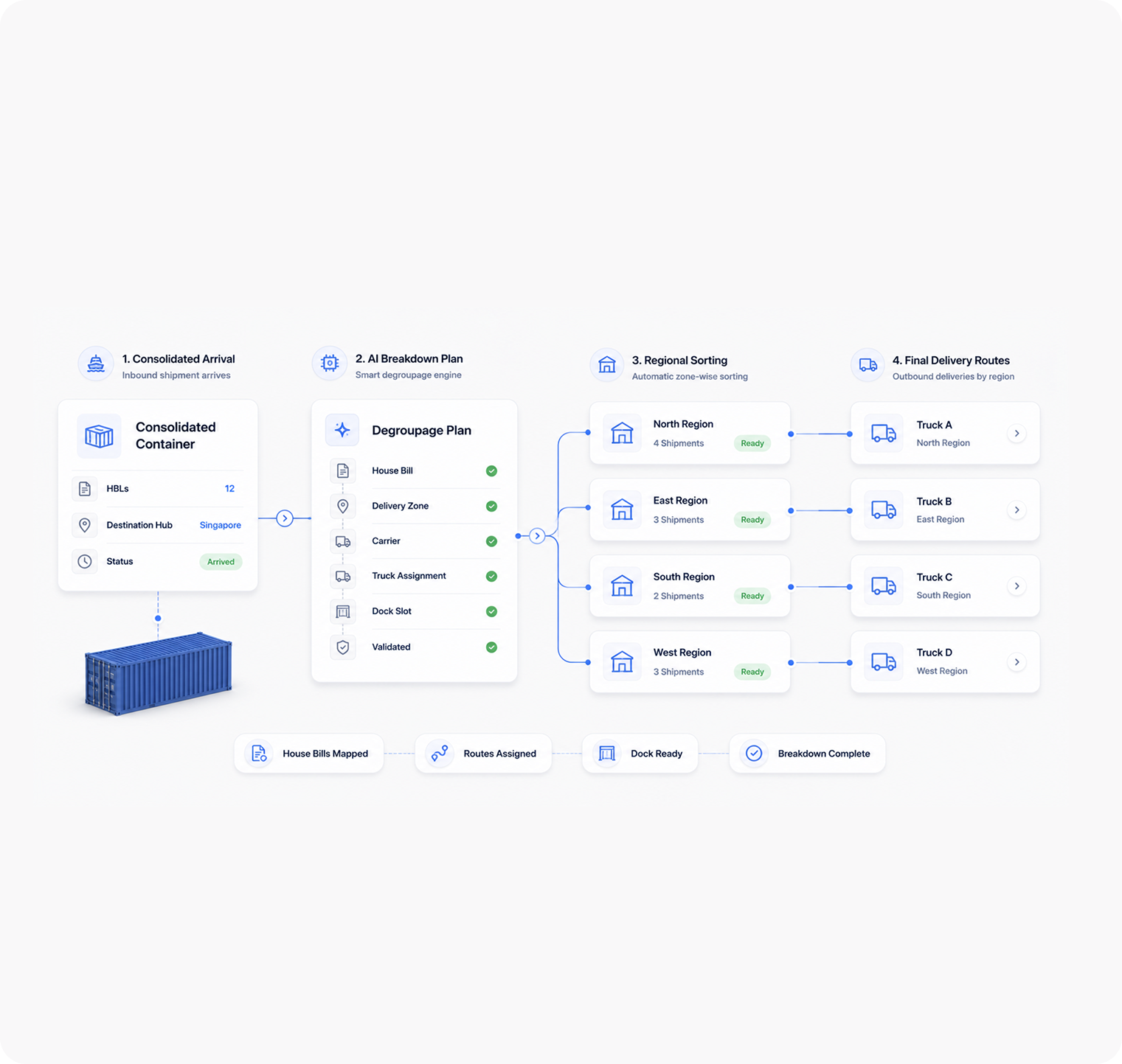
Shipthis maps the degroupage process at the destination hub, so every shipper's cargo goes to the right regional truck or final-mile carrier without manual sorting.
A consolidated shipment arriving at a destination hub still has to come apart correctly, each shipper's cargo routed to the right regional truck or final-mile carrier, without cargo for one buyer ending up on the wrong delivery run. Shipthis maps the degroupage process directly from the consol's own House Bill data, so the breakdown at the hub follows a plan generated from the shipment itself, cutting the bottlenecks and wait times that happen when sorting is worked out manually after the container arrives.
Every Shipper Pays Their Fair Share. Automatically
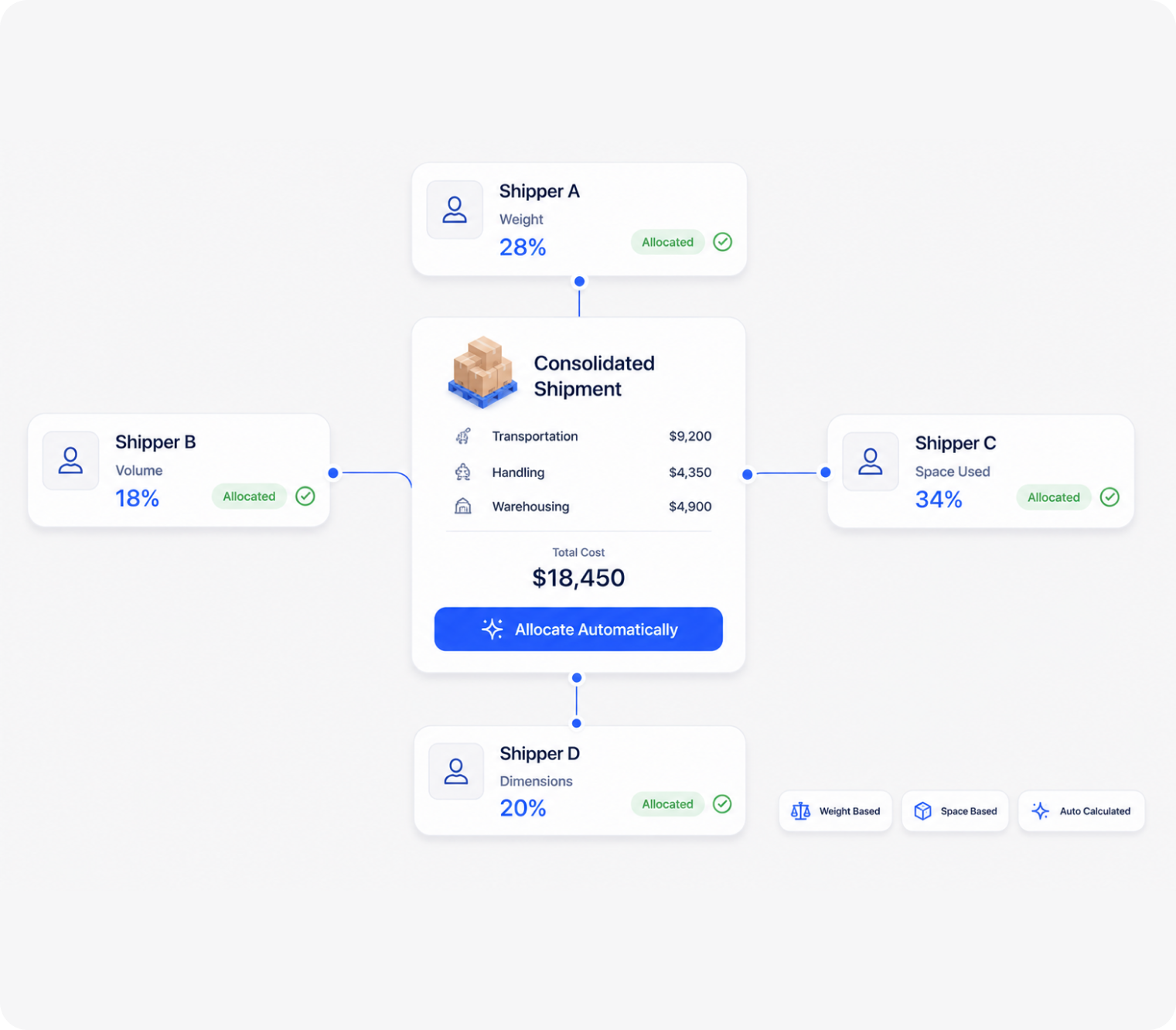
Transportation, handling and warehousing costs split automatically across every shipper in the consol, based on weight, dimensions or space allocation.
Splitting the total cost of a consolidated shipment fairly across every shipper inside it, by weight, dimensions, or space occupied, is exactly the kind of calculation that's easy to get slightly wrong at volume, and those small misses compound into real revenue leakage over a month of consols. Shipthis allocates transportation, handling and warehousing costs automatically across every shipper based on their actual share of the shipment, so nobody is quietly undercharged and no consol closes out with a margin gap nobody can explain.
Origin Warehouse to Final Mile, One View, Every Le
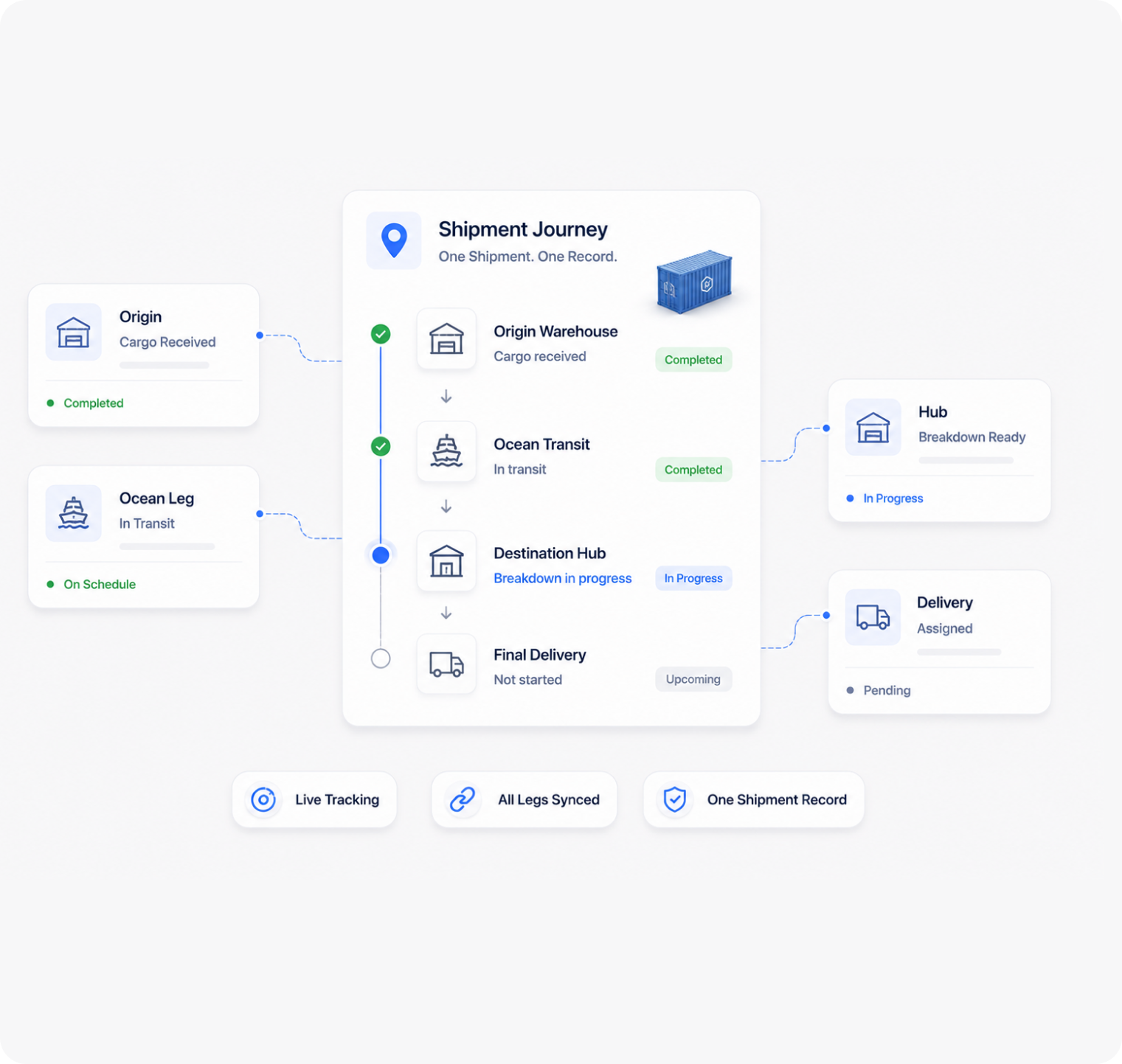
Track consolidated cargo across every leg of transit, from origin warehouse, through the main transport leg, to final-mile distribution, in a single visual interface.
A consolidated shipment moves through several distinct legs, from the origin warehouse, through the main ocean, air or road leg, to final-mile distribution after breakdown, and each handover between carriers is a point where visibility typically drops. Shipthis tracks the full multi-leg journey in one visual interface, so your team and your clients see exactly where a consol stands at any point, without piecing together status from separate systems at each leg.


Every Part of Consolidation, Connected to Every Other Part
Packing, bills, cost allocation, degroupage and visibility aren't five separate tools here, they're five views of the same consol.
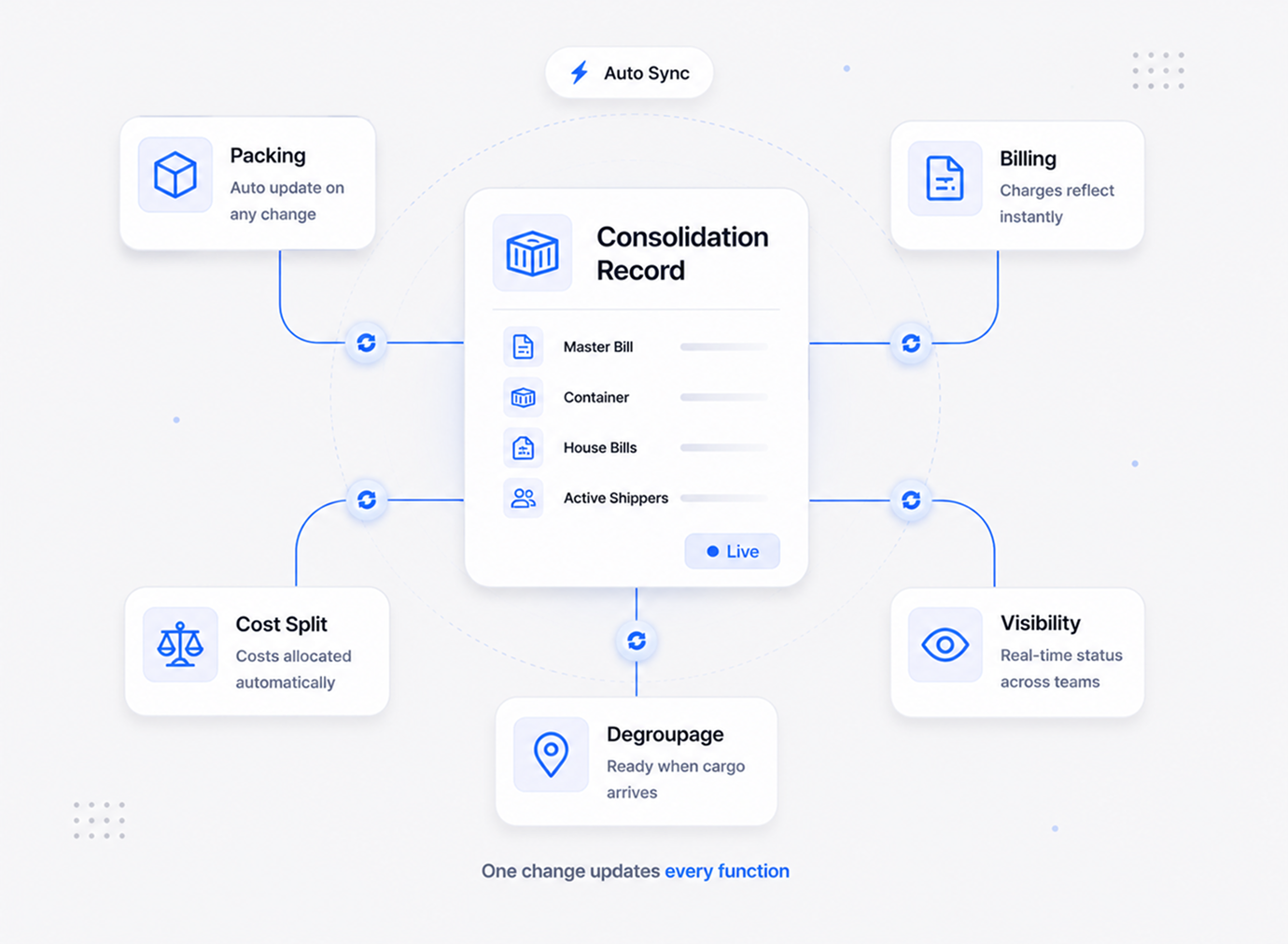
Most groupage tools handle one piece of consolidation well, packing, or billing, or tracking, and leave the rest to spreadsheets and manual cross-checks. Shipthis connects all five: cargo optimization, House/Master Bill generation and matching, degroupage planning, cost allocation, and multi-leg visibility all draw from the same consol record, so a change in one, an added shipper, a re-routed leg, is reflected everywhere else automatically, instead of requiring someone to update five different places by hand.
Go Live Without Losing Track of a Single Shipper's Cargo
A dedicated implementation team and full data migration mean your existing consols, House Bills, and shipper records carry over cleanly.
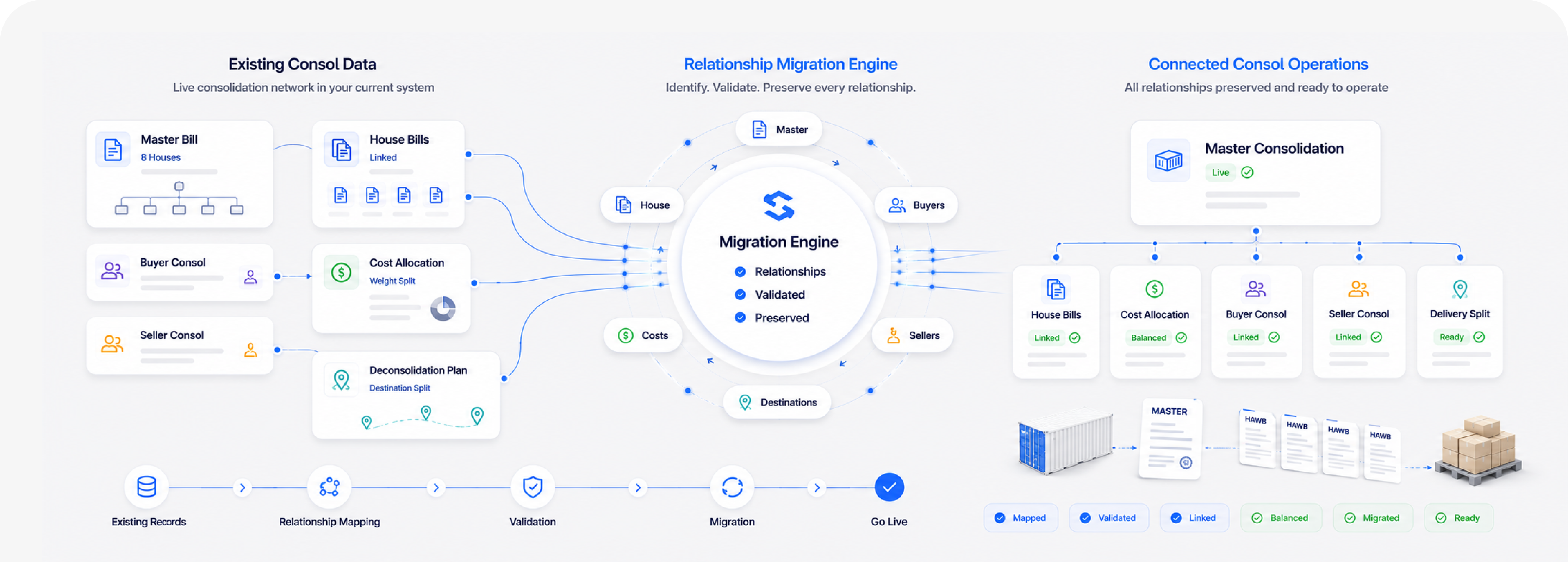
Consolidation doesn't pause for a software rollout, so Shipthis onboarding is built around that reality. Existing consols, House and Master Bill records, and shipper data are migrated for you, and your team is trained on the workflows they'll actually use, buyer and seller consols, bill matching, cost allocation, and degroupage planning. Most customers are fully operational within 9 weeks.

Bring Your Own Consol Mix. We'll Show You How It Runs in Shipthis.
Book a walkthrough with your own buyer or seller consol mix, or start a free trial and explore it yourself.
A demo can be built around your own consolidation mix — buyer consols, seller consols, or both — not a generic script. Prefer to explore first? A free trial gives your team hands-on access with no commitment.

Frequently asked Question
A buyer consol groups cargo from multiple sellers moving to one buyer; a seller consol groups one seller's cargo with other shippers, moving to multiple buyers who each get their goods broken out at destination. Shipthis manages both.
Yes. Every House Bill is linked to its Master automatically as the consol is built, and stays reconciled as shipments are added, changed, or removed.
Yes. A single Master Bill of Lading and individual House Bills for every shipper are generated directly from the consol's own data.
Transportation, handling and warehousing costs are split automatically across every shipper based on weight, dimensions or space allocation, so each shipper is billed their fair share.
Yes. The degroupage process is mapped from the consol's House Bill data, so each shipper's cargo is routed to the right regional truck or final-mile carrier.
Yes. Shipthis lets you track a consolidated shipment across multiple legs and carriers, giving visibility into the shipment’s movement from origin to destination, even when different carriers or transport legs are involved.