Digital Freight Forwarding, Built Into the Operation
Digital freight forwarding isn't coming. It's here, and it's already changing who wins the business. Shipthis runs quoting, documentation, compliance, billing and customer visibility on one connected platform, not paper trails with a tracking link bolted on. Open it up through our API, and it connects directly into your customers' ERP, EDI and TMS systems, so shipment data moves the moment something changes, not when someone finally gets around to an update email.
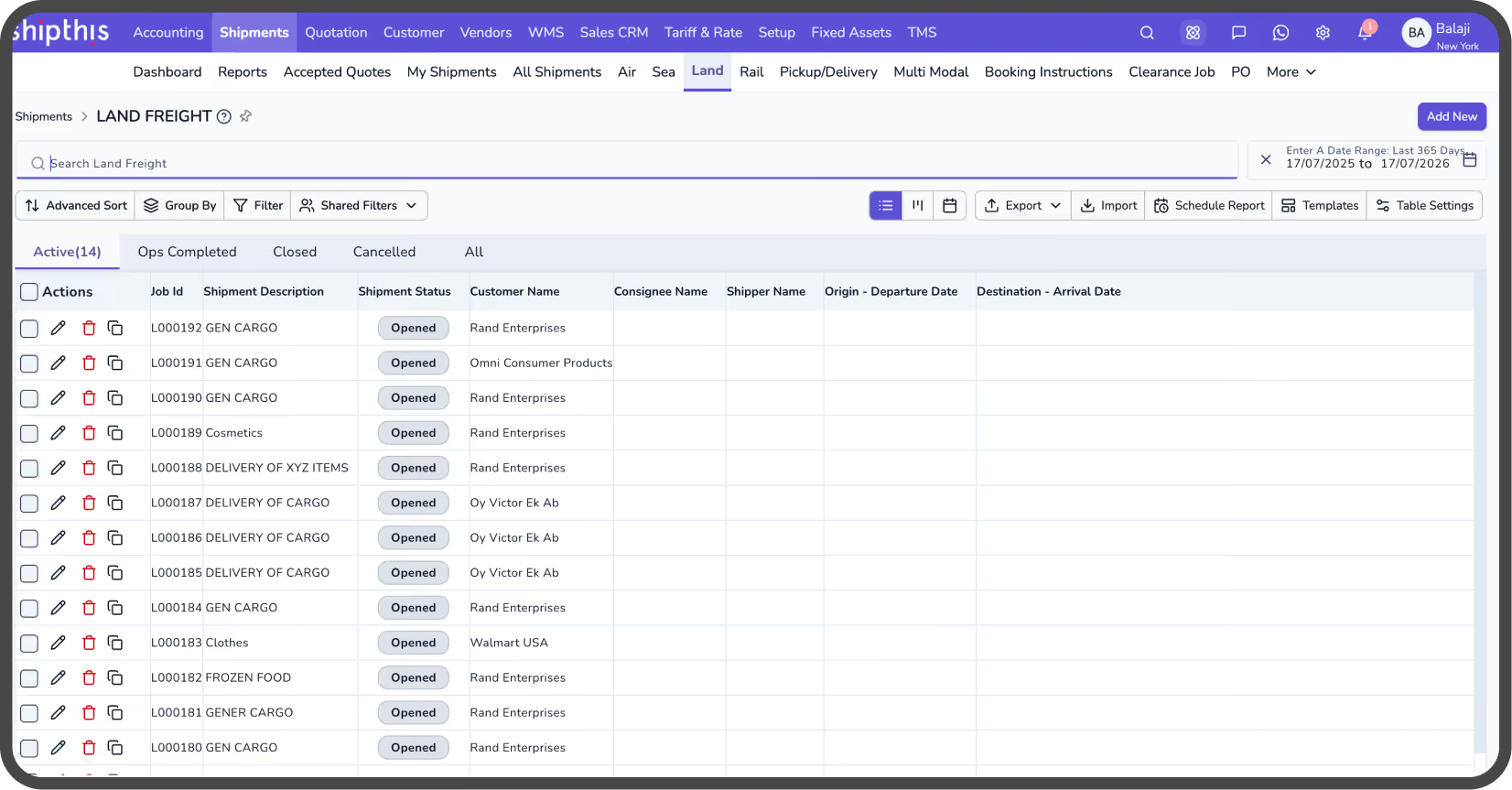




.avif)
Real digital freight forwarding means the quoting, documentation, compliance and billing behind the dashboard are digital too — not just the view your customer sees.
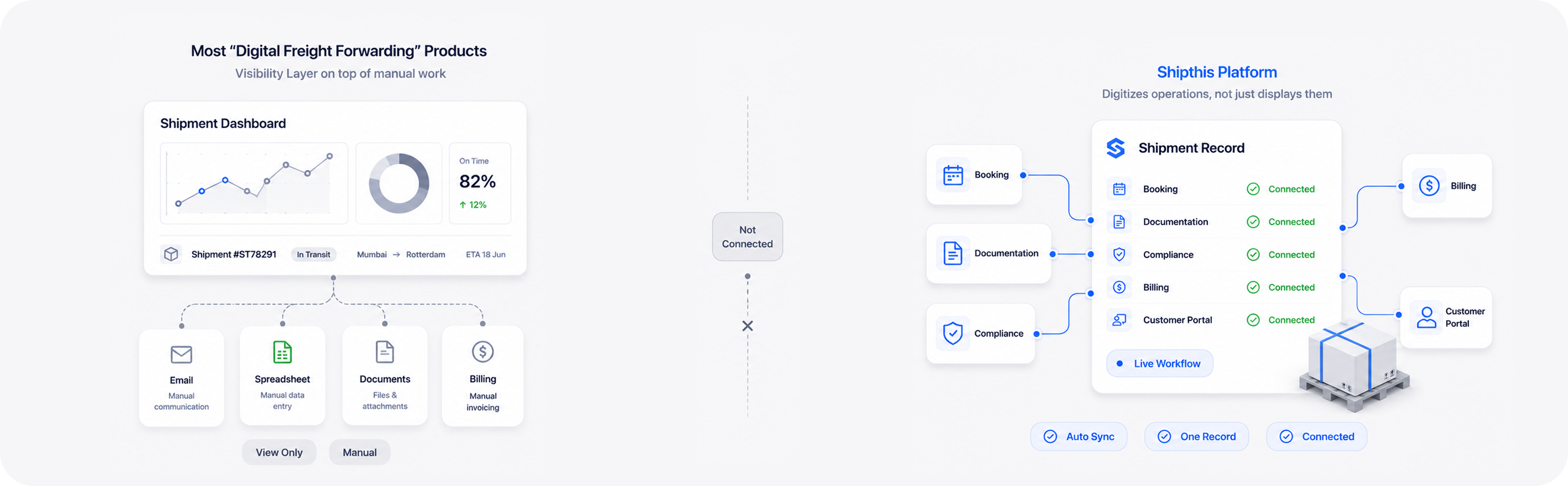

A lot of "digital freight forwarding" in the market today is a visibility layer, a clean customer-facing dashboard sitting on top of the same manual quoting, documentation and billing processes that were there before. That's a real improvement for the customer experience, but it doesn't touch the actual cost and speed of running the operation, because the work behind the dashboard hasn't changed. Shipthis makes the operation itself digital, quoting, documentation, compliance, billing, with customer visibility as a natural output of that, not a layer built to compensate for what's still manual underneath.

Digital freight forwarding means the whole shipment, not just the view of it.


What Changes When Freight Forwarding Runs on One System
Heading: Quoting, Documents, Compliance and Billing, Digital Because They're Connected, Not Because They're Visible
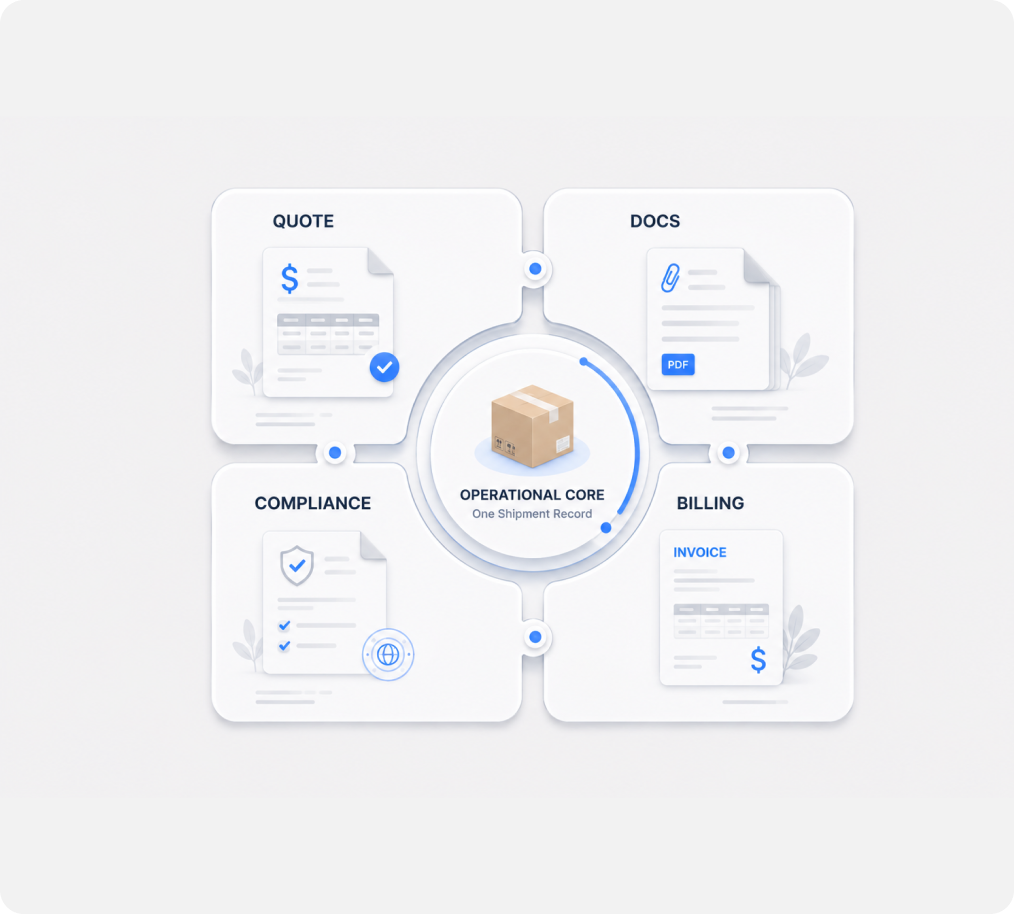
The same platform that generates the quote also generates the documents, tracks compliance, and produces the invoice, so visibility reflects a digital process, not a manual one wearing a digital front end.
Customer visibility is only as good as the process generating the data behind it. Shipthis runs quotation, booking, documentation, compliance checks and billing on the same connected platform, so the status a customer sees reflects a shipment that's actually being processed digitally end to end, not a manual workflow that's been given a dashboard to make it look otherwise. When a milestone updates, it's because the operational system actually reached that milestone, not because someone updated a status field by hand.

Open API, Because Digital Shouldn't Mean Isolated
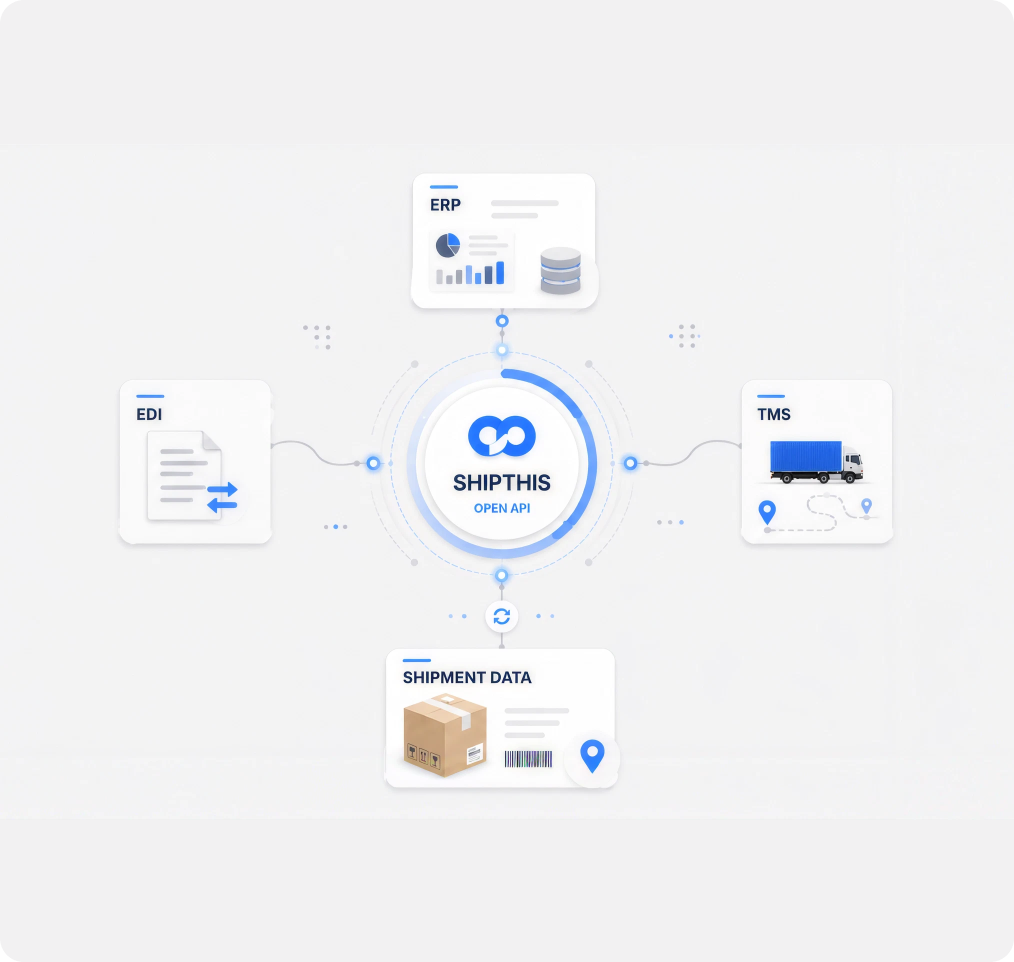
Connect directly to your customers' ERP, EDI and TMS systems, data moves system to system, not through someone re-entering it on either end.
A digital platform that doesn't connect to anything else is still a silo, it's just a well-designed one. Shipthis is built on an open API, so shipment, document and status data can flow directly into a customer's ERP, an EDI connection, or their own TMS, instead of requiring someone on either side to re-enter data that already exists somewhere else. High-integration capability is what actually makes a platform digital in a way that changes how customers and partners work with you, not just how it looks when they log in.

Digital Means the Process Runs Itself, Not Just That It's Online
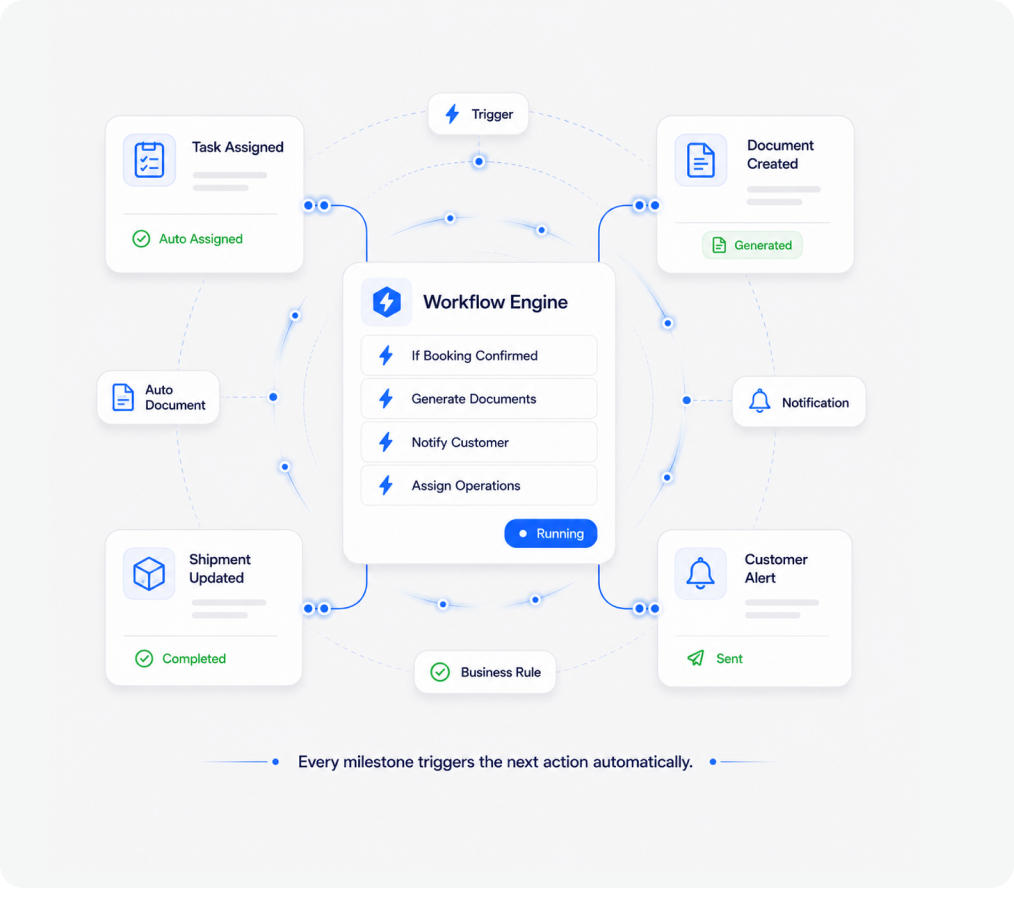
No-code workflows that assign tasks, trigger documents and notifications, and connect every step, configured around how your team actually works.
Digitizing a paper process without automating it just means the same manual steps happen on a screen instead of on paper. Shipthis lets you build workflows around your actual operation, by mode, shipment type, or Incoterm, so tasks get assigned automatically, documents and notifications trigger on the milestones you define, and the process moves forward on its own instead of waiting for someone to push it to the next step.
Everything Above Is What Makes the Portal Worth Trusting
Cost allocation, billing and AI-assisted document handling connected to the same shipment record, so profitability isn't a month-end surprise.
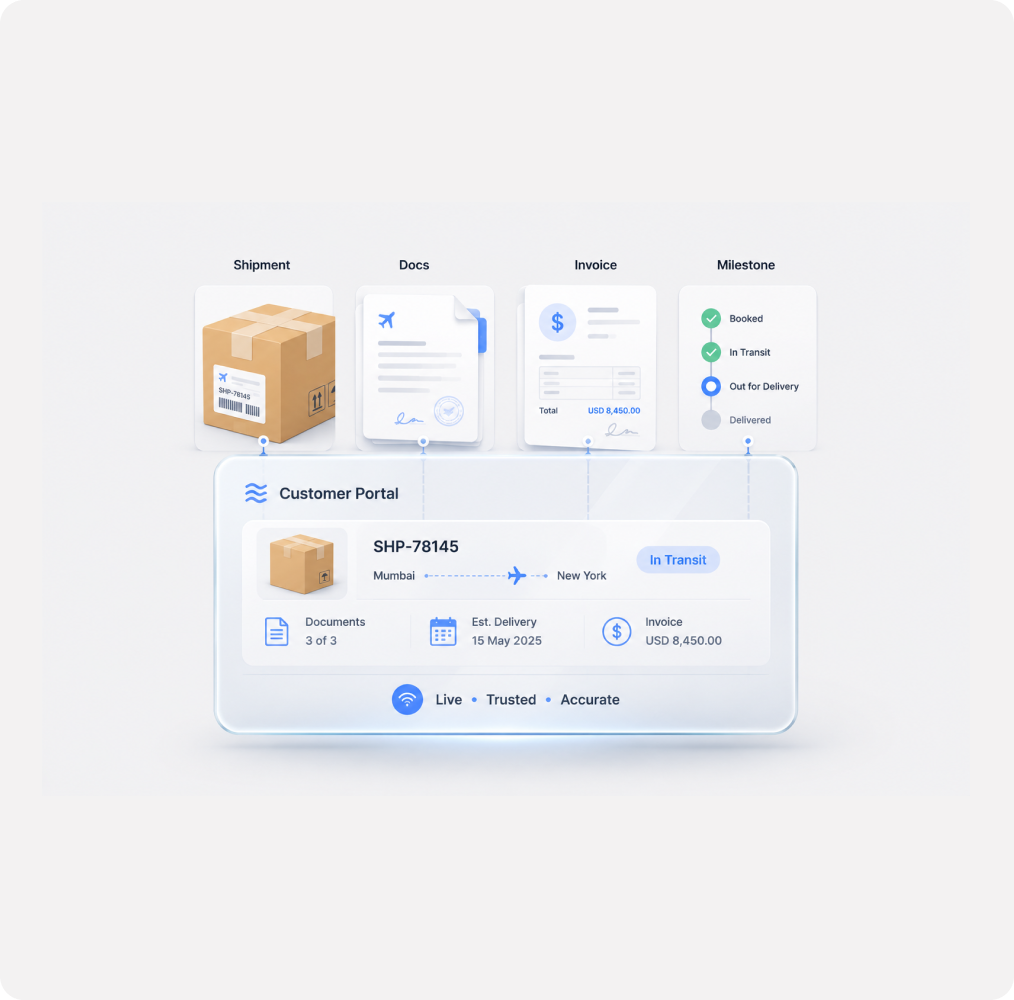
Customer-facing visibility, live milestones, documents, invoices, a branded portal your customers actually use, is a real and valuable part of digital freight forwarding, and it's substantial enough that it has its own dedicated page. What matters here is the point this page is making, that portal is only as trustworthy as the digital operation behind it. Because quoting, documentation, compliance and billing run on the same connected platform covered above, the visibility your customers get is accurate by construction, not a best-effort summary of a process happening somewhere else.
Compliance That Updates Itself, Not a Checklist Someone Has to Remember
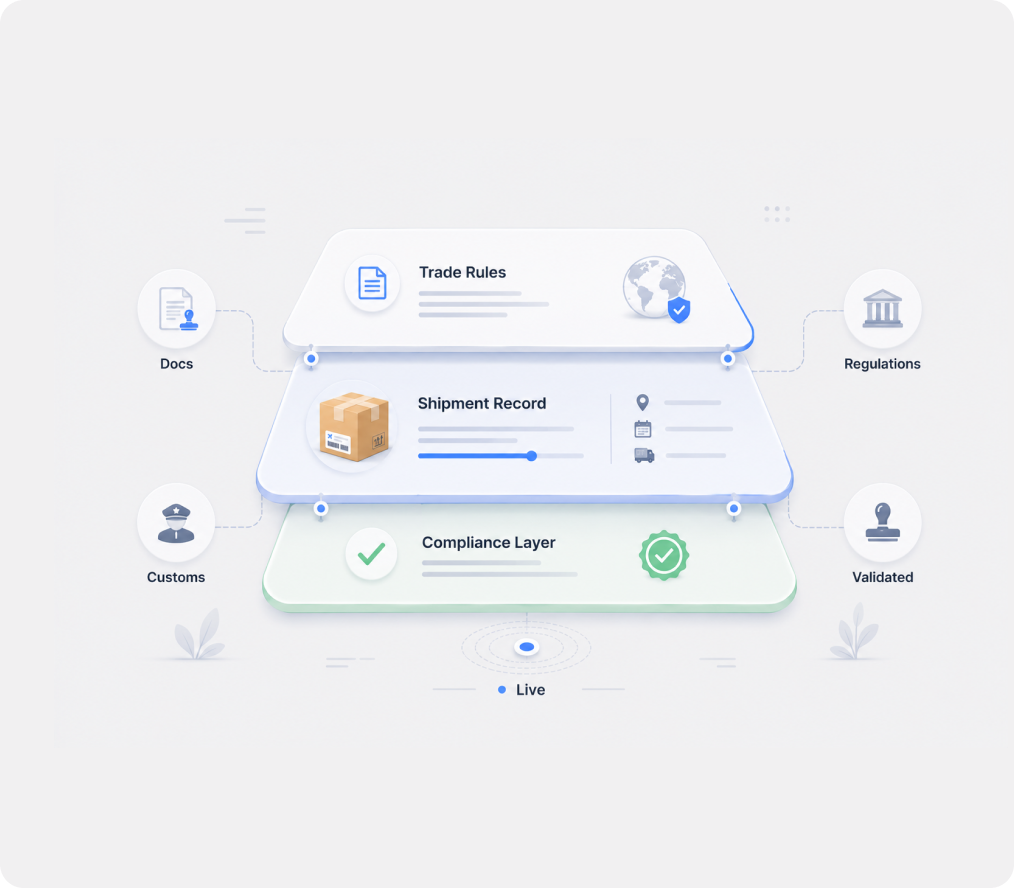
Trade documentation and compliance requirements managed as part of the digital shipment record, not a manual check run separately from the booking.
Trade compliance is one of the highest-risk manual processes in freight forwarding, because a missed document or an outdated requirement doesn't just slow a shipment down, it can stop it entirely. Shipthis manages documentation and compliance requirements as part of the digital shipment record itself, so the right documents and checks are tied to the shipment automatically instead of depending on someone remembering to run a separate compliance process.

Digital Isn't the Differentiator Anymore. Depth and Openness Are.
A fully digital operation, not a portal on top of a manual one, and an open API that connects to the systems your customers already run.
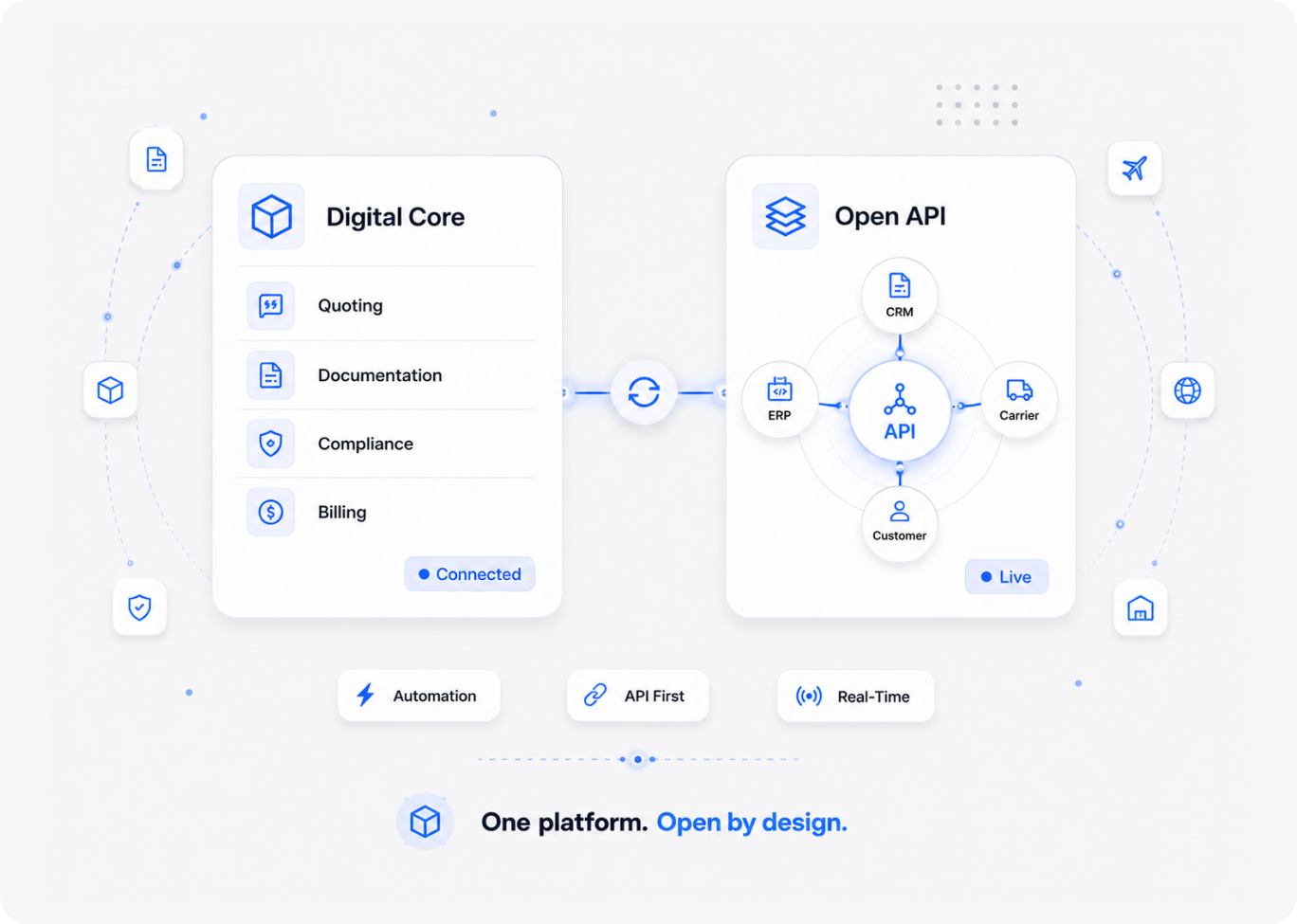
Every forwarder now claims to be digital, which means the claim itself has stopped meaning very much. What actually separates platforms today is whether "digital" reaches the whole operation, quoting, documentation, compliance, billing, or stops at a customer-facing dashboard, and whether the platform is open enough to connect directly to the systems your customers and partners already use. Shipthis is built on both, a genuinely digital operation from quotation to invoice, and an open API that makes system-to-system integration the default, not an enterprise add-on.
Shipthis is designed for growing forwarders, 50 to 500 employees, running air, ocean and multimodal operations, who need one platform that grows with the business.
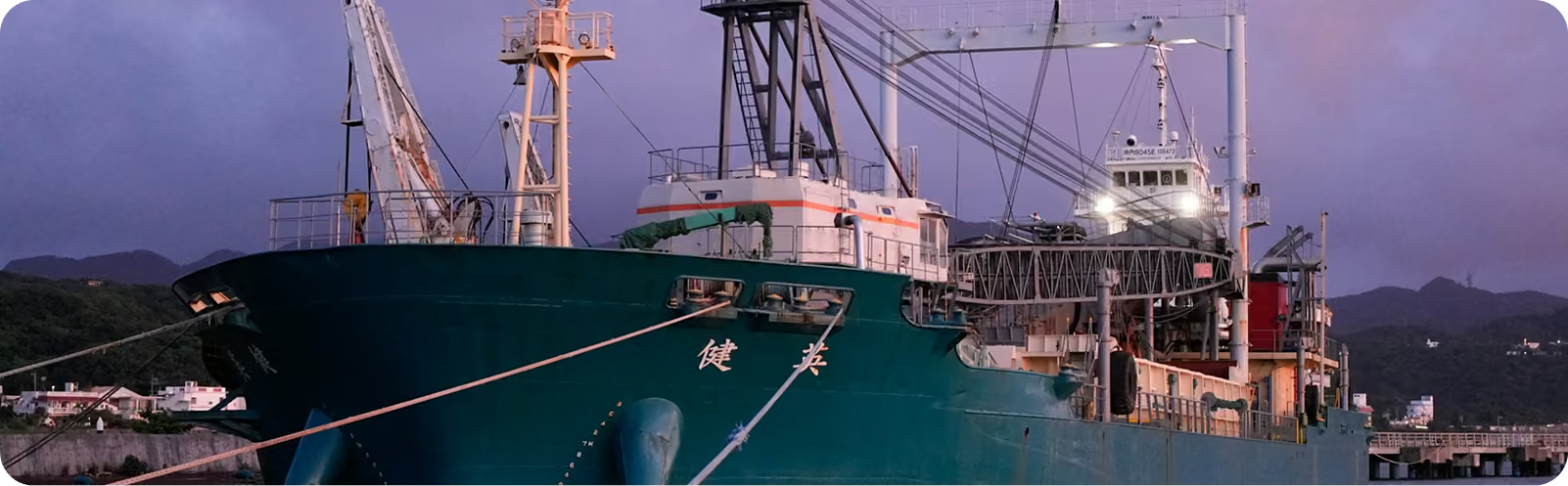
Growth in freight forwarding usually means more shipments and more people just to keep up. Shipthis is built so growth doesn't require a proportional headcount increase, automation and a connected shipment record let your team handle more volume. Pricing scales with your business, and implementation runs in 9 weeks with a dedicated specialist.








From Partial Digital to Fully Connected, in Weeks
A dedicated implementation team migrates your existing data and customer-facing commitments into a genuinely connected, API-first platform.
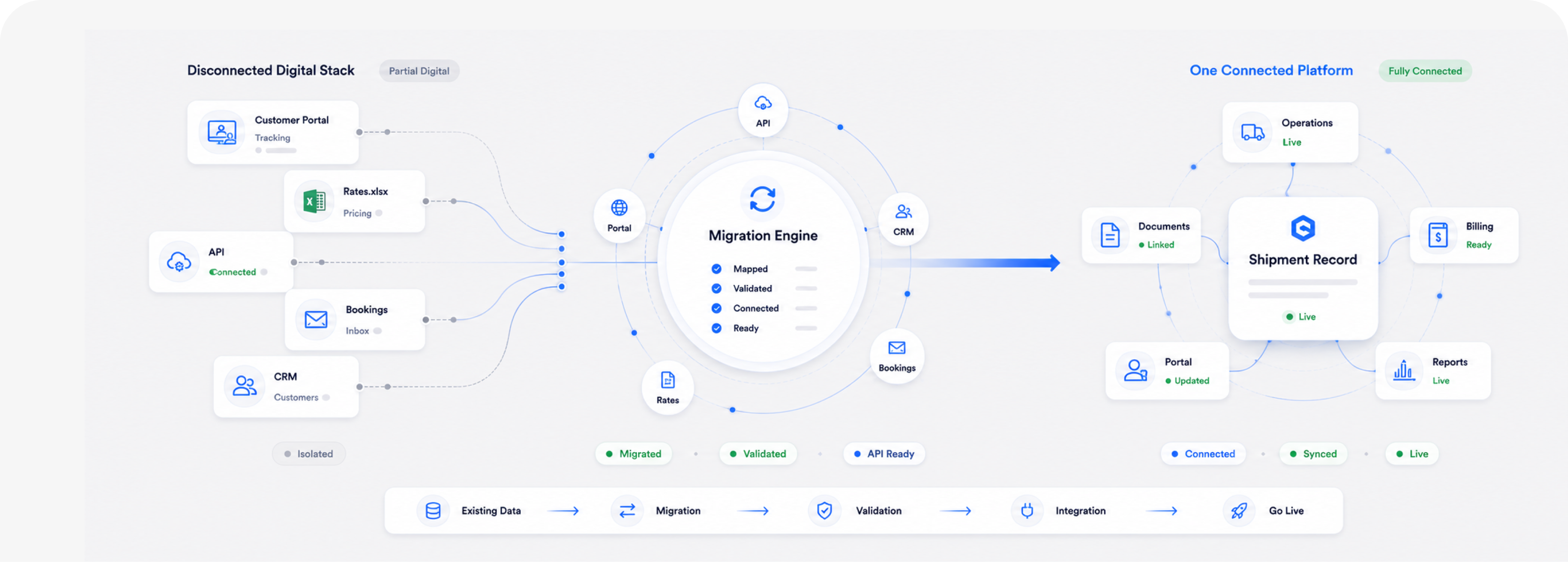
Moving from a partially digital setup, or a portal layered on a manual back office, doesn't mean disrupting what your customers already expect from you. Shipthis onboarding is built around that reality. Existing shipment, customer and integration data is migrated for you, and your team is trained on the workflows they'll actually use, including any API connections your customers already depend on. Most customers are fully operational within 9 weeks.
Book a walkthrough that shows the operation behind the dashboard, or start a free trial and see it yourself.
See how Shipthis helps freight forwarders simplify ocean freight operations, improve visibility, and grow without adding operational complexity.
A demo can walk through the actual operation behind the visibility layer, quoting, documentation, compliance, billing, and the API connecting it to your customers' own systems, not a generic script. Prefer to explore first? A free trial gives your team hands-on access with no commitment.

Ocean Freight Software Questions, Answered
It means running the shipment lifecycle, quoting, booking, documentation, compliance, billing and customer visibility, on connected digital systems, rather than manual processes with a digital layer added on top for appearances or customer visibility alone.
It means running the shipment lifecycle, quoting, booking, documentation, compliance, billing and customer visibility, on connected digital systems, rather than manual processes with a digital layer added on top for appearances or customer visibility alone.
Yes. Shipthis is built on an open API, designed for direct system-to-system integration with ERP, EDI and TMS systems your customers and partners already use.
No. Implementation is built to migrate whatever combination of digital and manual processes you currently run, including existing customer-facing integrations, into a fully connected platform.
It's part of the same platform. No-code workflow automation is built to match your actual operation, so digitized data can trigger the next step automatically rather than waiting for someone to move it forward manually.