Every Shipment Type You Actually Move. Not Just the Standard Ones.
Breakbulk, RoRo, project cargo, reefer, special and out-of-gauge cargo, dry bulk, and DG shipments — each with its own data, documentation and compliance needs — managed from the same platform as your standard container business, across air, ocean, road and rail. Nothing gets treated as an exception that has to be handled outside the system.
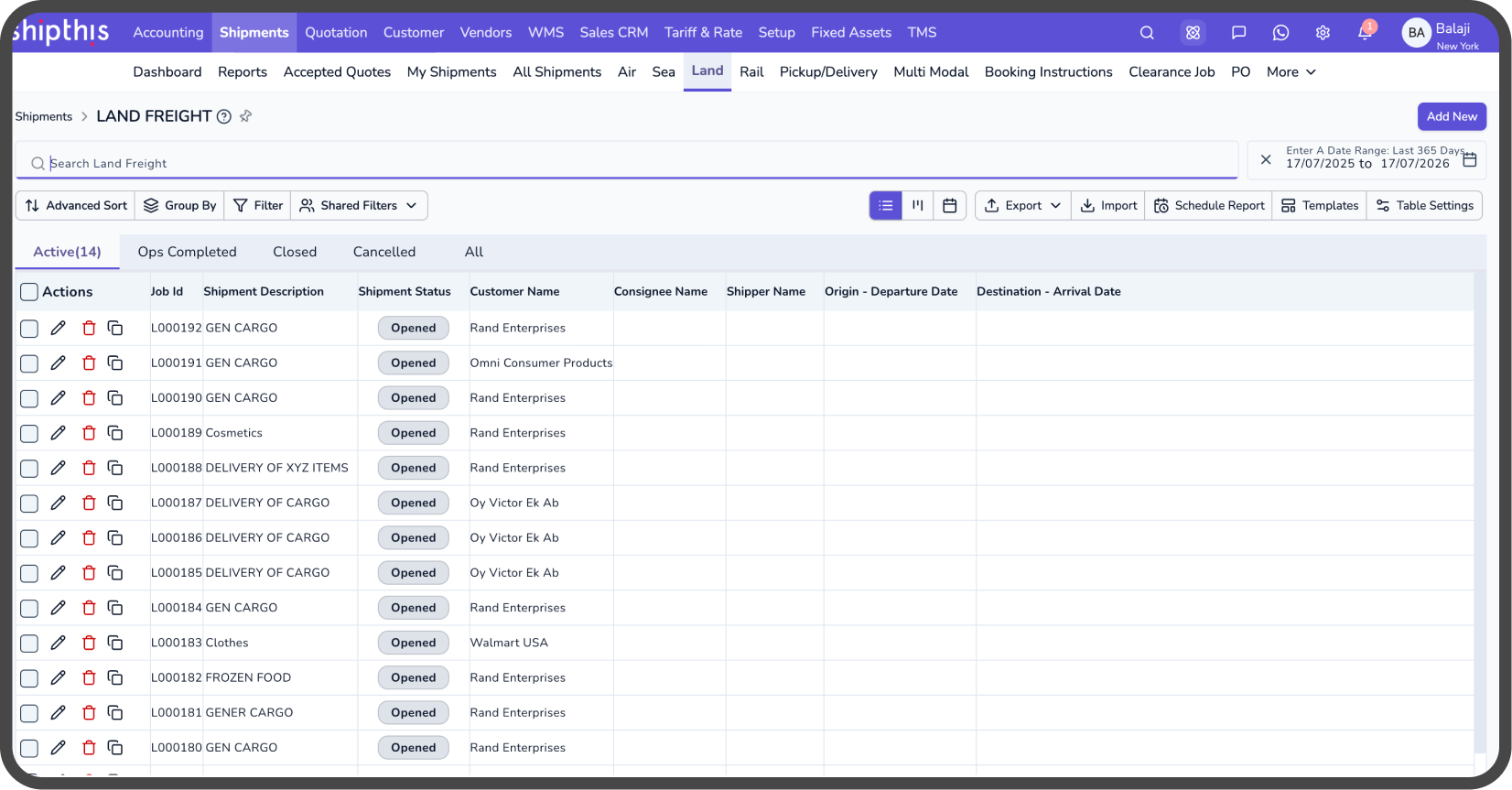



.avif)
Every shipment type gets the fields, documents and compliance checks it actually needs, inside the same platform, not bolted on beside it.
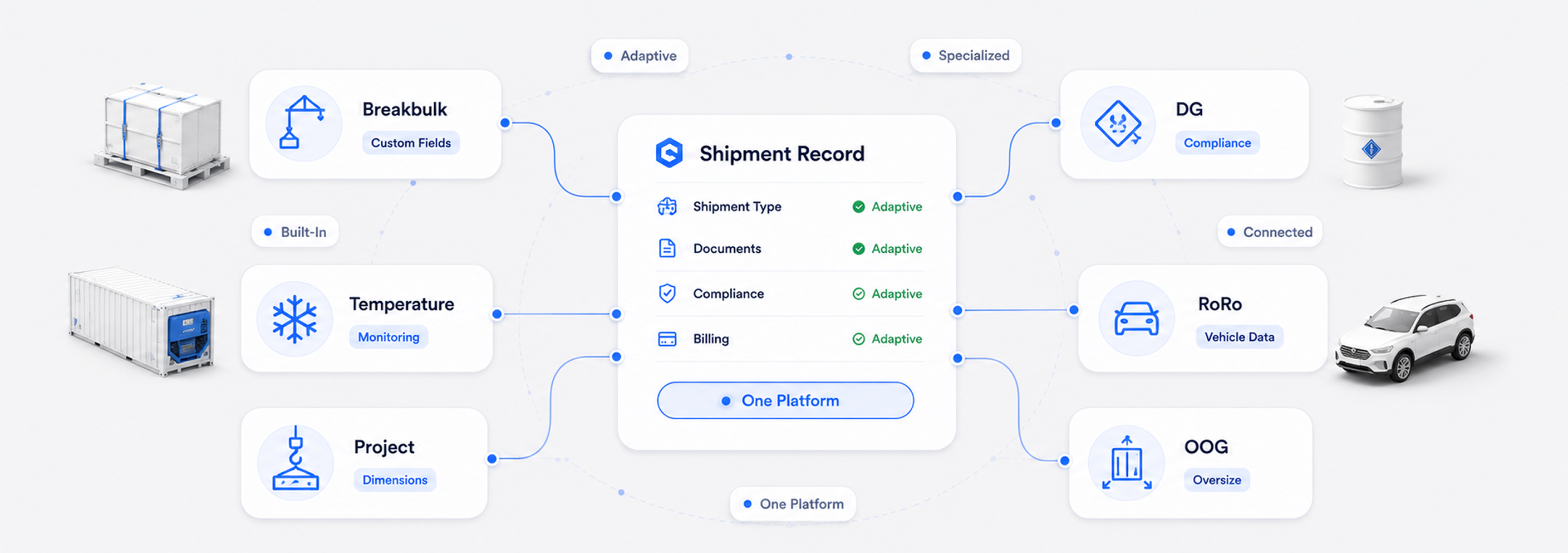

Most freight platforms are built around a standard container shipment, and every other cargo type inherits that same data model whether it fits or not, a breakbulk shipment forced into a container-shaped record, a DG shipment missing the classification fields it legally needs, a reefer container with no place to log temperature. The result is that specialized cargo quietly moves outside the system, into a spreadsheet or a side process nobody else can see. Shipthis gives breakbulk, RoRo, project cargo, reefer, special/out-of-gauge, dry bulk and DG cargo their own shipment structures, the right fields, the right documents, the right compliance checks, so specialized cargo is managed inside the platform, not around it.

Built for forwarders who move more than standard containers.


What Changes When Freight Forwarding Runs on One System
Piece-Level Tracking for Breakbulk. Vehicle-Level Tracking for RoRo.
Breakbulk cargo tracked piece by piece, with weight, dimensions and lashing detail; RoRo cargo tracked by vehicle, not container.
Breakbulk cargo, steel coils, machinery, timber, anything too large for a container, is tracked piece by piece, each with its own weight, dimensions and handling instructions. RoRo cargo is tracked by vehicle rather than container number, with the details a wheeled shipment needs, VIN, condition on load, lashing plan. Shipthis captures both the way they actually move, not forced into a record built for a sealed box.

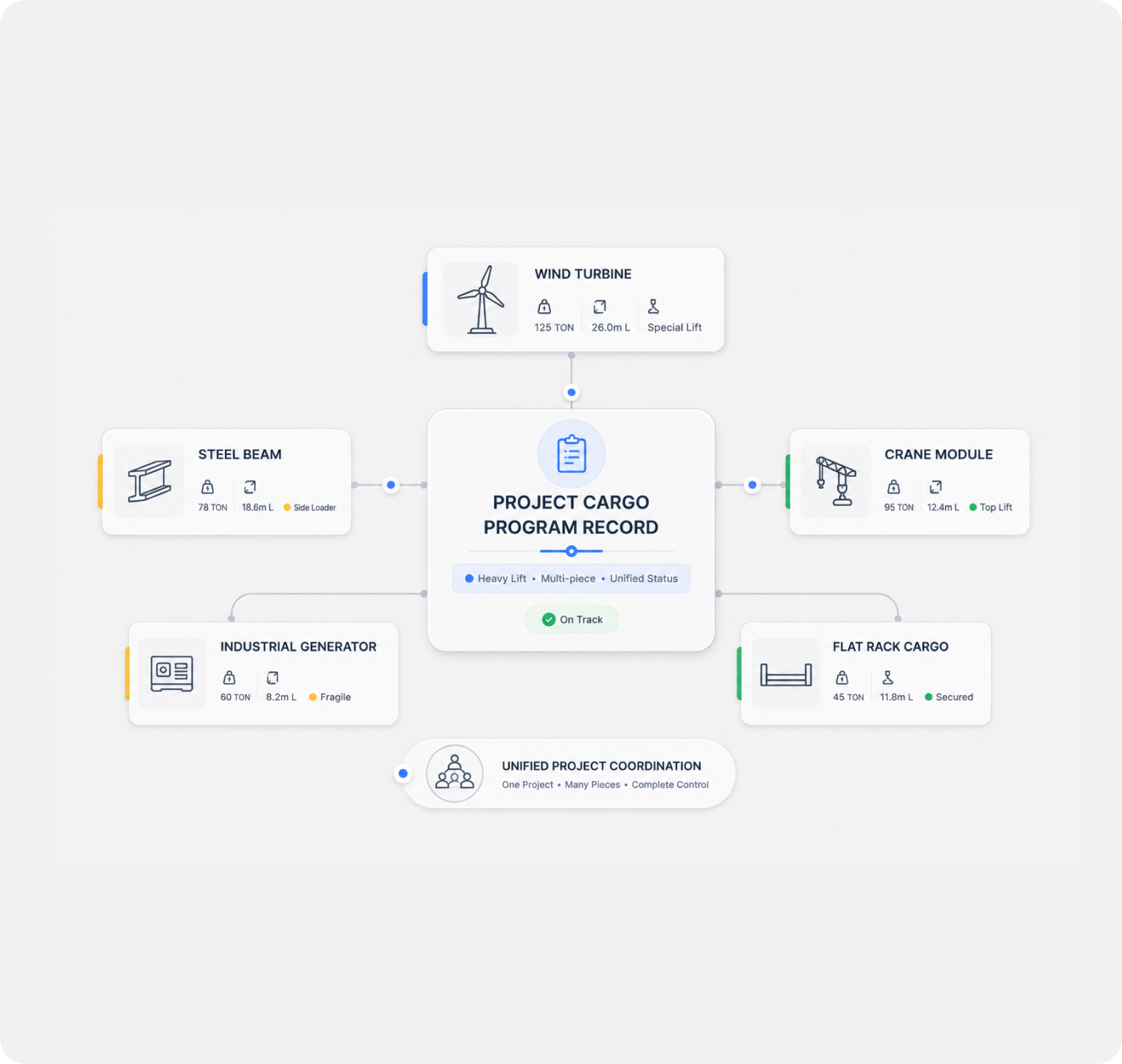
Project Cargo Moves as a Program. Shipthis Tracks It as One.
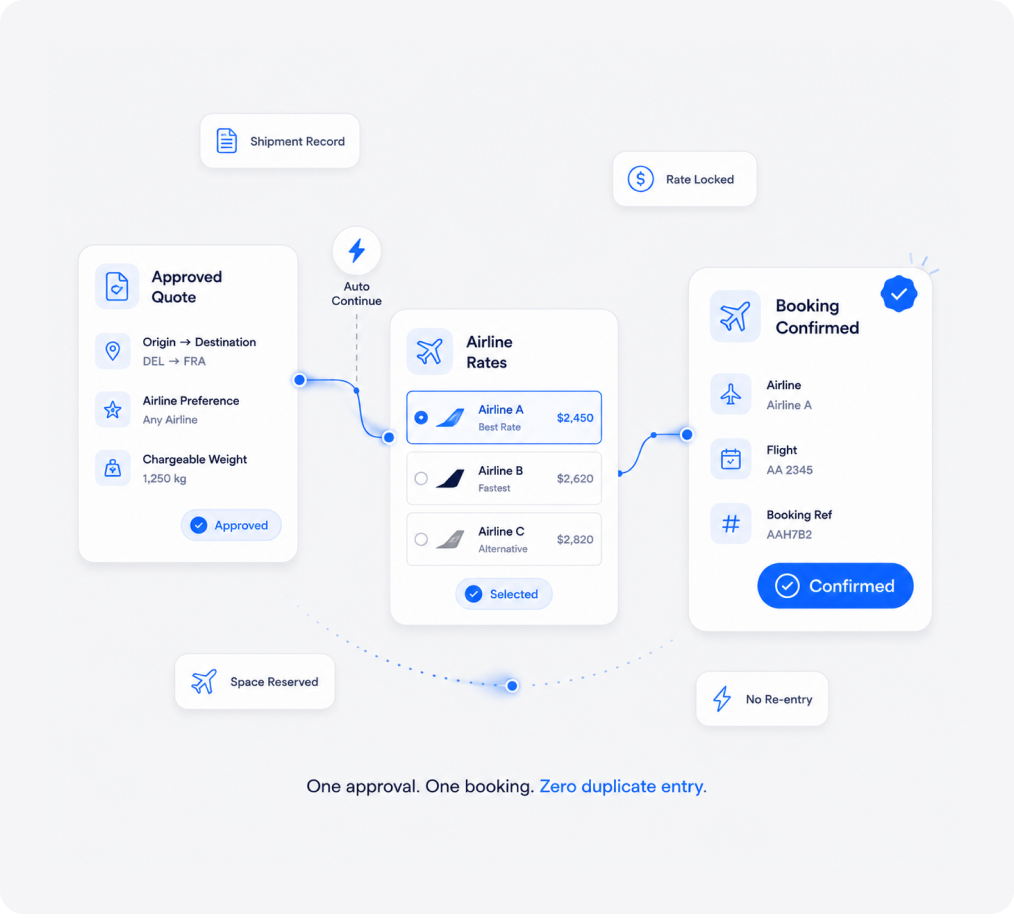
Coordinate every oversized piece in a project shipment, and handle the extra documentation and surcharges out-of-gauge cargo actually needs.
A project cargo shipment is rarely one shipment, it's dozens of oversized or heavy-lift pieces, often across multiple modes and months, that all have to arrive in sequence for a build to proceed. Shipthis coordinates every piece under one project record, so status is tracked at the program level, not scattered across bookings. Flat-rack documentation, surcharges, and handling instructions are captured as part of the shipment itself, not chased down separately.
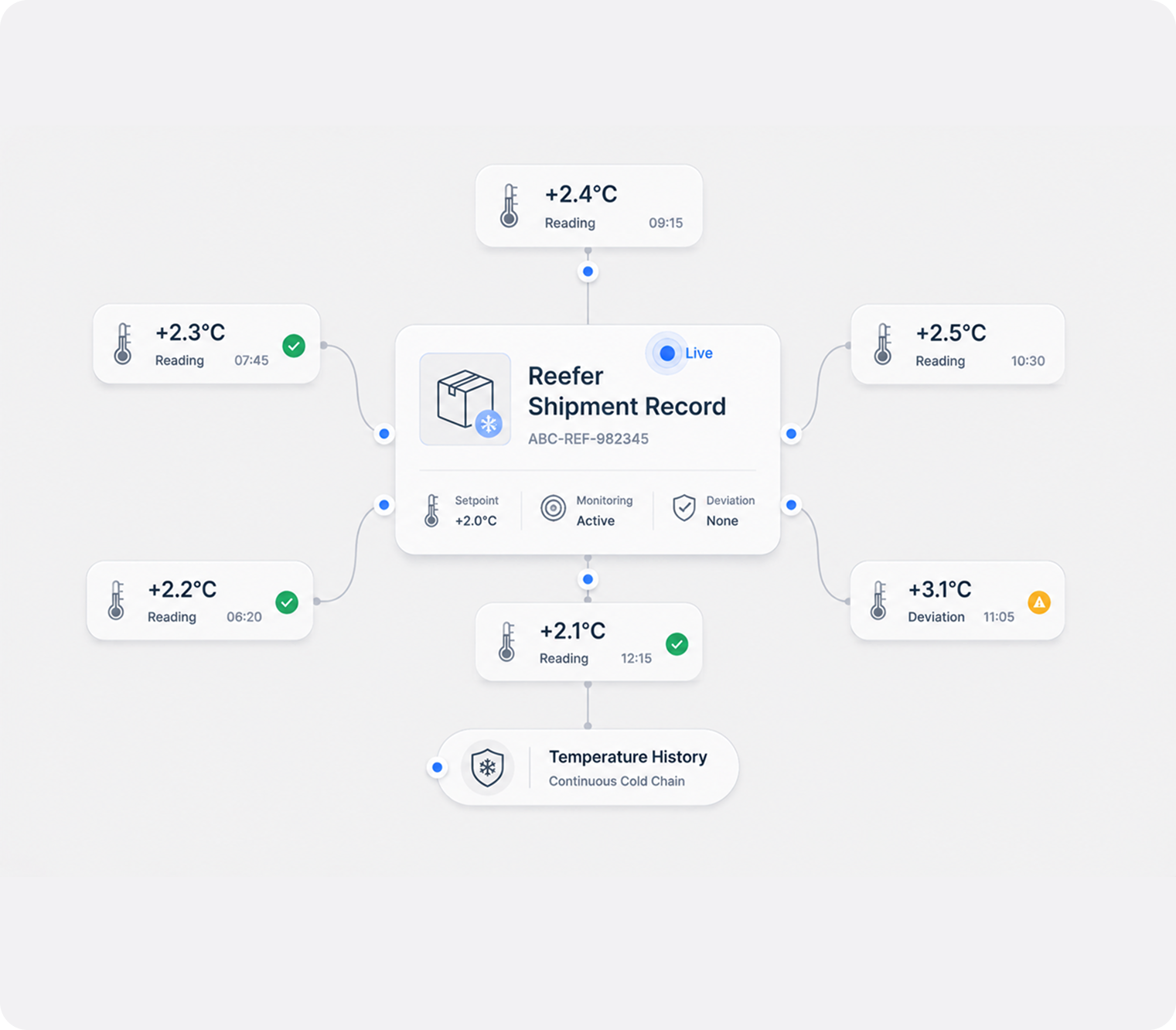
The Temperature Log Is the Shipment. Treat It That Way.
Setpoint, monitoring, and deviation data captured as part of the shipment, not reconstructed after the fact from a separate log.
Reefer shipment succeeds or fails on whether the cold chain held, temperature setpoints, pre-trip inspection, and genset monitoring tracked properly from booking to delivery. Shipthis captures reefer-specific data as part of the shipment record, setpoint, monitoring readings, any deviation, so the temperature history is documented and available if a claim ever depends on it, not reconstructed after the fact.
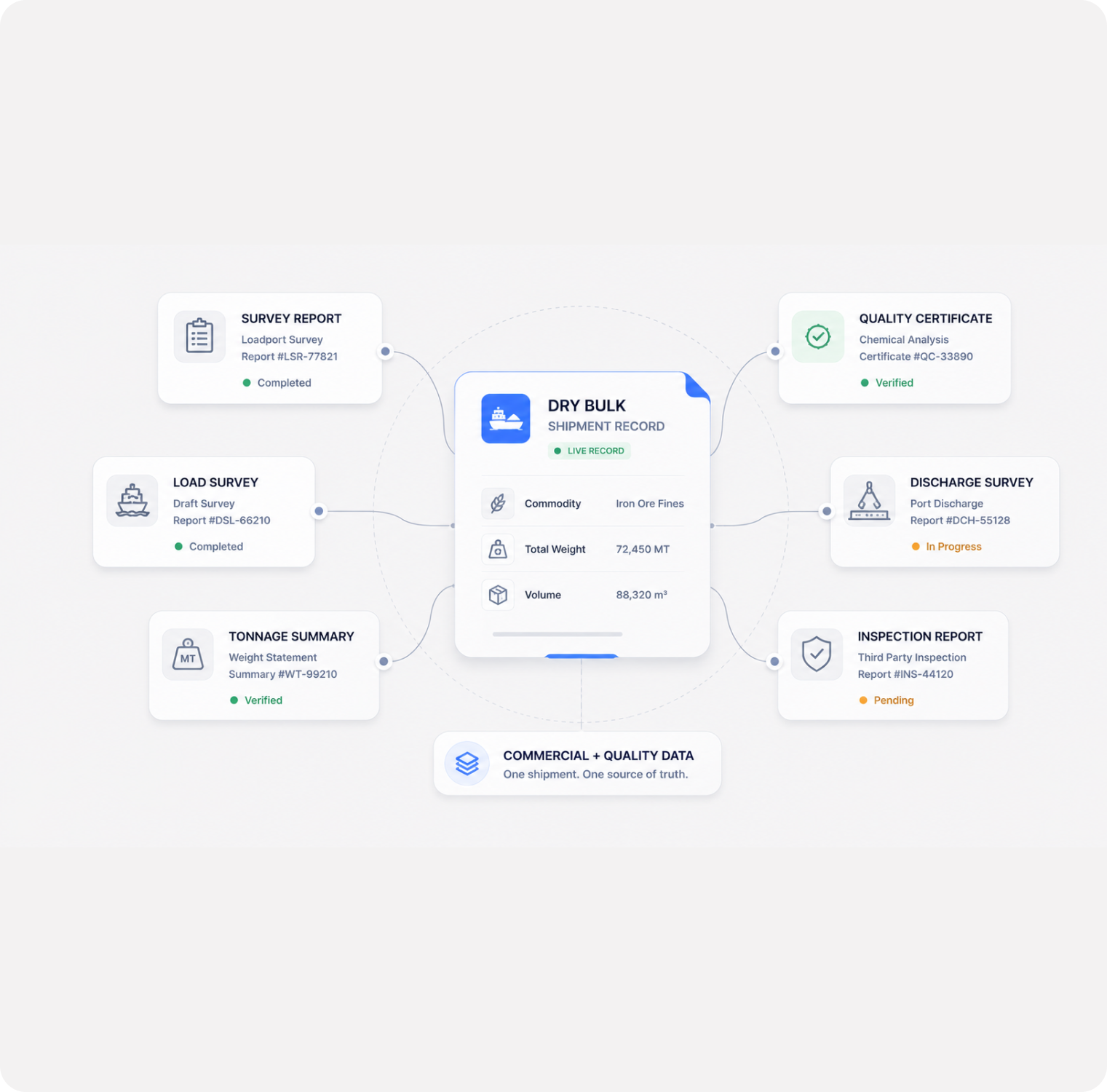
Tonnage, Surveys and Quality Certificates, Not a Container Count
Dry bulk cargo tracked by weight and volume, with load and discharge survey data and quality documentation captured against the shipment.
Dry bulk cargo, grain, ore, coal, and other loose commodities, moves by tonnage, not container or piece count, with load and discharge survey results and quality certificates that matter as much as the shipment status. Shipthis tracks dry bulk by weight and volume, with survey and quality documentation captured against the shipment record, so commercial and quality data isn't separated from the logistics data.
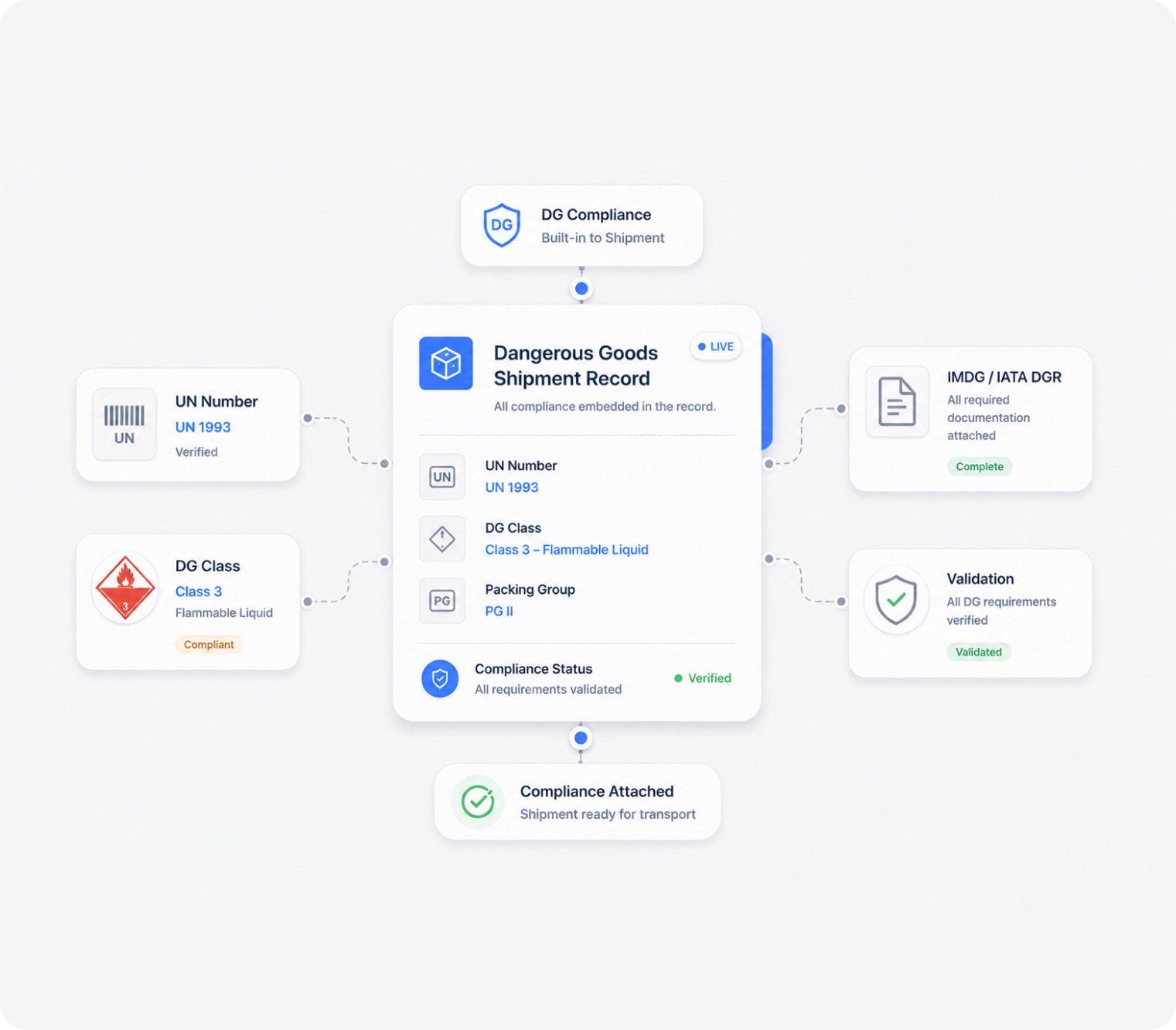
DG Classification You Can Trust With a Regulator, Not Just a Customer
UN numbers, classification, and the documentation IMDG and IATA DGR actually require, captured as part of the shipment, not handled separately from it.
Dangerous goods cargo carries real regulatory weight, a wrong UN number, a missing classification, or incomplete documentation is a compliance and safety failure, not just a data error. Shipthis captures DG classification, UN numbers, and the documentation required under IMDG for ocean and IATA DGR for air as part of the shipment record itself, so compliance is built into how the shipment moves, not maintained separately.
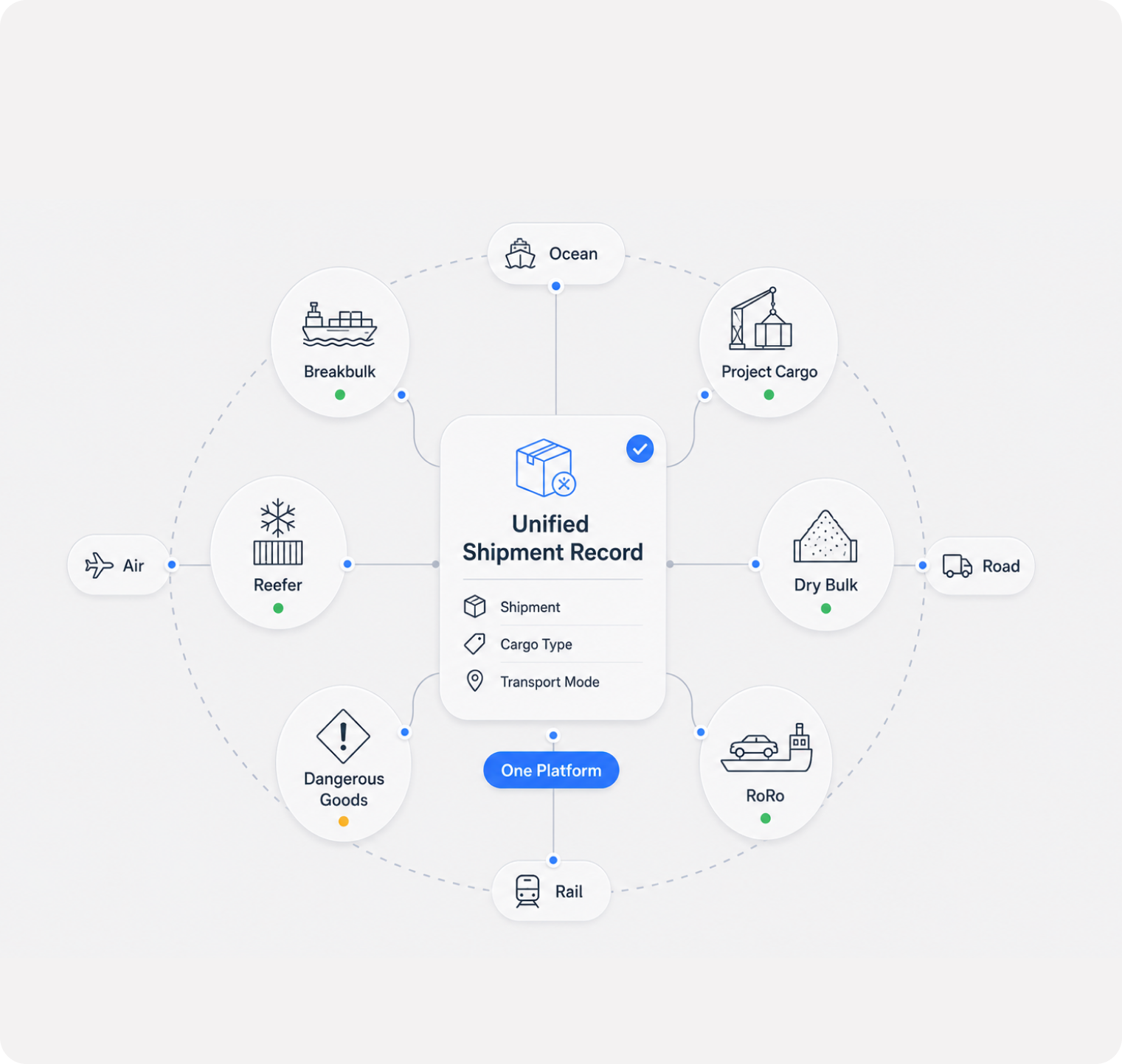
One System for Every Cargo Type, Across Every Mode You Use
Every specialized cargo type is supported across air, ocean, road and rail, on the same shipment record regardless of how it travels.
Specialized cargo doesn't stay in one mode, project cargo often moves by ocean and finishes by road, DG cargo might go by air on one lane and rail on another, reefer containers move by ocean, rail or road depending on the route. Shipthis supports every shipment type on this page across all four modes, so cargo-specific handling doesn't disappear when a shipment changes mode.



Implementation That Accounts for Every Cargo Type You Actually Run
A dedicated implementation team migrates your existing shipment data, standard and specialized, into the structure each cargo type actually needs.
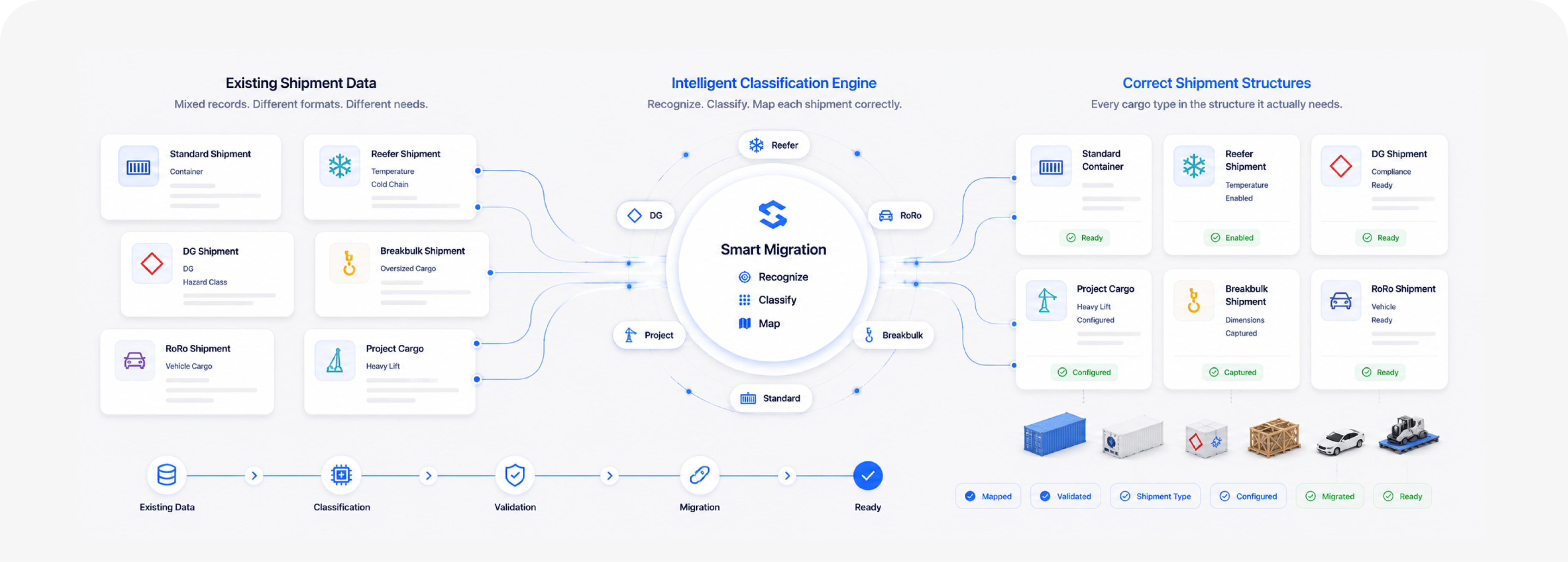
Migrating a diversified cargo business is different from migrating a standard-container operation, since specialized cargo data is often scattered across spreadsheets, side systems, or someone's personal process. Shipthis onboarding is built around that reality. Existing shipment, contract and compliance data is migrated into the proper structure for each cargo type, and your team is trained on the workflows specific to the cargo they actually handle. Most customers are fully operational within 9 weeks.



Ready to Stop Managing Specialized Cargo Outside Your Freight Management System?
Book a walkthrough with your own mix of breakbulk, project cargo, reefer, DG or bulk shipments — or start a free trial and explore it yourself.
A demo can be built around the specific cargo types and modes your business actually runs — not a generic script built around standard containers. Prefer to explore first? A free trial gives your team hands-on access with no commitment.
Ocean Freight Software Questions, Answered
Yes. Breakbulk cargo is tracked piece by piece, with its own weight, dimensions and handling detail, rather than being forced into a container-shaped record.
Yes. RoRo cargo is tracked by vehicle, capturing VIN, condition and loading detail, rather than by container number.
As a coordinated program. Every oversized or heavy-lift piece in a project shipment is tracked under one project record, so status is visible at the program level.
Yes. Setpoint, monitoring readings and any deviation are captured as part of the shipment record, supporting cold chain documentation.
Yes. Dry bulk shipments are tracked by weight and volume, with load and discharge survey data and quality certificates captured against the shipment.
Yes. DG classification, UN numbers, and the documentation required under IMDG for ocean and IATA DGR for air are captured as part of the shipment record.
Yes. Every shipment type covered here is supported across all four modes, on the same shipment record regardless of how the cargo travels.